Waste-to-Energy Makes 34 MW. AI Data Centers Want 1,500.
Can a waste-to-energy plant actually power an AI data center?
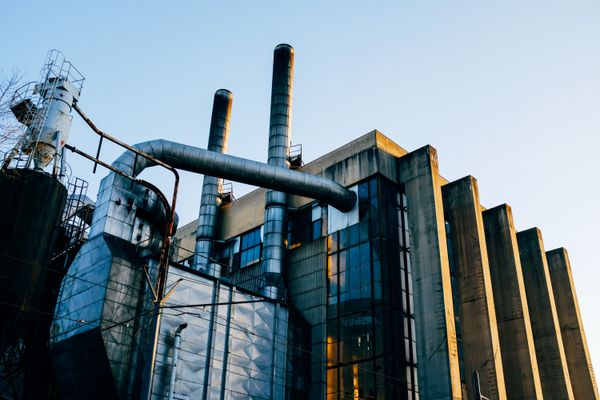
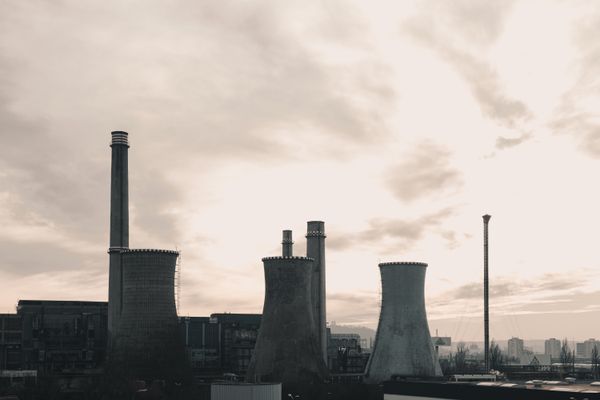
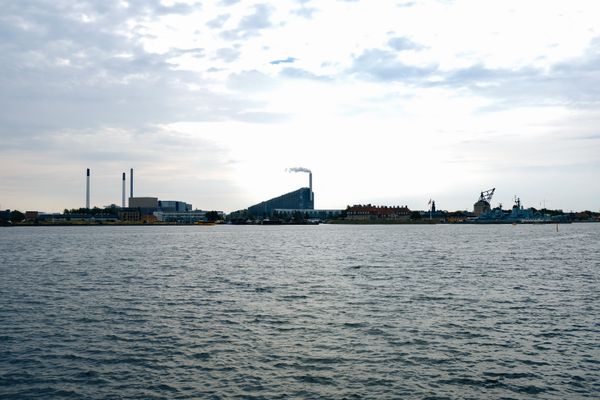
One plant, no. The waste to energy data centers pitch usually pictures a single facility quietly feeding a hyperscale campus, and the megawatts just don't line up. The average US waste-to-energy plant generates about 34 MW, and no single American facility clears 100 MW, per the EIA's 2022 fleet snapshot. A hyperscale AI campus runs in the hundreds to low thousands of megawatts. xAI's Colossus build outside Memphis is already pulling roughly 1,500 MW behind the meter [from data-center trade reporting].
And you can't simply turn a plant up. A waste-to-energy plant's output is capped by how much waste it physically moves across the grate each day, not by a throttle. Energy content per tonne is set by the feedstock (though that swings with moisture and the plastics fraction), so a facility processing 1,000 tonnes a day lands where it lands. Stacking the whole national fleet barely changes the picture: all 60 US plants combined make about 2,051 MW and 14,000 GWh a year [EIA, same dataset]. Global data centers burned through 415 TWh in 2024, and the IEA's base case has them reaching 945 TWh by 2030, per its Energy and AI report.
So every waste-to-energy plant in America, running flat out, would cover roughly 1.5% of today's global data-center load, and comfortably under 1% once the AI build-out actually lands. That number should end most of these conversations before they start. Waste-to-energy is a supply measured in tens of megawatts; AI data center energy demand is measured in gigawatts. You don't close two orders of magnitude with clever siting.
Then why does everyone keep pitching it as baseload?
Because the one thing waste-to-energy does that solar and wind can't is run at 3 a.m. in February. Capacity factor is the number that matters, and it sits at 85% or better for a waste-to-energy plant, several times what intermittent renewables manage [ASME and EIA fleet data]. The plant burns a fuel that shows up every day whether the sun cooperates or not. For a data center, where a one-point dip in uptime is a contractual event, that firmness beats a low headline price on power that comes and goes. This is the steady baseload power data centers are actually short of.
Set it beside the other firm options and the trade-off gets clear. A natural gas turbine gives you the same round-the-clock dispatch at hundreds of megawatts a unit; a nuclear small modular reactor promises similar firmness but not at scale before about 2030; solar and wind underdeliver on a winter night no matter how cheap the nameplate. Waste-to-energy splits the difference, gas-like dispatch on a partly renewable fuel, but at a fraction of the unit scale, and it ramps slowly, so it anchors a steady base rather than chasing load swings. (Whether that base counts as clean depends entirely on the biogenic share of what you feed it, a separate fight I've worked through in when renewable energy from waste actually counts as clean power.)
One caveat the brochures skip: that capacity factor isn't flat across a plant's life. I ran a predictive-maintenance pilot on a Hitachi Zosen line in 2024, and the plant read as baseload on paper, but the unplanned-downtime tail is what quietly eats availability. A ScienceDirect availability study put the drift at roughly 23% over a 20-year run as failure rates climb. So you finance the steadiness against a declining curve, not a constant.
Does behind-the-meter waste-to-energy actually pencil for a data center?
Only if you get the order of operations right, and most decks get it backwards. A waste-to-energy plant doesn't earn its keep selling electricity. It earns it on the gate fee, the $50-odd a tonne somebody pays to make the waste disappear [market range, US average]. The 500 to 600 kWh you recover per tonne [per ASME figures] is the second revenue line, not the first. So behind the meter waste energy can be genuinely cheap for a co-located data center, but only because the disposal economics already paid for the plant. Build the plant to sell power and the math inverts: as a pure generator, a 34 MW unit can't touch a gas turbine on dollars per kilowatt. The electricity earns money; it's just rarely the line that closes the deal. The same logic makes carbon capture on waste-to-energy a biogenic-credit trade with a kilowatt-hour byproduct rather than a power project.
But there's one place the economics genuinely favor an existing plant, and it's timing. Industry trackers put roughly 2 GW of behind-the-meter capacity online by mid-2026 against a projected shortfall north of 45 GW, with time-to-power slipping 1.5 to 2 years past what operators had penciled in, according to Cleanview's behind-the-meter tracking. A waste-to-energy plant that's already permitted and interconnected skips that queue. You're not waiting on a utility study; the steel is in the ground and the air permit is signed. For a developer staring at a three-year interconnection wait, a 25 MW head start next door is worth real money even if it never scales.
And the load side hides its own trap. On a colocation feasibility I reviewed in 2023, the developer sized the plant against the data center's IT load and underestimated the cooling overhead so badly the design missed real demand before a single rack powered on. At a PUE of 1.4, actual draw ran closer to 53 MW against a 40 MW plant, and the gap surfaced as grid-import charges nobody had modeled. That wasn't sensor drift; it was a spreadsheet that skipped a multiplier. Wire a plant straight to a compute load and you have to meter the whole envelope, set point to set point, which is the kind of closed-loop telemetry our AI waste management software is built to run.
Can the data center reuse the waste heat, or the plant's?
The popular framing runs exactly backwards. The data center power waste heat story imagines a server hall throwing off useful energy, but server reject heat is low-grade: roughly 30 to 40 C off air cooling, maybe 45 to 60 C from a liquid loop. To lift that into a district network at 70 to 90 C you need heat pumps doing real work, and their efficiency falls as the temperature lift grows. Meanwhile the waste-to-energy plant next door is making superheated steam well above 400 C. The high-grade heat is on the plant side, not the server side, which is the opposite of how the headline reads.
That doesn't make the server heat worthless; it means it needs a buyer with a network. Equinix's Markham, Ontario site recovers data-center heat into Markham District Energy, warming condos, schools, and a university campus, as Data Center Knowledge has documented. Denmark's Vestforbraending pairs a municipal waste-to-energy incinerator with data-center heat reuse on the same district loop. The three-way works: the plant sells power and high-grade heat, the data center's reject heat gets pumped into the same pipes, and the town gets warmth it isn't burning gas for. But it only lands where a district heating network already exists, which rules out most of the US Sun Belt where the campuses are going up, and with no pipes in the ground there's no heat trade.
So where does waste-to-energy for data centers actually make sense?
Not at hyperscale, and not as a reason to build a plant from scratch. The honest fit is narrow: an edge or colocation load in the tens of megawatts, parked next to a waste-to-energy plant that already exists for disposal reasons. A 34 MW plant can anchor a 25 MW colocation facility's base with the grid as backup and top-up. That's a coherent waste to energy solution, two zeros short of the headline, and it lives or dies on siting rather than on the conversion technology. For the case to pencil, four things have to be true at once:
- An existing, permitted plant on the doorstep. You co-locate next to one; you don't build a waste-to-energy plant to chase a compute load.
- A behind-the-meter regime that doesn't tax the private wire into oblivion.
- A district heating network to absorb the low-grade reject heat, or the heat-reuse economics stay on paper.
- A biogenic fraction high enough that the clean-baseload claim holds up when ESG-compliant projects get put through diligence.
Where does it fall apart? Below about 20 MW of compute, the interconnection and controls overhead isn't worth it and you're better off on the grid with a clean-power contract. Miss the heat network or the biogenic share and the rest of the case thins just as fast. And behind-the-meter siting buys no pass on emissions: a US waste-to-energy plant still answers to 40 CFR Part 60 Subpart Eb whether it sells to the grid or to the rack next door. That's quietly an advantage, since the air-permit fight is already settled, unlike the gas turbines some operators rushed online in 2025 and then had to defend under the Clean Air Act.
I once spent six months in 2023 sure an optical sorter's precision drop was a model problem before I found condensate fogging the camera enclosure on cold starts. The model was fine; the enclosure wasn't. The waste-to-energy-for-data-centers story has the same shape: everyone blames the conversion technology when the binding constraint is scale and siting. The waste-to-energy technology works as advertised; the gigawatts just aren't there. Pair the plant with a right-sized load and a district loop, and the zero-waste-to-landfill economics can carry a genuine building.
So the honest version of waste to energy data centers isn't a power play. It's a siting decision: a right-sized colocation load parked next to a plant the gate fee already built, taking a steady 25 MW that would otherwise leave at wholesale. Smaller than the headline. Also true.
Sources & Notes
- The fleet scale here, a 34 MW average plant, nothing above 100 MW, and 2,051 MW across 60 facilities producing about 14,000 GWh a year in 2022, comes from the EIA's waste-to-energy briefing.
- Demand of 415 TWh in 2024 climbing toward 945 TWh by 2030 is the base case in the IEA's Energy and AI report, with AI-optimized facilities the fastest-growing slice.
- For the 85%-plus capacity factor and 500 to 600 kWh per tonne I leaned on ASME's case for waste-to-energy; the ~23% availability decline over 20 years is from a ScienceDirect availability analysis.
- Behind-the-meter capacity, the 45 GW-plus shortfall, the Colossus figure, and the time-to-power slip are tracked in Cleanview's behind-the-meter report.
- The Equinix Markham and Vestforbraending heat-reuse examples are drawn from Data Center Knowledge; the gate-fee range and the 2023 colocation feasibility are a US market estimate and my own project notes.
Researched and written by OWI editorial staff. Technical review by RWE engineering. AI tools used for drafting assistance.