Why Does Waste-to-Energy in India Keep Stalling? Look at What's in the Bin
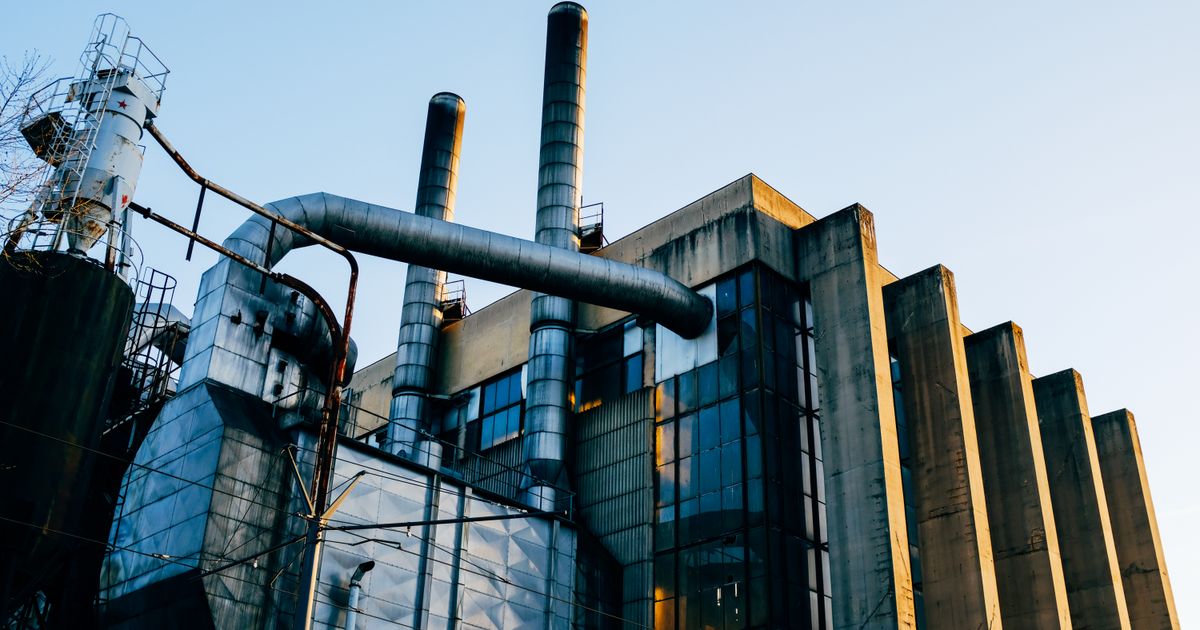
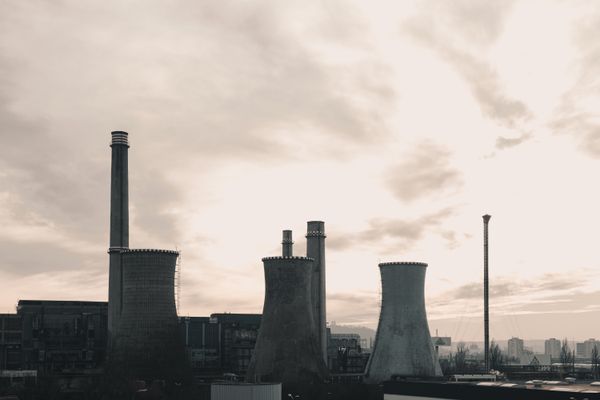
Delhi's four waste-to-energy plants take in roughly 5,600 tonnes of municipal waste a day. About 1,100 of that will burn well enough to earn its keep, according to India Development Review's reporting on the city's plants. The other 4,500 tonnes show up wet, mixed, and loaded with inert material that drags the heat content below what a boiler needs. That gap, not financing, not the grate under the fire, is what actually stalls waste to energy in India.
I build sensor stacks and process-optimization models for sorting lines, so I read every WTE feasibility study the same way: show me the feedstock characterization before you show me the boiler. India's plants keep stalling for a reason that looks almost boring once you've seen it plotted on a confusion matrix. They were specified for one kind of garbage and fed another. The fix isn't a cleverer incinerator. It's measuring and controlling what goes in, which is harder and a lot less photogenic than a ribbon-cutting.
The feedstock arithmetic nobody wants to run
A mass-burn grate, the European mainstays like Martin or Hitachi Zosen, wants refuse around 2,500 kcal/kg or higher to hold combustion without auxiliary fuel. India's Solid Waste Management Rules set the legal floor for incineration at 1,500 kcal/kg. Indian mixed MSW routinely shows up under that line. The IDR survey of operating plants found city averages running from about 1,080 kcal/kg in Eluru to 1,833 in Guwahati, all of them dragged down by 40 to 50 percent moisture. Feed a plant below its design point and you have two options, both bad: co-fire fossil fuel to hold temperature, which wrecks the economics and the emissions story at once, or run cold and dirty.
Moisture is the variable that quietly wrecks everything downstream, and I've watched it happen in real time. In 2022 we retrofitted a Tomra autosort line at a 600 TPD materials-recovery facility. On dry PET the model held 94 percent recall. The week monsoon runoff pushed input moisture past 18 percent, recall dropped to 71 percent, because a near-infrared sensor can't read a polymer signature through a film of water (and no, more training data doesn't fix that; the physics sits upstream of the model). Now scale that failure mode to an entire plant whose feedstock is 45 percent water by mass. Same failure mode, bigger boiler.
So why is the waste so wet? Because it isn't separated at source. India generates on the order of 150,000 tonnes of MSW a day, and most of it lands in a single bin: food scraps, plastics, construction debris and sand, all mixed together. A European plant runs on a stream that has already had its organics and recyclables pulled out upstream. Hand that same plant an unsorted Indian stream and you've changed the entire input distribution it was tuned around. The training set is the model, as I tell every junior engineer who joins my team, and in a waste-to-energy plant the feedstock is the training set. Source separation is the unglamorous foundation under any circular economy solution worth the name.
Why it stays broken: subsidies reward tonnage, not energy
Here's where the incentives turn perverse. WTE electricity in India sells around INR 7 per kWh; the CERC-determined tariff that Delhi's regulator accepted for these plants is INR 7.90 per unit. Coal and solar, by comparison, deliver power at INR 2 to 3 per kWh per the same IDR analysis. So a waste-to-energy plant only closes financially with help: a tipping fee, INR 2,000 to 2,700 per tonne in Delhi, plus capital subsidy, with the central WTE programme carrying a INR 600 crore outlay across FY2022 to FY2026. None of that support is wrong in itself. Most infrastructure needs it. But the structure rewards tonnes through the gate, not kilowatt-hours out the far side. And the imported design carries imported cost: European mass-burn is built to the flue-gas limits in Directive 2010/75/EU, an expensive envelope that rides along whether or not local feedstock or emission rules justify it.
And that's the trap. Pay per tonne received and the operator's rational move is to accept everything, water and all, because turning away bad feedstock means turning away revenue. The plant runs under nameplate, burns auxiliary fuel to compensate, and the shortfall gets papered over by the subsidy instead of fixed at the bin. I'll qualify that: bigger plants don't make it worse on their own, they make it worse when capacity outruns segregation, which is the usual case. So why do cities keep approving larger plants? Because tonnage diverted from a landfill is a number a mayor can announce, and a calorific floor is not.
On paper India has built toward 556 MW of installed WTE capacity, a figure the press releases love to quote. What the headline omits is utilization. A plant rated at 20 MW that runs at 60 percent of nameplate because half its feedstock won't burn is, in energy terms, a much smaller plant carrying a much larger debt. The capacity number measures what was bought, not what gets produced.
This isn't a new failure. The first serious Indian incinerator, a 300 TPD plant at Timarpur in Delhi built in 1987 with imported technology, shut down within weeks of commissioning because the waste never reached the calorific value the design assumed. Almost forty years on, India had 12 operational and 8 non-operational WTE plants across 10 states as of November 2022. The non-operational column is the tell. Plants rarely die because the boiler breaks; they die because the feedstock the feasibility study promised never showed up. The same pattern stalls projects elsewhere, which is why our piece on why waste projects in Latin America stall and what actually works reads like a checklist you could hand a Delhi municipal engineer.
Can better sorting and waste intelligence fix it?
The pitch I hear most is that AI will rescue the feedstock: bolt computer vision and optical sorters onto the front end, pull the wet organics and inerts, feed the boiler a clean stream. Partly true, and I say that as someone who builds these systems for a living. A well-tuned Tomra or Steinert line will clear 90 percent recall on a target polymer in dry conditions. But two things temper the pitch. Most "AI waste sorting" on the market is a rule-based pipeline with a CNN bolted on for the brochure, useful, but not the autonomous system the slide deck promises. And sorters degrade exactly where Indian MSW lives, in high moisture and high contamination. Precision is easy; recall is where the model lies to you, and recall is the first thing to go when the input is half water.
Sensor drift always wins eventually too: condensate on a lens, dust on an emitter, a gasket nobody specified for monsoon humidity. I spent six months in 2023 chasing a precision drop I was certain was a model bug. It was a fogged camera enclosure, condensate from a bad gasket on cold starts, and the model had been fine the whole time (I've written before about where vision models break on contaminated streams). Waste intelligence software earns its place by showing you the problem faster. It does not change the physics of wet feedstock. The sorting still has to happen, and the cheapest place to do it is the household bin, not a sensor array bolted onto a plant that's already underwater.
What the working plants actually do differently
Not every Indian WTE plant is a cautionary tale, and the ones that run near nameplate are worth copying. They tend to share three traits: a feedstock supply tied to a separated or pre-processed stream, refuse-derived fuel preparation (drying, shredding, pulling inerts) ahead of the boiler, and a contract that specifies feedstock quality rather than just quantity. The third is the one that gets skipped. If your offtake agreement says "deliver 1,300 tonnes a day" with no calorific floor and no moisture ceiling, you've signed up to burn whatever turns up.
Refuse-derived fuel is the pragmatic bridge. Rather than burning raw MSW, you dry and densify the combustible fraction into a fuel with a predictable heat value, then co-fire it where the heat is already needed. Cement kilns are the natural home; they run hot enough to swallow variable input and they want the calories. Several Indian cement producers now take RDF, and that route sidesteps the standalone-plant economics altogether. Less glamorous than a dedicated facility with its own turbine, but it's a genuine outlet, the kind of pathway a serious waste conversion facility weighs before it commits to mass-burn.
If I had to hand a municipal team a sequence, and I more or less have, it would run in this order, because each step de-risks the next:
- Characterize the actual waste stream before sizing anything: moisture, calorific value, inert fraction, seasonal swing. Measure across a full year, not a dry-season fortnight.
- Fix separation at source before adding any burn capacity. A wet-dry split at the household level moves calorific value more than any boiler upgrade will.
- Pre-process into RDF instead of feeding raw MSW. Predictable fuel beats high-energy fuel you can't count on.
- Write feedstock quality into the contract: a calorific floor, a moisture ceiling, rejection rights, not just a tonnage target.
- Right-size to the separated stream you can actually verify, not the headline tonnage in the press release.
None of that needs a breakthrough. It needs measurement discipline and the political will to enforce separation, which is the genuinely hard part, because sensors are cheaper than behaviour change. The Solid Waste Management Bill introduced in the Rajya Sabha in December 2025 leans hard on segregation and treatment standards, which is the right pressure point to push on. Whether it gets enforced past the first news cycle is the open question, and it's the one I'd watch. Teams offering zero-waste-to-landfill solutions across India will live or die on that enforcement.
A few caveats, because this doesn't generalize cleanly. The feedstock story bites hardest on large mixed-MSW mass-burn plants. Source-separated biomethanation, wet organics into biogas, actually wants the high-moisture fraction India produces in abundance, so it has the opposite problem and a far better natural fit. Industrial RDF co-processing in a cement kiln tolerates variability that would stall a standalone turbine plant. And southern cities with heavier organic fractions behave differently from drier northern ones; the moisture curve isn't national. If your stream is genuinely separated and your scale is modest, some of what I've called a trap won't apply to you (though I'd still measure for a full year before I believed it).
India doesn't have a waste-to-energy technology problem. It has a measurement-and-separation problem wearing a technology costume. The hardware does its job. What keeps stalling is the assumption, baked into every feasibility study that copied a European design, that the garbage would cooperate. Until the bin gets sorted, the plants will keep eating water and calling it fuel, while the subsidy quietly pays the difference.
Sources & Notes
- Most of the Delhi figures here, the 5,600 tonnes in against roughly 1,100 burnable, the tipping fee, and the tariff gap of INR 7 versus INR 2 to 3 per kWh, come from India Development Review's investigation into the country's WTE plants, which also counts 12 operational and 8 non-operational plants as of November 2022.
- For the sector-wide diagnosis and the calorific-value constraint, CSTEP lays out the case in its work on how India can rejuvenate its waste-to-energy sector.
- Installed capacity near 556 MW and the INR 600 crore programme outlay across FY2022 to FY2026 trace back to the Ministry of New and Renewable Energy's official statement on waste-to-energy plants.
- On the December 2025 statutory push, see this summary of the Solid Waste Management Bill, 2025 and its segregation mandates.
- The 94 against 71 percent recall numbers are mine, pulled from our 2022 Tomra retrofit commissioning logs at a 600 TPD MRF, not from a published paper.
Researched and written by OWI editorial staff. Technical review by RWE engineering. AI tools used for drafting assistance.