Your Waste-to-Energy Solution Is Only as Good as the Feedstock You Didn't Measure
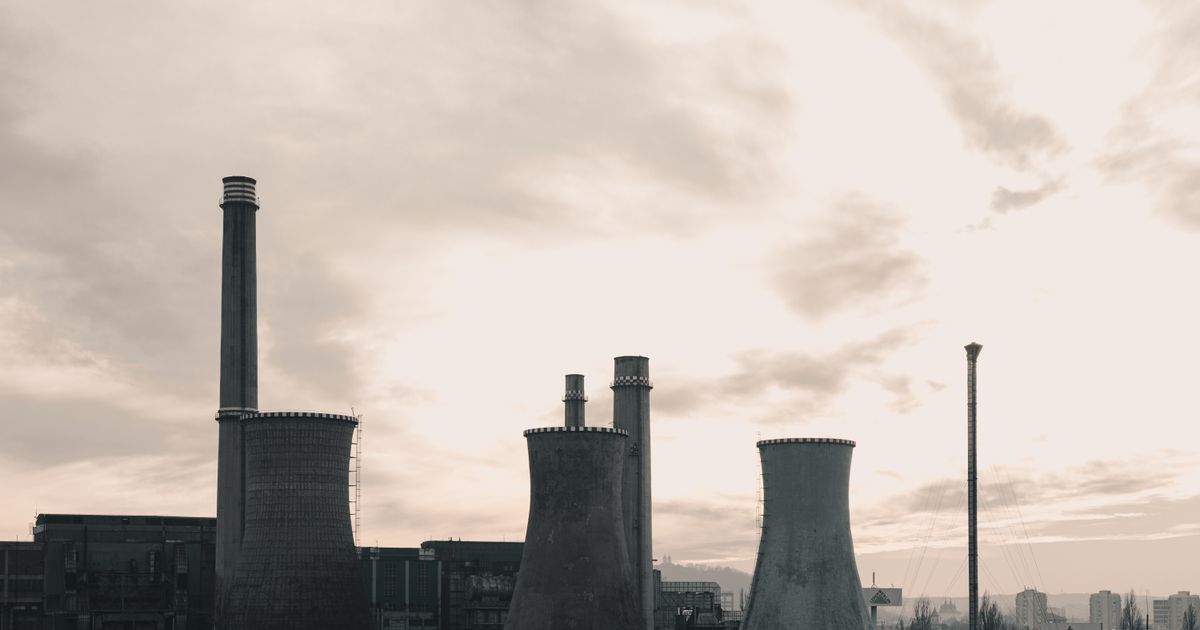
A gasifier rated for 12 MJ/kg of refuse-derived fuel doesn't care that the feasibility study said the local waste averaged nine. It cares what comes off the tipping floor at six in the morning in February, when the organic fraction is soaked and the calorific value has sagged to five. I've watched a project commit eight figures to a conversion technology before anyone ran a single seasonal characterization on the stream it would actually eat. That's the most expensive mistake in waste-to-energy solutions, and it's nearly always made before one piece of steel shows up on site.
I build the sensor stacks and data pipelines that tell operators what their waste is doing in real time, so I see the gap from a particular angle: the plant gets specified around a number, and the number was a guess wearing the costume of a measurement. Match the technology to the waste stream you measured, not the one a textbook describes, and most of the failures I get called in to diagnose never happen in the first place.
The box gets bought before the stream gets measured
Here's the pattern I keep seeing. A municipality or a developer decides they want waste-to-energy. They talk to vendors. Vendors sell boxes: grates, gasifiers, digesters, pyrolysis reactors. Each vendor's box is, by remarkable coincidence, exactly the right one. Somebody picks a box, sizes it on a composition table lifted from a regional average, and only then asks what the local waste is really made of. By then the capital is committed, so the answer stops mattering, because changing course would mean re-tendering the whole project.
But the waste decides the technology, not the other way round. A wet, high-organic municipal stream wants a digester, or serious drying before anything thermal. Feed a wet, high-organic stream to a mass-burn grate and you'll spend the plant's life propping up the fire. A dry, sorted, high-calorific stream is wasted in a digester and belongs in a thermal route. Mixed municipal solid waste, inerts and all, is what grate combustion was built for, which is exactly why a grate is the wrong home for a clean single-stream feedstock. (Andritz, Hitachi Zosen, Martin: every grate OEM will tell you their machine tolerates variability, and they're right, up to a point. That point is set by physics, not by the brochure.)
Mismatch isn't only a thermal-efficiency problem. It shows up in the residue. A mass-burn line turns a tonne of waste into roughly 220 to 390 kg of bottom ash, plus a smaller stream of fly ash, per Tata Consulting Engineers' analysis of MSW thermal treatment. Feed it wetter, dirtier waste than it was designed for and that fraction climbs, the boiler fouls faster, and the ash you have to landfill, the very thing the project promised to eliminate, grows instead of shrinking. Genuine zero-waste-to-landfill solutions live or die on whether the feedstock and the box were matched before procurement, not on the marketing afterward. I've watched more than one zero-landfill claim quietly expire on the ash line.
And there's a third number that almost never makes the feasibility study: contamination. A stream that looks combustible on paper can carry enough chlorides from PVC, or enough grit and glass, to wreck a route the calorific value alone would green-light. Chlorides corrode superheater tubes; inerts eat into the self-sustaining zone from the ash side. I've watched a feedstock pass the energy test and flunk the chemistry test, and the chemistry test is the one that resurfaces in year three as an unplanned three-week outage on a fouled boiler.
So why does this keep happening? Partly incentives. A vendor sells waste conversion technology; nobody sells you the boring quarter of feedstock sampling that would tell you which vendor to call. Partly it's that characterization is slow and unglamorous, and a feasibility deadline is faster than four seasons of waste.
Why the calorific number on the feasibility study lies
Most feasibility studies quote one calorific value. One number, for a stream that changes every week. That single average is where waste-to-energy solutions go to die, because the box gets sized for the mean and then operated against the extremes.
Calorific value isn't a constant; it's a function of moisture and organic content, and both swing with the season, the weather, and whatever the local economy threw out that month. Below roughly 4.6 MJ/kg on a dry basis (about 1,100 kcal/kg) combustion stops sustaining itself and you're burning auxiliary diesel to keep garbage alight, per Tata Consulting Engineers' thermal-treatment review. To run economically rather than merely stay lit, an incinerator wants something near 7 MJ/kg as a wet annual average and at least 6 MJ/kg in every season. Refuse-derived fuel, once it's been dried and cleaned up, lands at 18 to 24 MJ/kg, according to the ScienceDirect review of waste-to-energy technologies. Quote the annual mean and you hide the February trough that decides whether the plant limps or runs.
And measurement itself lies more than most people expect. In 2022, on a 600 TPD materials recovery facility we'd just retrofitted with Tomra autosort optical units, the PET line lost almost a quarter of its recall, sliding from 94% to 71% the week input moisture climbed past 18% (our commissioning data, later confirmed on internal validation runs). Wet flakes clump, the near-infrared signature smears, and the classifier starts hedging. Precision is easy; recall is where the model lies to you. Same hardware, same model, different feedstock, and a quarter of the recoverable PET walked straight into the residue stream. If a sorter's accuracy is that sensitive to moisture, what makes anyone think a single calorific number survives contact with real waste?
I'll own one of these myself. For six months in 2023 I was convinced a slow precision drop on a sorting line was a model problem, drift in the training distribution, so I kept retraining. It wasn't the model. A poorly sealed gasket was letting condensate fog the camera enclosure during cold starts. The data was lying because the sensor was wet, and I'd trusted the data over the hardware. Sensor drift always wins eventually, and so does feedstock moisture; both of them punish anyone who treats a measurement as ground truth.
This is also why I get skeptical when a vendor pitches "AI waste sorting" as the cure for a feedstock problem. Most of what gets sold under that label is a rule-based pipeline with a CNN bolted on, and a neural net can't see calorific value or a moisture trend; it sees pixels. Good computer-vision classification on a sorting line earns its keep, but it sorts what's in front of it. It won't tell you whether you bought the right reactor.
What the waste actually decides
Strip away the vendor noise and feedstock selection comes down to three measurements: moisture, calorific value, and contamination. Get those across a full year and the technology mostly chooses itself.
Moisture sorts the first fork. Wet, pumpable organics belong in anaerobic digestion; dry, stackable material can go thermal or into a high-solids digester instead. For the thermal routes, the old Tanner triangle still does the work. Plot a waste against three axes, combustible content, moisture, and ash, and there's a zone inside which it burns without auxiliary fuel. Drift outside that zone and you're subsidizing the flame. Mixed municipal waste is what grate lines were built to clear, and Directive 2010/75/EU sets the bar they have to hit: flue gas held at 850°C for two seconds. The thresholds that bound the self-sustaining zone, and the moisture and solids cuts that separate the major routes, are worth keeping on a single page (numbers below drawn from the ScienceDirect waste-to-energy review and the Tanner-diagram update):
| Feedstock signature | Best-fit conversion | The measurement that decides it |
|---|---|---|
| Wet, pumpable organics (food, green waste) | Wet anaerobic digestion | Total solids 5-15% |
| Stackable high-solids organics | Dry (high-solids) anaerobic digestion | Total solids 25-40% |
| Mixed municipal solid waste | Mass-burn grate combustion | Moisture below ~45% |
| Dry, sorted, homogeneous fraction | RDF to cement kiln or dedicated thermal | Moisture 3-6% |
| High inert / high ash | Sort and dry first, or don't burn it | Combustible 25%+, ash under 60%, water under 50% |
Notice what the table doesn't decide: the economics. A sorted RDF stream that runs clean in a cement kiln might clear a gate fee of $30 to $42 a tonne in current European markets [market range, 2025], while the same tonnes pushed through a marginal mass-burn line cost you in ash disposal and downtime. The conversion route also fixes how much of your output counts as renewable, the biogenic-fraction question that decides whether the power qualifies as clean, which I've gotten into elsewhere on when energy from waste actually counts as clean power. Renewable energy waste management isn't one decision. It's the moisture decision and the contamination decision compounding into an economic one.
This framework has limits worth naming. Below about 55 TPD the per-tonne cost of seasonal characterization gets hard to justify, and the thresholds above assume reasonably segregated collection. In a region with no source separation, moisture and contamination blur into each other and the neat decision tree turns into a judgment call instead. None of it is a substitute for sampling your own stream.
Characterize before you commit
So what does measuring a stream properly actually take? Not a single grab sample sent to a lab. That's the thing nearly everyone does, and it tells you almost nothing.
Sample across seasons. Pull characterization runs in at least the wet and dry quarters, ideally monthly, because the February stream and the August stream are different fuels burning at different temperatures. Measure moisture and calorific value on each batch, not on a blended composite that averages the problem away. Track contamination as a distribution rather than a mean, because the worst week sets your sorter's real recall, not the average week. And if you're leaning on sensors or a waste-intelligence layer to do this continuously, budget for the drift: a predictive-maintenance pilot we ran on a Hitachi Zosen line in 2024 threw 11 false positives before we caught labeling drift in the training data, and that recovery time costs money before the system earns any. The training set is the model; everything else is hyperparameters.
Then, and only then, pick the box. Three months and a modest characterization budget ahead of procurement is the cheapest insurance in this business, and I've never seen a project regret spending it. I've seen plenty regret the opposite: eight-figure reactors commissioned against a number nobody had actually measured, then operated for twenty years against the gap. If you're early enough to still get the order right, talk to someone about waste-to-energy technology only after the stream is characterized, not before.
Characterize first, then buy. Every plant that did it in the other order is still paying for the gap, one wet February at a time.
Disclosure: I build sensor and data systems for Renewable Waste Energy, and the failures above are from lines I've worked on. If you want a second read on a feedstock characterization plan before procurement, that's what our team is for.
Notes
- The recall figures, the 18% moisture cliff, and the 2024 false-positive count are from sorting and predictive-maintenance lines I worked on directly, not from a published report.
- For the self-sustaining-combustion floor, the economic calorific minimum, and the ash yields, see Tata Consulting Engineers' breakdown of MSW thermal treatment.
- The anaerobic-digestion solids ranges, RDF calorific band, and feedstock-to-technology mapping come from this ScienceDirect overview of waste-to-energy technologies; the burn-without-auxiliary-fuel thresholds trace back to the updated Tanner-diagram study.
Researched and written by OWI editorial staff. Technical review by RWE engineering. AI tools used for drafting assistance.