Carbon Capture on Energy from Waste Doesn't Pencil Without the Pipeline Next Door
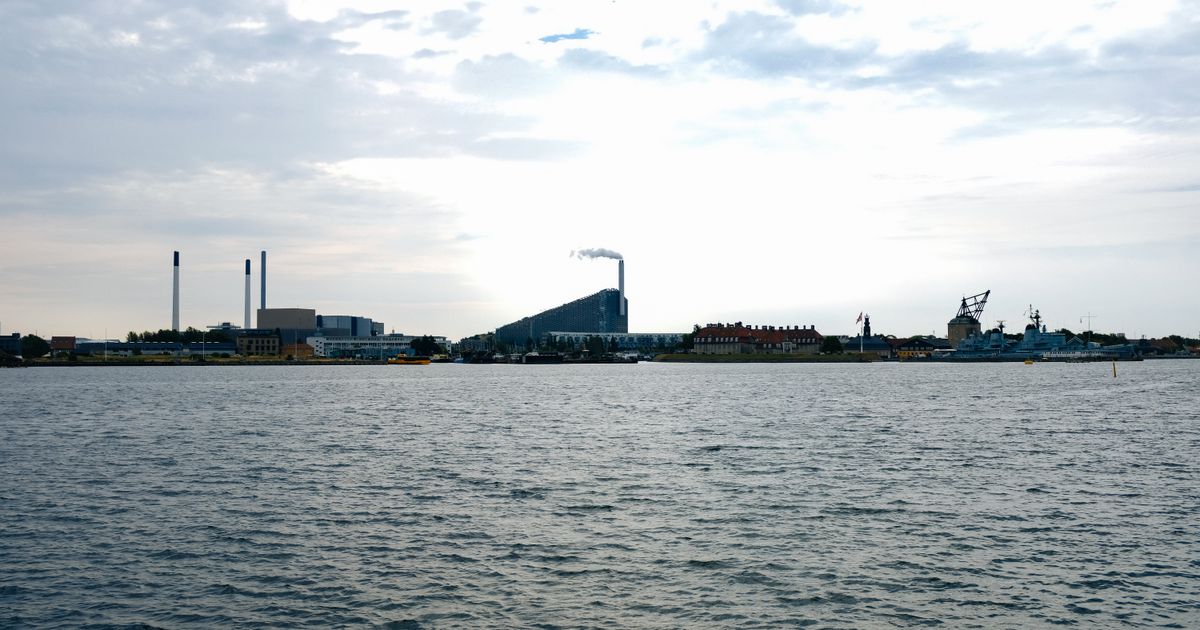
On 1 June 2026, piling rigs went into a 4.4-acre plot in Cheshire, and the UK got its first full-scale carbon capture on an energy from waste plant. Encyclis is bolting an amine scrubbing island onto its Protos Energy Recovery Facility, with Kanadevia Inova as EPC contractor, to catch around 370,000 tonnes of CO2 a year and pipe it to depleted gas reservoirs under Liverpool Bay through the HyNet network. The waste plant behind it burns about 500,000 tonnes a year and rates at 49.9 MW. Handover is slated for mid-2029.
The headlines call it a retrofit. I read it as a balance sheet, and the balance sheet says something the retrofit word quietly buries: the capture plant is not the expensive part, and it is not the part that decides whether the second one, or the fiftieth, ever gets financed. So here are the claims I keep hearing from clients, investors and the occasional council finance officer, and what each one looks like when you run it against the numbers.
"It's a retrofit, so the cost is just the capture island"
No. You're building a mid-size chemical plant next to an incinerator that has to keep running while you do it. Zero Waste Europe's figures for a 350,000-tonne-a-year facility put the capital cost up from about £220 million to £320 million once capture goes in, with annual operating cost climbing from roughly £12 million to £16 million (figures from the Eunomia and Zero Waste Europe cost dispute). That's not a bolt-on box. That's an absorber column, a solvent regenerator, a compression train and a CO2 conditioning unit, all of which need land, steam and a maintenance crew.
At Protos it's two capture lines on that 4.4-acre plot. Two lines. The word "retrofit" makes a credit committee price the thing like an accessory, and I've watched that framing do real damage. The spreadsheet was wrong by year three on more than one deal I've seen, because someone booked capture as a single capex line instead of a second plant with its own availability risk and its own outage schedule. The underlying combustion and thermal conversion technology, a Martin or Hitachi Zosen mass-burn grate in most plants of this class, doesn't get simpler when you hang a solvent loop off the flue gas duct. It gets a new failure mode. And tying the capture train into a live flue gas stream usually means an outage on the host plant, which means lost gate-fee throughput during the tie-in window. That cost rarely shows up in the capture budget, but the host plant feels it on the day the waste keeps arriving and the grate is cold.
"Capturing the CO2 makes the plant carbon-negative"
Only partly, and the part matters for what you can sell. A municipal waste stream releases roughly one tonne of CO2 for every tonne burned, and both sides of that UK cost fight actually agree on the figure. But only the biogenic fraction (food, paper, garden and wood waste, call it half the carbon in typical municipal solid waste) counts as a genuine removal under any credible accounting, the ISO 14064 family included. Capturing the fossil half is avoidance, not removal. So 370,000 tonnes captured is nowhere near 370,000 tonnes of saleable removal credits. It's maybe half that, before a verifier touches it.
And verifiers touch it hard. In 2023 I ran a carbon-credit issuance audit on an Asian facility where a methodology mismatch wiped out 38% of the expected credits at registry review, money the model had booked as good. Most carbon-credit pro formas I see overstate by 30 to 50% at exactly that registry-methodology stage. If you want the long version of why the biogenic split, not the kWh, is the actual product here, I wrote it up in this piece on carbon capture as a biogenic-credit trade. The short version: count the removal-eligible tonnes, not the captured tonnes.
"The capture cost is the number that hits the gate fee"
This is the one that fools people who should know better. There's the cost of CO2 captured, and there's the cost of CO2 avoided, and the gap between those two numbers is where the economics actually live. Amine regeneration drinks steam, and that steam is electricity you no longer sell. The table below stacks what the retrofit actually adds, the headline capture cost included:
| Line the retrofit adds | What it costs you | Where the number comes from |
|---|---|---|
| Amine capture island | £66 to £110 per tonne CO2 captured | Eunomia, for Viridor, UK cluster sites |
| Energy penalty | ~213 kWh of steam per tonne CO2, output you stop selling | 2024 retrofit techno-economic study |
| Transport and storage | a separate HyNet tariff, not inside the capture quote | UK CCUS cluster structure |
| Removal-eligible share | only the biogenic half earns a removal credit | ISO 14064-style verification |
Stack those and the all-in cost per tonne avoided sits well above the headline capture figure, because the energy penalty alone knocks plant efficiency down from about 22.7% to the low 21s in the peer-reviewed retrofit work (the 2024 Sustainability techno-economic assessment). Now, who carries that? The waste tip fee is the only line that's actually contractual. Everything else, the power sale, the credit price, the storage tariff, floats. So unless something underwrites the avoided-cost gap, it lands on the gate fee, and the council pays it. That's the line every feasibility study should open with, and most of them bury it on page forty.
"The operator eats the cost, so it wrecks the economics"
At Protos, the operator doesn't eat it. The UK built a specific contract for this, the Waste Industrial Carbon Capture model, a Contract-for-Difference style payment on each tonne captured and stored, sitting alongside a capital grant from the public infrastructure fund. Energy from waste plants are deliberately excluded from the Dispatchable Power Agreement that gas-plus-capture projects use, because an incinerator's electricity is a secondary output and part of it gets eaten by the capture unit anyway. The government's own CCUS business model documents spell this out.
So the real answer to "who pays" is: the taxpayer through the grant, the waste customer through the gate fee, and a state counterparty through the per-tonne contract. Equity stays in the room as long as the offtake stays in writing, and here the offtake is a government CfD on captured carbon. Strip that contract out of the model and the capture island doesn't clear a single IRR threshold worth financing. That's not a knock on the project; it's how first-of-a-kind ESG-compliant projects get built. It's also a risk I've been burned by. I once underwrote a deal on the assumption that offtake credit support would hold through a sovereign downgrade. It didn't, and the whole structure had to be re-tranched in Q3 2022 at a 240 bps spread I hadn't modelled. Contracts move. When the UK Emissions Trading Scheme starts pricing waste incineration's fossil CO2 later this decade, the capture payment and the carbon liability will move together, and the model has to hold at both ends at once.
"Now it's proven, every EfW plant can retrofit"
Here's where the retrofit-math optimism breaks. Protos pencils because of where it sits. It's on the HyNet cluster, with a shared CO2 pipeline to Liverpool Bay storage that no single plant had to fund alone, and it has a government contract calibrated to its carbon exposure. Take a standalone energy from waste facility 200 miles from the nearest CO2 trunkline and the picture inverts: no shared transport and storage, no cluster tariff, you're financing a pipeline or a liquefaction-and-trucking operation on your own, and the avoided-cost number balloons past anything a gate fee can absorb.
So the math doesn't travel the way the press release implies, and the limits are worth naming plainly. It holds for plants on or near a cluster, with a long-term capture contract and a feedstock biogenic share high enough to generate real removal credits. It doesn't hold below roughly 150,000 tonnes a year, where the fixed cost of an amine train swamps the throughput it's spread across. It doesn't hold for high-fossil-content streams, where most of what you capture is avoidance, not removal. And it doesn't hold for anyone betting on merchant carbon prices instead of a contract. The timeline rarely behaves either: the 2022 Riyadh waste-to-energy feasibility I worked on was delayed 14 months after environmental permitting got reopened twice, and capture only adds another permitting surface to reopen. The same lesson keeps showing up across the sector, from the Gulf's mass-burn programmes to the next round of European retrofits and the wider field of global waste conversion facilities: the asset that got financed at Protos isn't the capture technology. It's the pipeline next door and the contract underneath it. Build those first, or don't bother costing the scrubber.
Sources & Notes
- Project facts for Protos (370,000 t CO2/yr, amine scrubbing, two lines, mid-2029 handover, HyNet storage) come from Kanadevia Inova's June 2026 notice-to-proceed announcement.
- The disputed cost range, the capex jump from £220m to £320m and the one-tonne-CO2-per-tonne-waste figure are drawn from letsrecycle's write-up of the Eunomia versus Zero Waste Europe exchange.
- For the energy penalty and the efficiency drop into the low 21% range, see the 2024 techno-economic assessment of amine-based capture retrofit on a waste-to-energy plant in Sustainability.
- The contract framework, the Waste ICC model and the exclusion from the Dispatchable Power Agreement are set out in the UK government's CCUS business model publications. Registry-audit and re-tranching figures are from my own project work.
Researched and written by OWI editorial staff. Technical review by RWE engineering. AI tools used for drafting assistance.