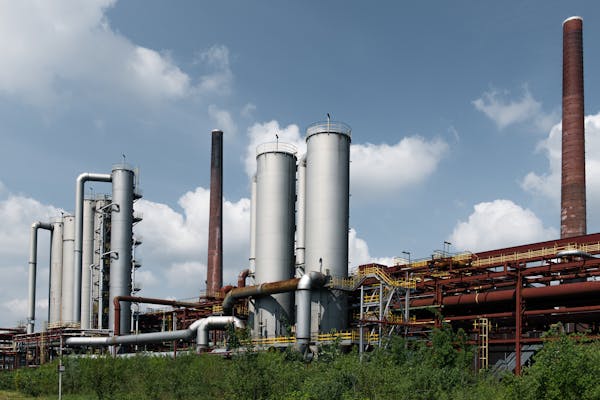
Carbon Capture on Waste-to-Energy Is a Biogenic-Credit Trade with a kWh Byproduct
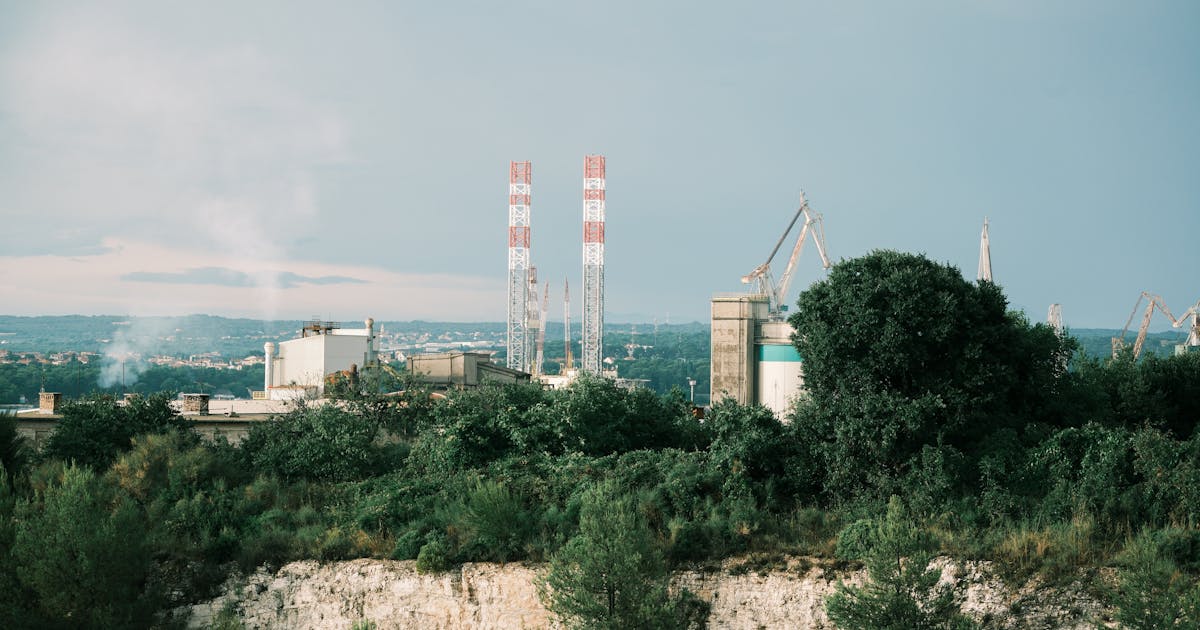
There's a question I ask every developer pitching a carbon capture waste to energy project: which half of the stack do you actually monetize? Half of it, usually. Sometimes less. The kilowatt-hour pays the lights and the tip fee pays the loan - those lines the spreadsheet gets right. But the carbon-capture line is where most of these pro formas quietly collapse, because they treat the fossil CO2 and the biogenic CO2 as if they monetize the same way. They don't. And the Microsoft-Hafslund offtake at Klemetsrud, the only large WTE+CCS deal actually contracted at scale, makes that explicit if you read the structure: 1.1 million tonnes of carbon removal credits over ten years against roughly 350,000 tonnes of annual capture (per ESG Today's reporting on the deal), with only the biogenic share generating tradeable removal credits.
That ratio is not a rounding artefact. It is the business case.
The Biogenic Share Is the Entire Carbon-Removal Trade
A residual municipal waste stream entering a mass-burn plant typically lands somewhere between 45% and 60% biogenic carbon by mass, depending on how aggressively the upstream MRF has pulled out paper and food. At Klemetsrud the operator works with a biogenic share around 50% [Hafslund Celsio operator data, reported via Waste Management World]; at Stockholm Exergi's biomass-CHP project it sits much higher because the feedstock is largely wood. That single percentage governs how many tonnes from the capture train clear as IPCC-aligned removals under a CDR methodology versus how many sit as fossil avoidance - useful, but a different product trading into a different market.
Carbon removal credits from BECCS-class projects have cleared in the $200-$400/tonne range over the past 24 months in the voluntary market for high-durability removals, with Microsoft's published deal book skewing toward the upper end. Fossil-CO2 avoidance at a waste-to-energy facility under an EU ETS regime monetizes implicitly by not buying allowances at roughly EUR 75-90/tonne [EUA forward curve, Q1 2026], and only if the installation is actually in scope. Two cash flows, two counterparties, two risk profiles. And financing one is a long-dated commodity offtake. Financing the other is a hedge against a regulated allowance you may or may not be obliged to buy.
I see waste streams as balance sheets. On this one the asset side has two distinct line items, and developers who staple them together end up with debt cover ratios that don't survive the first sensitivity run.
The Energy Penalty Is Not the Headline Number
Most carbon-capture pro formas I review lead with the capture rate (90%, sometimes 95%) and treat the parasitic load as a footnote. The footnote is the deal. A post-combustion amine train on a residual-waste mass-burn unit typically draws 0.30-0.45 MWh of equivalent steam per tonne of CO2 captured, per the academic and engineering literature on CCUS retrofits to WTE plants. On a 30 MW net facility burning 200,000 tonnes/year of MSW that translates into roughly a 20-30% reduction in salable electricity once the capture island is loaded and the CO2 conditioning train is running.
The IEA puts BECCS removal costs at USD 40-50 per tonne for biorefinery sources where the CO2 stream is already concentrated, and USD 95-120 per tonne for heat-and-power applications where it isn't (per IEA's BECCS tracker). Waste-to-energy sits firmly in the second bucket. The dilute flue-gas stream is the reason. A 2025 European Parliament costing put end-to-end EU capture-and-store at EUR 105-280 per tonne. That's not a discount window; that's the cost of the kWh you forgot to model.
This is the line I make every credit committee sit with. The capture rate is engineering. The parasitic load is finance.
"But fossil CO2 abatement has compliance value under EU ETS, and at EUR 85 a tonne that pays for the capture island anyway."
It does, on a plant that's in scope, with a permit configured for the post-capture flue-gas conditions, and an operator that has actually re-baselined under the post-2024 ETS revision. Three preconditions, none of which are universal. Still, the plant-by-plant variance is wide enough that I've seen the same retrofit pencil at IRR 11% in one jurisdiction and fail the hurdle at the same EUR 85 allowance in another. The waste tip fee is the only line that's actually contractual. The rest is policy.
The Methodology Will Eat Your Margin
In 2023 I ran a carbon-credit issuance audit on an Asian waste-to-energy facility that had pre-sold its credit stream against an issuance forecast modelled on the developer's preferred methodology. The forecast failed registry review at year three - the methodology mismatch killed 38% of expected credits, not because the capture didn't happen, but because the biogenic-share verification chain wasn't tight enough to clear the higher tier. Recertification took eight months and the offtake had to be restructured at a 22% discount. The capture train was fine the entire time. The spreadsheet was wrong by year three.
That experience is the reason I now spend more time on the methodology stack than the engineering stack. Most carbon-credit pro formas overstate by 30-50% at the registry-methodology stage, in my reading. The variables that matter (biogenic share sampling frequency, whether the storage pathway clears Article 6 durability tests, whether the host-country authorization for international transfer is actually in place) are knowable in advance. And they're also routinely glossed over in the financial model.
For operators looking to harden this layer, the Optimal Waste Intelligence platform is one of the data layers I now ask portfolio companies to run, specifically because the waste-stream characterization data is what registry reviewers ask for first. AI waste management software doesn't save a bad methodology, but it does close the audit trail that lets a defensible methodology survive review.
For the bigger picture on how WTE-derived removals trade and where the registry friction is highest, our prior piece on monetizing emissions reductions from waste-to-energy walks through the same plumbing from the credit-buyer side.
Transport and Storage Is a Separate Project
Klemetsrud is the only WTE+CCS project at industrial scale that has solved the storage problem cleanly, and only because Norway's Longship initiative built the Northern Lights ship-and-inject infrastructure underneath it. Capture at the plant is roughly half the capex. The other half is liquefaction, intermediate storage, shipping or pipelining to a sequestration site, and the injection lease itself. The IEA notes that full BECCS storage projects take an average of seven years from FID to operation, against 1-2 years for a bioethanol retrofit where the CO2 stream is already concentrated and a sink may be local.
For waste-to-energy operators in jurisdictions without a Longship-equivalent backbone, the project is two projects: the capture island, which is a known piece of waste-to-energy technology, and the T&S logistics, which is a fresh capital raise against an uncertain offtake. I sat on the Riyadh WTE feasibility in 2022, where the project was delayed 14 months because environmental permitting got reopened twice. Add a CCS scope to that timeline and you've added a second permitting cycle for the storage end. So sponsors who model these in parallel are usually modelling them in serial without realising it.
Where the Net-Negative Story Falls Apart
Net-negative power from waste-to-energy is achievable, narrowly. It requires (a) a feedstock biogenic share above roughly 50%, (b) a capture train above 85% efficiency on the slipstream that actually goes through it, (c) a storage pathway that clears a durability test of 100+ years under whichever protocol the credit is being issued under, and (d) a counterparty willing to pay removal pricing for the biogenic portion. Strip any one of those and the math becomes fossil-CO2 avoidance plus an expensive kWh.
It doesn't work, in my view, on small-scale plants below roughly 100,000 tonnes/year of MSW throughput (the parasitic load eats too much of the electricity revenue and the capex per tonne captured runs above any voluntary-market clearing price I've seen. It doesn't work on facilities with high-contamination or highly variable feedstock, because the biogenic-share verification can't clear a Tier-2 methodology. And it doesn't work in jurisdictions where the storage pathway is more than 300km from the plant gate without dedicated pipeline infrastructure, because trucked or shipped CO2 to a non-purpose-built sink lands in a methodology gray zone that most CDR buyers won't touch. Equity stays in the room as long as the offtake stays in writing) and the offtake will not stay in writing if any of those four conditions wobble.
I've been wrong on adjacent calls. I underwrote a 2021 deal assuming offtake credit support would hold through a sovereign downgrade. It didn't. The structure had to be re-tranched in Q3 2022 at a 240 bps spread I hadn't modelled. So the lesson I took into the WTE+CCS space is that political and counterparty risk on the credit-buyer side is the part of the model that breaks first. Methodology risk breaks second. Engineering risk breaks third, if at all.
So What Actually Pencils
The deals I have seen clear are the ones structured around the biogenic credit as the primary cash flow, with the kilowatt-hour and the gate fee as supporting lines, and the fossil CO2 abatement treated as compliance optionality rather than revenue. The Microsoft-Klemetsrud structure is exactly that shape: a removal-credit offtake against the biogenic half, with the fossil half reducing Oslo's municipal Scope 1 by roughly 20% as a public-sector bonus. The kWh barely appears in the deck.
That's what carbon-negative waste energy looks like when the financing actually closes. It isn't a power play with a green wrapper. It's a long-dated, methodology-sensitive removal-credit offtake whose host facility happens to also run a residual-waste boiler. The kilowatt-hour is the byproduct. The biogenic tonne is the trade. Model it any other way and the spreadsheet will be wrong by year three.
Sources & Notes
- IEA, Bioenergy with Carbon Capture and Storage - cost ranges of USD 40-50/t for concentrated biorefinery sources and USD 95-120/t for dilute heat-and-power flue gas; pipeline of ~60 Mt CO2/yr planned by 2030 against ~185 Mt/yr needed under the Net Zero Emissions scenario.
- ESG Today, reporting on the Microsoft-Hafslund Celsio offtake at Klemetsrud - 1.1 million tonnes of removal credits over 10 years, ~350,000 tonnes/year capture, ~50% biogenic share generating credits, project start 2029, storage via Northern Lights.
- MDPI Energies, Review on CCUS Sections Applied to Waste-to-Energy Plants, 2025 - parasitic-load and capex ranges for post-combustion amine retrofits to MSW mass-burn; reference plants at Saga City, Twence, Klemetsrud, Duiven, Copenhagen.
- Waste Management World, 10+1 Things to Know About CCUS and Waste-to-Energy - biogenic-share data for Klemetsrud (~60% in older operator data, reset to ~50% in the Microsoft contract baseline).
- EU end-to-end capture-and-store cost band of EUR 105-280/tonne (~USD 122-326/tonne) - referenced from a 2025 European Parliament presentation on CCUS economics; figures used here as a directional sanity check rather than as a project-specific cost. RWE project experience (Riyadh 2022, Asian credit-audit 2023) used for anchored examples; figures cited are recollected from the engagement, not from a public source.
Researched and written by OWI editorial staff. Technical review by RWE engineering. AI tools used for drafting assistance.