Which Waste Projects Actually Qualify for the Clean Electricity Tax Credit in 2026?
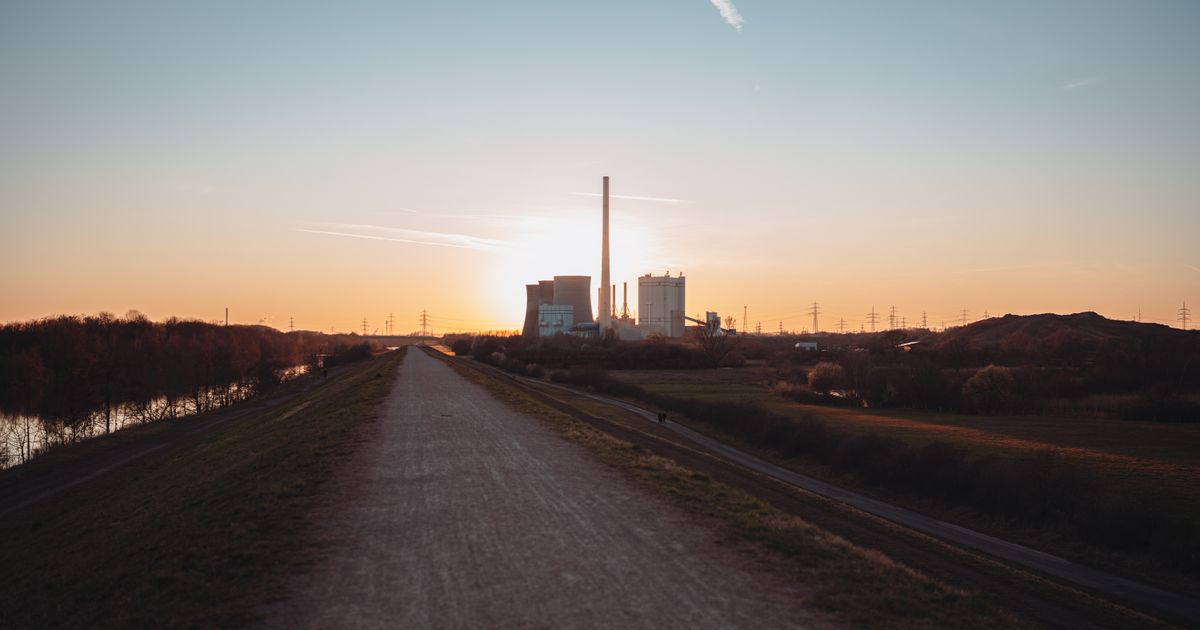
A waste-to-energy pro forma crossed my desk last quarter with the 48E investment credit modeled at the full 30 percent of capex, sitting in the returns like it was already banked. It wasn't. The plant was a mass-burn line, and mass-burn doesn't clear the one line the clean electricity tax credit actually turns on: a lifecycle emissions rate at or below zero grams of CO2 per kilowatt-hour.
That gap, between what an operator assumes qualifies and what the code measures, is the most common mistake I see when a client brings me a capital stack built on the clean electricity tax credit. The tech-neutral credits, 45Y for production (the PTC) and 48E for investment (the ITC), replaced the old technology-specific ones for anything placed in service after December 31, 2024. They don't ask whether your feedstock is renewable. They ask for a number. Five beliefs come up in almost every diligence call, and none of them survive contact with the regulation.
"It's renewable, so it qualifies"
The design of 45Y and 48E is that Congress stopped naming technologies and started measuring output. A qualified facility needs a greenhouse-gas emissions rate not greater than zero, counted in grams of CO2-equivalent per kilowatt-hour, under the final Treasury and IRS rules published on January 15, 2025. Solar, wind, hydro, geothermal and nuclear are treated as zero by default. Anything that makes power by burning something is a combustion and gasification facility, and those don't get the default. They have to prove zero through a lifecycle analysis, and that's a much harder room to sit in.
Mass-burn municipal solid waste doesn't get near it. Take a Martin grate line running mixed household waste: by mass, a third to a half of what it burns is fossil-derived, plastics, synthetic textiles, treated wood. Burn a tonne of plastic and you get two to three tonnes of fossil CO2 (per EPA figures and published incineration life-cycle studies). The biogenic half has a fair claim to carbon-neutral; the fossil half doesn't, and lifecycle accounting counts every gram of it. US municipal waste combustion runs somewhere between 10 and 20 million tonnes of CO2-equivalent a year, depending on how the biogenic split gets drawn. And none of those readings lands at or below zero.
It's the same confusion I wrote about in when renewable energy from waste actually counts as clean power: three regulatory regimes, each with its own definition of clean, and a fuel that clears some tests and fails others. Renewable is a word about where the fuel came from. The credit is a test on what leaves the stack. They aren't the same gate, and the distance between them is exactly where the clean electricity tax credit lives or doesn't.
"The statute literally says 'waste energy recovery property'"
It does, and it's the most expensive false friend in the code. Revenue Procedure 2025-14 sets out the facility types that Treasury deems to have an emissions rate not greater than zero:
wind, hydropower, marine and hydrokinetic, solar, geothermal, nuclear fission, fusion energy, and waste energy recovery property that derives energy from another source specified in this list.
Read the last clause twice. Waste energy recovery property qualifies only when it pulls energy from something already on the list, like waste heat coming off a geothermal or nuclear process. It isn't the plant burning your municipal waste. The term reads like it was drafted for waste-to-energy, but it was drafted around it. The category was written for plants that capture industrial waste heat, the kind of bottoming-cycle recovery Section 48 originally rewarded, not for a tipping floor feeding a boiler. I've watched a model claim that categorical exemption off the phrase, then quietly delete the line once counsel read the dependent clause.
"Our digester and gas-conditioning skid gets the investment credit"
Over the past year, this one moved in the wrong direction. Under the final 48E rules, anaerobic digesters and gas-conditioning equipment aren't part of a qualified facility; they aren't generation, so they don't earn the investment credit. The renewable natural gas industry got left leaning on work performed before January 1, 2025, under the older Section 48 biogas credit that lapsed at the end of 2024. If your stack assumed the credit riding on the upgrading train, the compressors and membrane skids and the whole expensive part, that assumption's gone.
I've seen this failure mode from the carbon side, too. In 2023, on a carbon-credit issuance audit for an Asian facility, I watched 38 percent of the expected credits disappear at the registry's methodology review, because the baseline was wrong from the start. A tax-credit model breaks the same way, only earlier and more quietly: the emissions-rate analysis or the qualified-facility definition erases the line before a shovel moves. A carbon credit you can't register is a footnote. A tax credit you can't substantiate is a restated return.
Where biogas can still work is the generator itself. A landfill-gas or digester-gas power island, say a Jenbacher or Caterpillar genset burning the gas, can clear the zero line on a lifecycle basis, because combusting methane that would otherwise vent beats the counterfactual. But the credit attaches to the generation equipment, not to the gas plant feeding it. That one distinction decides whether you're modeling a credit on a fifth of the capex or on most of it, a spread wide enough to reshape the returns across the kind of global waste-to-energy projects a developer actually weighs.
"We've got runway until 2032"
Not anymore, and here the news runs oddly in waste's favor. The IRA set these credits running; the 2025 budget reconciliation act rewrote the clock. Solar and wind get cut off fast: begin construction on or after July 4, 2026 and land in service after December 31, 2027, and the credit is gone (per published law-firm analyses of the act). Every other qualifying technology, which is where a compliant waste generation facility sits, keeps the credit until a phase-down that begins in 2034 and closes out by 2036.
So a waste project that can clear the emissions gate now has a longer runway than the solar farm going up beside it. That's the inversion nobody prices in. The catch is the same small word: if. You still have to clear zero, and mass-burn still can't, so those extra years only reach the narrow set of projects that qualify in the first place. And a longer credit runway doesn't fix the thing that really reprices a waste deal, which is merchant-power exposure once the contracted revenue runs thin.
"The tax credit is what makes it bankable"
Even for a facility that clears every gate, the credit is a byproduct on a byproduct. At a waste-to-energy plant the kilowatt-hour is already the byproduct; the gate fee is the product, and it's the only line in the model that's genuinely contractual. It rides on the electricity, which rides under a waste-supply agreement signed for disposal, not for power.
Then who books it? Most US waste-to-energy capacity is municipally owned or run on thin margins. A city carries no federal tax bill, so it can't use a credit the ordinary way; it needs elective, or direct, pay under Section 6417 to draw the credit as cash from Treasury. A private operator with no tax appetite sells it under the transfer rules in Section 6418, and transferred credits change hands at a discount to face. With prevailing wage and apprenticeship on the job, that headline is 30 percent of capex or about 3.0 cents a kilowatt-hour after the 2025 inflation adjustment (per IRS figures); miss the labor standards and both fall by roughly four-fifths. Either route, the cash reaching the project is smaller than the headline.
That's why I keep the incentive in the "upside" column, not the "foundation" column, when a client is sizing a stack. Not every waste facility is locked out, to be clear. Small landfill-gas gensets, digester-gas power islands, and plants that pair a genuinely high biogenic fraction with carbon capture can pencil to zero or below, and the combustion-and-gasification lifecycle rules are still being written in a direction that might pull a few more across. But that's a narrow door, and it isn't the mass-burn fleet. It's also the part investors probe hardest on an ESG-compliant waste project, because the credit that survives diligence is the one bolted to equipment that can actually substantiate a zero rate.
So underwrite it accordingly. Get the stack in front of a team that has priced waste-to-energy tax equity before you take it to a lender, because a bank will advance against a twenty-year municipal disposal contract long before it lends against a credit that hangs on a lifecycle methodology still being drafted. Anchor the return on that credit instead, and you've bet the plant on the one line a Treasury guidance update can move.
Sources & Notes
- The zero-emissions test and the combustion-and-gasification lifecycle rule come straight from Treasury and the IRS's final 45Y and 48E regulations, published in the Federal Register on January 15, 2025.
- For which facility types Treasury actually deems zero-emitting, and why anaerobic digesters got left out, I leaned on Troutman's read of the final rules and the Revenue Procedure 2025-14 emissions table it summarizes.
- The fossil-versus-biogenic split behind the tonnage math draws on EPA's Facts and Figures on materials and waste alongside published municipal-waste incineration life-cycle assessments.
- On the post-2024 phase-down, fast for wind and solar and 2034-onward for everything else, Pierce Atwood's alert on the 2025 reconciliation act lays out the construction-start and placed-in-service deadlines.
- Credit values, the 2025 inflation adjustment, and the transfer and direct-pay mechanics under Sections 6418 and 6417 are compiled in Crux's tech-neutral credit guide.
Researched and written by OWI editorial staff. Technical review by RWE engineering. AI tools used for drafting assistance.
Cite this article
Catherine Liang, “Which Waste Projects Actually Qualify for the Clean Electricity Tax Credit in 2026?,” Optimal Waste Intelligence, July 30, 2026, https://optimalwasteintelligence.com/posts/waste-energy-tax-credits.
You’re welcome to quote this article with attribution and a link to the original.