SB 1383 Compliance Costs More Than the Trucks. The Procurement Rule Is Why.

Show me a California jurisdiction's SB 1383 compliance budget and I can usually tell inside a minute whether anyone read the regulation past the collection section. Most stopped there. The green cart, the extra route, the driver, that's the line they funded, and CalRecycle's own cost work put it at roughly three to five dollars a month on the average household bill. That's not nothing. It's also the cheap part.
I've spent three decades negotiating deals across manufacturing, energy, and environmental ventures, and I run a company that commercializes waste-to-energy, bioenergy, and carbon-market projects. So I read a mandate the way I read a contract: who pays, what's contractual, and where the economics actually close. Read the California organics recycling law that way and it stops looking like a recycling program. It looks like a demand mandate with penalties attached, and the obligations that cost the most sit in the sections most budgets skip. Below are the beliefs I hear most often about SB 1383 compliance, and what each one leaves out of the number.
"SB 1383 is a recycling law."
It isn't, and the framing matters because it sets the wrong budget. SB 1383 is a short-lived climate pollutant law. The target, per CalRecycle, is a 75% cut in organic waste sent to landfills by 2025 against a 2014 baseline, plus recovery of 20% of still-edible food. The point was never the compost. It was the methane that food throws off as it rots in a landfill (landfills are the third-largest source of human-caused methane in the US, by EPA's greenhouse gas inventory), which is why the rule lives in air-quality policy and not in the recycling code.
Why does that distinction reach the balance sheet? Because a recycling program is something a city runs when it pays. A climate mandate is something a city funds whether it pays or not, backed by penalties. And the organic waste diversion mandate stacked a second obligation on top of collection that a plain recycling framing hides: procurement. Every jurisdiction has to buy back a set volume of the product its own diverted organics become, pegged at 0.08 tons of recovered organic material per resident per year. Collection is the cost of getting the banana peel out of the black bin. Procurement is the cost of buying the finished compost, mulch, or renewable gas back. Two separate bills, and most cities budgeted one.
"The real cost is the green cart."
The cart is the visible cost, so it gets the attention. It's also the one most under control. Per the League of California Cities, that household increase lands in single-digit dollars a month and the average business closer to seventy to ninety, which is a rate conversation a council can hold in public without much drama. The costs that break budgets are quieter.
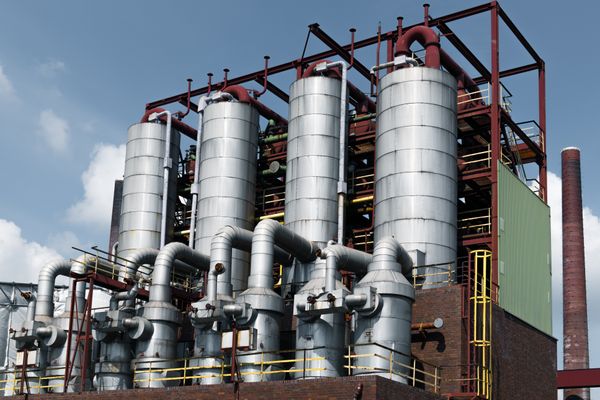
The first is the buy-back I just described. The second is capacity that doesn't exist yet. CalRecycle has estimated the state needs somewhere between 50 and 100 new or expanded composting and anaerobic digestion facilities to process on the order of 26 million tons of organics a year. A city can roll out green carts in a season. Permitting, financing, and building the digester to process what those carts collect takes years, and the developers behind that capacity, the waste-to-energy services and zero-waste-to-landfill solutions a compliant program actually leans on, need offtake certainty before they'll close financing. When the processing isn't there, the diverted tonnage has nowhere to go, and the city still owns the obligation.
Put the buy-back in units a public-works director can feel. A city of 100,000 residents owes on the order of 8,000 tons of finished organic product a year, product it has to specify, purchase, take delivery of, and actually put somewhere, whether that's compost on medians, mulch on slopes, or gas it pays a premium to buy. Compost doesn't move itself. The jurisdictions scrambling now are the ones that treated procurement as a check to write rather than a logistics program with staff and storage attached.
One caveat worth stating plainly: none of this describes every jurisdiction equally. The clearest exception is the city that already ran curbside organics before 2022, which may see little rate movement. Visalia planned none; San Ramon pushed rates up around 30% to stand its program up. Small rural jurisdictions got their procurement obligation delayed to 2027. If you already had the route and a digester taking your feedstock, SB 1383 mostly formalized what you were doing. The pain concentrates in cities that had neither, which is most of them.
"If we divert the tonnage, we hit the target."
This is the belief that turns into a nasty surprise at the CalRecycle audit. Diverting organics into a green cart isn't the same as reducing what reaches the landfill, and the gap between those two things is where SB 1383 compliance quietly fails.
In 2024, StopWaste, the public waste agency for Alameda County, surveyed about a hundred California jurisdictions on whether they had met their procurement targets for 2023. Only about half said yes. These aren't lazy cities. They diverted the tonnage. What they couldn't do was find enough finished product to buy, or enough processing capacity to turn feedstock into product in the first place. And the academic record on diversion bans is blunter than most policy decks admit:
Of the first five U.S. states to adopt food-waste bans, only Massachusetts produced a measurable reduction in landfill disposal, according to a 2024 analysis in Science.
Read that twice if you're budgeting off a diversion percentage. A ton in the green cart that a contaminated load bounces back to landfill, or that a full facility won't accept, counts for nothing at audit and still cost you to collect. Contamination is the tax nobody prices in. One fouled load, a few plastic bags and a stray battery in the wrong cart, can downgrade a whole truckload at the composter's tip face, and the facility either charges a contamination surcharge or routes it to the landfill on the city's dime. Neither ending shows up as diversion. Proving a load is clean enough to count, and clean enough for a composter to take without a rejection fee, is a measurement problem before it's a hauling problem, which is why waste intelligence software like Optimal Waste Intelligence earns its keep on the contamination line rather than the collection line. A city that can document a clean stream negotiates a better gate fee. One that can't pays the rejection.
"The RNG and the carbon credits pay for it."
This is my world, so let me be precise about who actually gets paid. Route a city's food waste to an anaerobic digester and it can become renewable natural gas. That gas has value, and it isn't trivial: depending on feedstock it can run as high as $80/MMBtu (dairy digesters sit near the top, urban food waste well below), with a Low Carbon Fuel Standard credit stacked on top. Anaergia's Rialto Bioenergy Facility digests over 175,000 tons of organics a year into pipeline-grade renewable gas. That's a genuine revenue line, and it's the reason renewable energy from waste gets built at all.
But the mismatch is where it gets expensive. That revenue accrues to whoever owns the digester, not to the jurisdiction paying a gate fee to deliver feedstock into it. The city carries the contractual cost; the developer banks the merchant upside. And the upside is soft. LCFS credits traded near $200/tonne a few years back and have since slid to around $60/tonne as the market oversupplied. You can't underwrite a compliance budget against a credit that halved. The tonnage is the byproduct here; the avoided landfill cost and the credit are the product, and they settle on two different balance sheets. Pulling that apart, contracted cost on one side and volatile merchant revenue on the other, is the first thing a lender does, and it's the same test I walked through in what investors actually verify on an ESG waste-to-energy project. A project gets built on its contracts, not its technology, and a compliance program answers to the same rule. A city that assumes the credit will cover the mandate has confused someone else's revenue for its own.
It gets sharper on the contract. Where feedstock is tight, a good digester will flip the gate fee and pay for clean organics; where it's oversupplied, the city pays to take them away. Same load, opposite sign, and the sign swings on local processing capacity the city doesn't own or control. That's the line I'd stress-test hardest before anyone signs a fifteen-year delivery commitment priced off next year's credit market.
There's a public version of this coming. California's own biomethane program, the one the utilities commission runs, is the demand side of SB 1383 wearing a utility procurement hat. It helps the projects pencil. It doesn't write a check to any city's compliance account.
"This is a California problem."
For now the biggest bill is California's. Not for long. Twelve states now carry some form of food waste diversion requirement, and the newer ones borrowed the parts that bite. Washington's law took effect on January 1, 2026, reaching businesses that throw off more than a couple of rolling carts' worth of organics a week. Massachusetts has run a commercial organics ban since 2014 and is weighing dropping its threshold toward zero. Anyone tracking food waste diversion requirements across states should watch which mechanism travels, because a plain disposal ban and a demand mandate aren't the same instrument.
The one worth watching is California's idea that the government has to buy the output back. A disposal ban tells a generator to stop landfilling. A procurement requirement tells the jurisdiction to create demand for the finished product, which is what turns a recycling rule into a market. That's the export-grade piece of SB 1383, and it's the one other states are starting to copy. That demand floor is also exactly what a composting or digester developer needs to finance a plant, which is the quiet upside buried in the cost: California's approach, for all the grief it causes budgets, may end up building more processing capacity than a disposal ban alone ever would.
Enforcement is what makes any of it non-optional. Since January 1, 2024, per CalRecycle's enforcement rules, a California jurisdiction that fails to enforce faces administrative penalties up to $10,000 a day under 14 CCR 18997.2, and the generator penalties it passes down climb from $50 to $500 a violation as they repeat. Penalties change how a city treats a line item. A voluntary program gets cut in a lean budget year. A mandate with a five-figure daily penalty gets funded first, ahead of things residents can actually see.
So price it honestly. The green cart was never the expensive part of SB 1383. Twelve states are about to find out which line was.
Sources & Notes
- The 75% landfill-diversion and 20% edible-food-recovery targets, and the short-lived-climate-pollutant framing, come straight from CalRecycle's SB 1383 overview.
- The generator and jurisdiction penalty tiers under 14 CCR 18997.2, and the January 1, 2024 enforcement start, are laid out on CalRecycle's jurisdiction enforcement page.
- Household and business rate figures, the San Ramon and Visalia examples, and the 50-to-100-facility capacity estimate are drawn from the League of California Cities' Western City briefing on funding SB 1383.
- On the procurement shortfall and the 0.08-tons-per-resident formula, I'm relying on Waste Dive's reporting of a 2024 StopWaste survey of California jurisdictions.
- The Massachusetts finding is from a 2024 study in Science. RNG value ranges and LCFS credit prices track BioCycle's LCFS primer, and the state biomethane program is the CPUC's.
Researched and written by OWI editorial staff. Technical review by RWE engineering. AI tools used for drafting assistance.
Cite this article
Alex Mardikian, “SB 1383 Compliance Costs More Than the Trucks. The Procurement Rule Is Why.,” Optimal Waste Intelligence, July 28, 2026, https://optimalwasteintelligence.com/posts/sb-1383-organics-diversion.
You’re welcome to quote this article with attribution and a link to the original.