Waste-to-Energy Ash Is an Offtake Problem, Not a Disposal Line
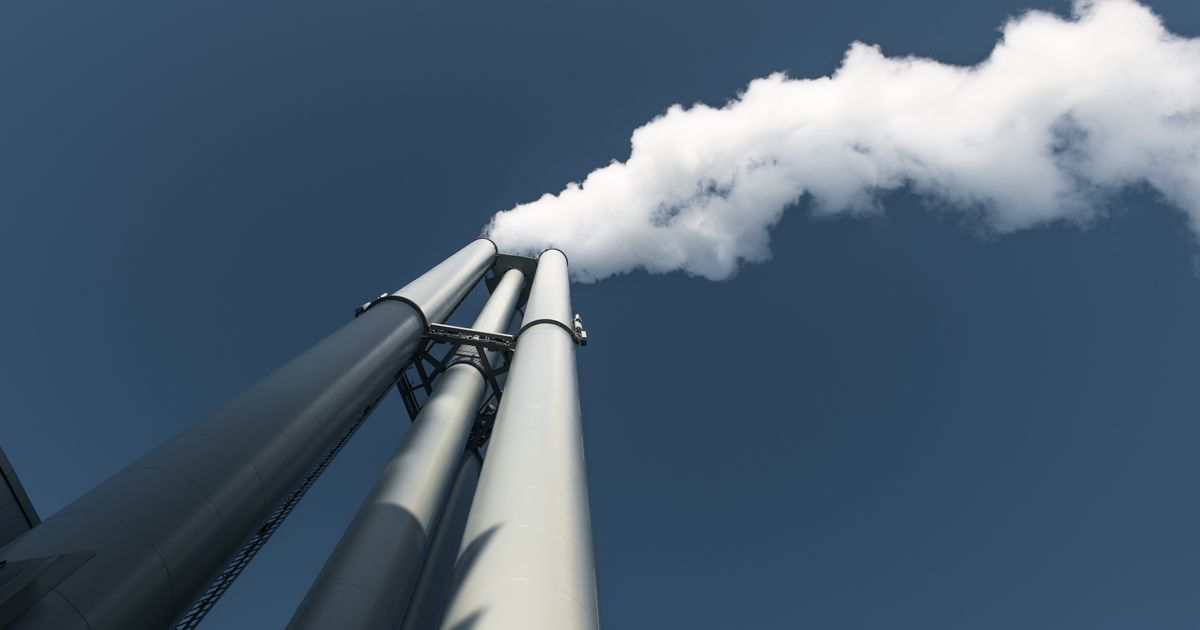
Walk a mass-burn floor at shift change and the operators will tell you the boiler is the boring part. The Martin grate runs, the turbine spins, the export meter ticks over at roughly 550 kWh a ton (per EPA figures). Then someone points at the ash crane dragging grey clinker out of the quench pit, and the mood changes. That pile is about a quarter of everything that came through the tipping hall by weight, and in most US projects nobody has a plan for it past a truck and a landfill contract that got signed in feasibility and never opened again.
So let me put a stake in the ground, and most of the industry will disagree with me. Waste to energy ash disposal isn't a disposal problem. It's an offtake problem. We treat the ash as the stuff you get rid of, when it's really two very different products plus one genuine liability, and the reason it ends up back in a landfill has almost nothing to do with the furnace and almost everything to do with a market nobody bothered to build. I've watched the waste-to-energy technology on the hot side get more capable every year I've been in this business. The ash side still gets improvised on the back of a napkin.
A quarter of the tonnage doesn't burn to nothing
One number should anchor every ash conversation. Combustion residue runs 15 to 25 percent of processed municipal waste by weight, and 5 to 15 percent by volume, per the EPA's summary of energy recovery from waste combustion. Mass burn shrinks volume beautifully. It shrinks mass far less than the brochures suggest. A ton in, and something like 200 to 250 kg walks out the back as ash that still has to go somewhere real.
And it isn't one material. Roughly 80 to 90 percent of that ash by weight is bottom ash, the heavy grey aggregate that tumbles off the end of the grate into the quench, per the same EPA data. The other 10 to 20 percent is fly ash and air pollution control residue, the fine fraction the baghouse and scrubber strip out of the flue gas before it reaches the stack. Same plant, same hour, two materials that could not be further apart in what they're worth and what they'll cost you. One is close to a construction product. The other is close to hazardous waste. Averaging them into a single line called "ash" on the pro forma is the first mistake, and I've made it myself.
Bottom ash is an aggregate business, and the US mostly won't run it
What stings, if you develop projects in the Americas, is the contrast with Europe. Over there bottom ash is a feedstock, not a waste. In 2022, European plants thermally treated on the order of 100 million tonnes of residual waste and produced roughly 20 million tonnes of bottom ash, and a little over half of that gets used in construction, about 54 percent by weight averaged across the continent, according to a review of bottom ash utilisation practice published in the journal Waste Management. In Denmark, Germany and France the reuse rate sits near 100 percent. The processed ash becomes road base, embankment fill, the granular layer under a car park.
Before the mineral fraction ever becomes aggregate, the metals come out. Incinerator bottom ash carries something like 4 to 8 percent ferrous and around 2 percent non-ferrous metal by weight (copper, aluminium, zinc, with traces of precious metal hiding in the fines), according to the peer-reviewed literature on metal recovery from bottom ash. Run it past an overband magnet and an eddy current separator, a Steinert or SGM line, and you're pulling on the order of 60 kg of ferrous off every tonne of ash plus the higher-value non-ferrous, before what's left goes off to weather in the yard. That's a revenue stream. In most of the US it's just a stockpile that never leaves.
So why doesn't the US run the same business? The honest answer is the one I keep landing on across every market I've worked. It fails at offtake, not at technology. The screens and separators are the identical machines Europe uses. What Europe has that most US states don't is a spec that lets processed bottom ash into a road, an end-of-waste pathway, and a contractor who'll buy the aggregate because it's cheaper than virgin stone and legal to place. Strip out the buyer and your "product" is just a differently-shaped waste.
"There's no market for it here, and the DOT will never let us put ash in a road."
I hear a version of that in almost every feasibility meeting, and it's half right. Most state departments of transportation don't carry a bottom ash aggregate spec today. But that's a policy and permitting gap, not a law of physics, and closing it is exactly the kind of work a developer is supposed to do before financial close, not shrug at three years later. Florida and a handful of others have moved. The point isn't that US bottom ash beneficial reuse is easy. It's that we quit on it at feasibility and then act surprised when the ash goes to a landfill, and then still put "zero-waste-to-landfill" on the website. Plants that market zero-waste-to-landfill solutions while trucking a quarter of the input mass to a monofill are counting on nobody reading the mass balance.
Fly ash is the liability you can't average away
Now the other 10 to 20 percent. Fly ash and APC residue is where the metals, salts and dioxins concentrate, because concentrating them is the entire job of the air pollution control train. It's strongly alkaline, it's chloride-rich, and its leachate can fail the toxicity test. In the US, if the residue exceeds the limits under 40 CFR 261.24 on the TCLP procedure, it's a hazardous waste, and every part of how you handle it changes. Europe mostly treats APC residue as hazardous by default and keeps it in its own stream.
The common US convention is to blend bottom ash and fly ash together and manage the mix as a single non-hazardous stream. That works, legally, because the large clean bottom ash fraction dilutes the nasty fine fraction below the regulatory threshold. But dilution as a compliance strategy carries a cost you don't see until the feedstock moves. Push more PVC, more treated wood, more batteries through the front end, and the fly ash chemistry shifts under you.
I watched exactly that happen. On a plant I was advising, the combined ash passed TCLP comfortably for two years, and then in 2023 it failed, twice. A change in the commercial waste mix, more construction-and-demolition fines coming through one winter, drove the lead and cadmium leachate up, and two consecutive quarterly samples came back over the limit. Overnight the blend was a candidate hazardous waste, the non-hazardous monofill refused the load, and disposal went from a line we barely thought about to the scariest number in the operating budget while we scrambled to stabilise it. Nobody in that room had modelled the possibility that the ash classification can change without a single thing changing inside the plant.
Treating the fly ash is doable. Phosphoric acid stabilisation, cement solidification, washing, even vitrification, any of them can get the residue to pass and go to a cheaper landfill, or in a few markets into cement, as laid out in a 2022 Waste Management study on stabilising WTE fly ash. But the cost gap is the whole point. Landfilling raw WTE ash runs roughly $10-$50/ton depending on the market; treating it first runs more like $50-$200/ton (an industry range, consistent with what I've paid). Model the ash at the low end, then find yourself at the high end in year three, and your disposal opex has quietly tripled on a quarter of your throughput.
What the ash line does to a pro forma
Put it together and the ash stops being a rounding error. It's a variable-cost line riding on 20 to 25 percent of your tonnage, with a disposal price that can swing four-fold on classification, and an upside from metals and aggregate that most US models score at zero. A downside that can quadruple sitting next to an upside booked at nothing is exactly backwards from how you'd want to carry a quarter of your throughput. The capex headlines that dominate every waste-to-energy plant cost discussion get diligenced to death. The ash offtake, the thing that actually decides whether you're running a recycling asset or a very expensive landfill pre-processor, gets a placeholder.
My rule now, after getting it wrong, is to underwrite bottom ash and fly ash as two separate offtakes with two separate counterparties, and to treat the aggregate buyer with the same seriousness as the power offtaker. If the ash offtake math won't close at feasibility, that's telling you something about the whole project. On a Dominican RDF offtake in 2022 I learned how fast an offtake constraint bites: the cement kiln's chloride limit capped our throughput at 60 percent of nameplate, and chloride is the very chemistry that complicates fly ash reuse downstream. Offtake constraints don't announce themselves in the data room. The site visit and the counterparty's own permit tell you what the model leaves out.
None of this holds everywhere, and I want to be clear about where it breaks. Below roughly 200 tonnes a day, an on-site metals and ash processing line usually can't justify itself, and you're stuck trucking to a regional processor if one even exists. With wet or high-organic feedstock, more of your mass leaves as moisture and less as marketable aggregate. And in a jurisdiction with no aggregate spec and no cement kiln inside economic trucking distance, the beneficial reuse case genuinely may not close, in which case the honest move is to price the full landfill route and stop calling the plant zero-landfill. I'm not arguing every plant can sell its ash. I'm arguing every plant should know, at feasibility, which of those worlds it's in, because that's the diligence a serious renewable energy from waste project lives or dies on, and it's where the ESG claim gets tested.
So back to the position I opened with. A waste to energy plant reduces the bulk of what a city throws away by most of its volume, and cities build them for exactly that reason. But it does not make the mass disappear, and a quarter of it leaves out the back as ash that is either an aggregate-and-metals business you chose to run or a landfill bill you chose to ignore. The furnace was never the hard part. The ash was, it still is, and the projects that treat it as an afterthought are the ones I watch struggle three years in. Build the ash offtake before you pour the foundation, or admit you built a landfill with a turbine on top.
Sources & Notes
- The 15 to 25 percent ash-by-weight figure, the 80/20 bottom-to-fly split, and the roughly 550 kWh per ton export number all come from the EPA's overview of energy recovery from MSW combustion, which also spells out the RCRA framing and the 40 CFR 261.24 hazardous test.
- Europe's reuse rates (about 54 percent on average, near 100 percent in Denmark, Germany and France) and the ~20 million tonne bottom ash figure are from Blasenbauer and colleagues' review of bottom ash utilisation practice across Europe in Waste Management.
- On the fly ash side, the hazardous-classification problem and the stabilisation options draw on a 2022 Waste Management paper on stabilising WTE fly ash for landfill or cement use. The $10-50 and $50-200 per ton cost bands are my own working numbers, in line with that literature.
- Metal content of bottom ash (roughly 4 to 8 percent ferrous, around 2 percent non-ferrous) is drawn from the review of metal recovery from incineration bottom ash in the Journal of Hazardous Materials.
- The 2023 TCLP reclassification and the 2022 Dominican chloride cap are from my own project files, lightly anonymised.
Researched and written by OWI editorial staff. Technical review by RWE engineering. AI tools used for drafting assistance.
Cite this article
David Ayala, “Waste-to-Energy Ash Is an Offtake Problem, Not a Disposal Line,” Optimal Waste Intelligence, July 27, 2026, https://optimalwasteintelligence.com/posts/wte-ash-management.
You’re welcome to quote this article with attribution and a link to the original.