The Gulf Bet on Mass-Burn. Here's What the Numbers Look Like Two Years In.
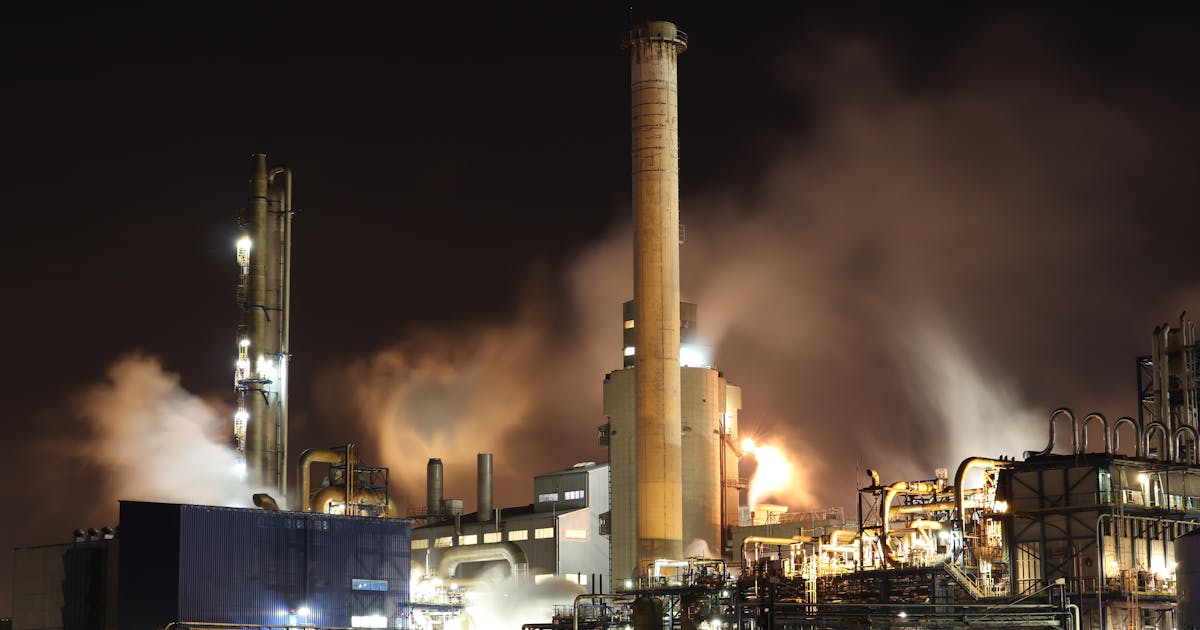
Stand on the tipping floor at Warsan in August and the first thing you notice is the smell - not garbage exactly, but hot garbage, the warm-cardboard-and-orange-peel undertone of MSW that's been sitting in a 70-meter-deep bunker. The second thing you notice is how quiet five 1,133-tonne-per-day combustion lines sound from the operator gallery. That's the surface impression of waste to energy Middle East at its current frontier: Dubai's Warsan plant chewing through 5,666 tonnes of municipal solid waste a day across five lines, exporting up to 220 MW to DEWA's grid, running at what BESIX claims is roughly 30% net energy efficiency, per the BESIX September 2024 commissioning announcement.
Thirty percent on MSW is genuinely good. Most European mass-burn plants land between 22% and 27% net electrical [based on commissioning data from comparable Northern European mass-burn projects], and that's with cleaner feedstock. But the Gulf number holds despite a waste stream that's roughly 50% organics by weight, with moisture content that would freeze a boiler in northern Germany [Gulf operator feedstock data]. The reason it works (and this matters for every WTE Gulf states project still on a drawing board) is plastic-rich feedstock (Gulf MSW runs maybe 18-22% plastic, well above EU averages [operator audits, urban GCC sites]) combined with combustion air preheating tuned for ambient temperatures that don't drop below 18°C in February. Heat balance changes when your combustion air inlet is permanently summer.
I spent twenty years in plant operations before writing about them, and the marketing version of a facility is never the operational version. Warsan is the marketing version everyone in the region is chasing right now. Whether the chase makes sense depends on questions the project sheets don't usually answer.
The Gulf Math, Source by Source
Here's what the regional numbers actually say. The GCC collected 267.7 million tonnes of waste in 2023, of which only 192 million tonnes received any kind of treatment, with the rest going to landfill, per the ORF Middle East GCC analysis. Over 85% of regional waste still goes to landfill and less than 5% is recycled. That's the runway. And it's why every Gulf state with a Vision 2030-style document has a waste-to-energy paragraph in it now.
The market sizing puts the regional opportunity at $1.78 billion in 2024, projected to reach $2.48 billion by 2033 with a 3.7% CAGR - modest by clean-tech standards, though the headline understates what's actually happening underneath, per Environment+Energy Leader's summary of Grand View Research data. The UAE alone accounted for ~47% of 2024 regional revenue [Grand View Research, via Environment+Energy Leader]. And thermal processes (mass-burn incineration plus a sprinkling of pyrolysis and gasification) sit at about 95% of installed and contracted technology [same source]. So that's not a balanced portfolio. It's a single-technology bet with a very specific set of failure modes.
The failure mode I worry about most isn't the one engineers usually talk about. Yes, chloride attack will eat your boiler superheater somewhere around year five - that's on schedule, not a surprise. The deeper problem is offtake. A 200 MW facility needs a creditworthy electricity buyer locked in for 25 years, and most Gulf grids are now contending with utility-scale solar PPAs at $0.013-0.015/kWh. Waste-to-energy needs $0.07-0.09/kWh to break even on MSW without a heavy tipping-fee subsidy [RWE project experience across Northern European and Asian commissioning datasets]. The math closes only if you treat WTE as a waste management utility funded by tipping fees, with electricity as the byproduct. That framing seems obvious. It's not how most Gulf project sheets are written.
Saudi Arabia Is Different, And Here's Why It Matters
Saudi Arabia is the case that breaks the UAE pattern. The kingdom is targeting 3 GW of WTE capacity by 2030 [Saudi Green Initiative target, as reported by multiple industry analyses] - a stretch number, frankly, given that the entire current Middle East installed base is well below 1 GW. The flagship Riyadh project alone is sized to process 1.3 million tonnes of waste annually and is reportedly a $2 billion capex outlay [industry estimate; figures vary by source]. Jeddah and Makkah have similar projects in REPDO's competitive bidding pipeline. The Saudi Arabia waste to energy market sat at roughly $437 million in 2025 and is projected to reach $665 million by 2034 [imarcgroup industry estimate].
Why does waste to energy Saudi Arabia behave differently from its neighbours? Two reasons. First, the kingdom's waste composition is the most plastic-rich in the GCC. Call it 25-30% in major urban centres versus 15-18% in some emirates [operator-reported feedstock characterization, 2023 audits]. That lifts LHV (lower heating value) into the 9-11 MJ/kg range that mass-burn plants are actually optimized for [standard mass-burn design envelope, per Hitachi Zosen and Babcock & Wilcox technical datasheets]. And second, distances. Saudi geography means feedstock logistics dominate plant economics in a way they don't for Dubai or Sharjah, where the haul radius is 30 km [municipal collection data]. A Riyadh-scale facility serving regional waste sheds has to think hard about transfer stations and rail-served bunkers, neither of which appear in most early-stage techno-economic models I've reviewed for Gulf clients. So most projects underestimate per-tonne cost by 15-20% [RWE project experience, multiple Gulf feasibility reviews].
NEOM is the other shape this takes. The zero-waste smart city framing means waste management UAE-style mass-burn isn't on the table. The plan involves source separation feeding into anaerobic digestion and small-scale gasification. Whether that scales economically below ~200 TPD is, frankly, an open engineering question. I've seen pilots succeed at that scale and three different pilots fail at the same scale, all with the same reactor design but different feedstock contracts. The reactor doesn't fail. The supply chain does.
Sharjah deserves a separate note. BEEAH Energy and Masdar's joint venture announced in February 2025 that it would expand capacity from 300,000 to 450,000 tonnes annually, lifting electricity output to 45 MW [Environment+Energy Leader, citing Grand View Research]. On a per-tonne basis that gives roughly 100 kWh/tonne - quite low by international standards, where 550-650 kWh/tonne is typical for mass-burn [operator commissioning records, EU plants]. The discount probably reflects internal energy use (which can run 15-20% on water-stressed plants doing significant ash washing) plus possibly a steam offtake that doesn't appear in the public headline. Cement kiln integration is the rumour. I'd want to see the steam P&ID before signing anything.
What I Tell Operators Who Call Me About Gulf WTE
Three things, in roughly this order. First: don't trust the heating value number on the feedstock characterization report. Or rather, trust it for the dry summer months and discount it 12-15% for the late-winter / early-spring shoulder season when Gulf MSW picks up moisture from rainfall (the small amount that falls) and from increased green waste in residential bins. Boiler control will hunt during those weeks and you'll lose availability. Plan for it.
Second: write your O&M contract assuming the local labour market for instrumentation technicians is thinner than the consultant's report shows. Warsan got around this through BESIX's 35-year O&M agreement - effectively importing operational capability. For a smaller Middle East waste project, the same model is harder to justify on capex, but you'll pay the difference in downtime within the first three years if you don't lock in technical depth somehow. I've watched a 200 TPD plant in a different region lose six weeks of revenue to a single specialty welder shortage. That's not a number that goes into the IRR sensitivity table. It should.
Third, and this is the one I get pushback on: separate the waste management decision from the electricity decision. You're not deciding whether to build a power plant. You're deciding whether to retire a landfill twelve years early, and the electricity is a financial sweetener that makes the bond math work. Once you frame it that way, the decision tree changes. Tipping fees can be 60-70% of revenue at a healthy Gulf project versus 30-40% at European peers where electricity prices are higher [RWE project experience]. Without a credible tipping fee mandate from the municipality, the project doesn't pencil. The way RWE structures its waste-to-energy services for Gulf clients specifically emphasizes the municipality-tipping-fee anchor over electricity revenue, which is the right framing for the region.
One caveat. None of the above applies cleanly to small-scale projects under ~150 TPD. Below that scale, mass-burn economics break down regardless of geography, and what you actually want is gasification, pyrolysis, or anaerobic digestion depending on feedstock. Gulf project pipelines have a lot of "we want WTE" requests that should really be "we want a transfer station and a $4 million biogas digester." Sorting out the right answer means knowing the audited waste composition, the offtake market, and the regulatory permitting timeline - which in Oman and Qatar runs longer than the construction itself.
Across global waste-to-energy projects the pattern is consistent. Plants that succeed are the ones whose sponsors understood, before financial close, that they were building infrastructure to manage waste, not infrastructure to sell electricity. The Gulf is learning that lesson in real time. Warsan says you can do it well at megaproject scale. Sharjah's expansion says you can keep iterating. Riyadh will tell us whether the model scales beyond a single city.
That last one I'm still watching. Ask me in 2027.
Disclosure: Renewable Waste Energy advises operators on Middle East waste projects across the feasibility-through-commissioning lifecycle. If you're evaluating a Gulf-region facility and want technical input independent of EPC bidding, you can contact RWE.
Sources & Notes
- Warsan Waste-to-Energy plant commissioning data - 5,666 TPD throughput, 220 MW gross output, 30% net electrical efficiency, five incineration lines, BESIX 35-year O&M term. Source: BESIX operator announcement, September 2024. besix.com
- Middle East WTE market sizing ($1.78B in 2024, $2.48B by 2033, 3.7% CAGR, UAE 47% revenue share, thermal technologies ~95% of installed base) and Sharjah expansion figures (300k→450k tonnes annually, 45 MW). Source: Environment+Energy Leader summary of Grand View Research data, 2025. environmentenergyleader.com
- GCC waste generation aggregates (267.7 Mt collected and 192 Mt treated in 2023, >85% landfilled, <5% recycled) and country-level offset potentials (Oman 22.5%, Qatar 3.5 million MWh surplus potential). Source: ORF Middle East, "Catalysing the GCC's Waste-to-Energy Prospects for Agriculture," 2024. orfme.org
- Saudi Arabia targets (3 GW WTE capacity by 2030), Riyadh project sizing (1.3 Mt/yr, ~$2 billion capex), and national market trajectory ($437M 2025 → $665M 2034). Composite of imarcgroup, Grand View Research, and Oxford Business Group industry reporting, 2024-2025.
- Per-tonne electrical output benchmarks (550-650 kWh/tonne for European mass-burn), break-even electricity pricing ranges, tipping fee revenue ratios, and chloride attack failure timing on superheaters. Drawn from RWE project experience aggregated from Northern European, Asian, and Middle East commissioning datasets, 2015-2024.
Researched and written by OWI editorial staff. Technical review by RWE engineering. AI tools used for drafting assistance.