What a Waste-to-Energy Scrubber Actually Captures Isn't Dioxins
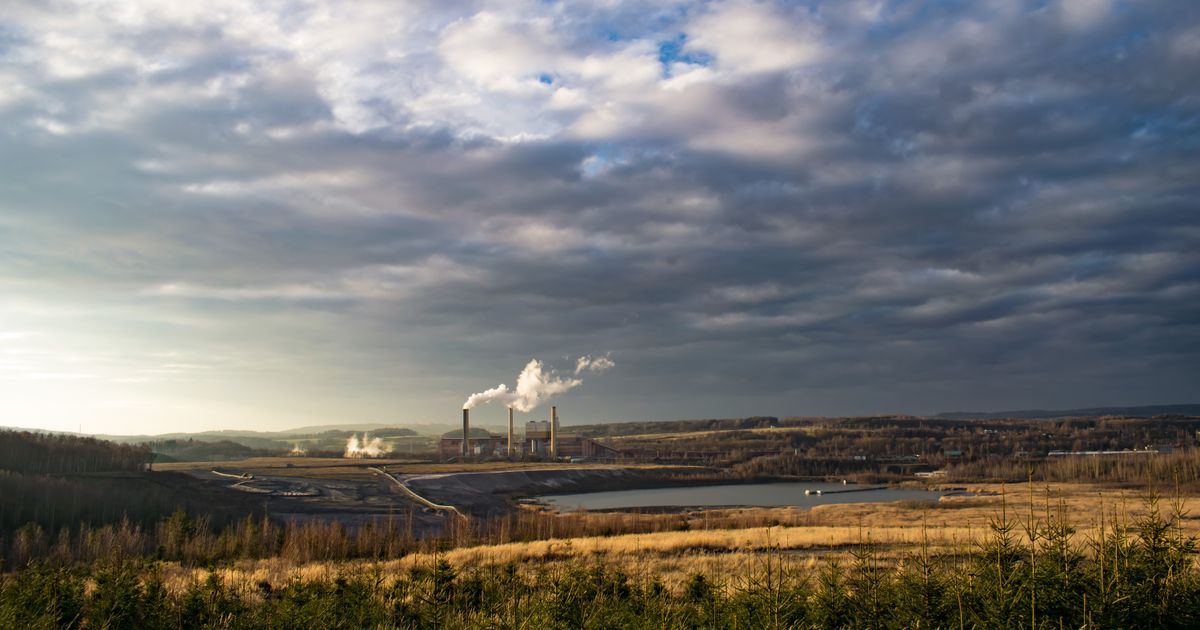
At a mass-burn plant outside a mid-size Midwest city last spring, I watched a visiting lender point at the wet scrubber and ask whether that big steel box was "the thing that catches the dioxins." It isn't. That box strips acid gases, hydrogen chloride and sulfur dioxide, and it does almost nothing for dioxins. The equipment that actually governs waste to energy dioxins sat about forty feet downstream: a fabric filter fed by a small screw quietly injecting powdered activated carbon into the duct ahead of it.
I build the sensor stacks and data pipelines that sit on top of plants like that one, so I spend most of my time in the gap between two questions that turn out to be very different: what a plant actually captures, and what we can actually measure. Almost every misconception about dioxins and waste-to-energy lives in that gap. So here are four beliefs operators, lenders, and neighbors keep bringing me, and what's true instead.
"The scrubber catches the dioxins"
It doesn't, and the confusion is mostly linguistic. "Scrubber" became shorthand for the whole grey mass of pollution-control gear bolted to the back of a combustor, so people assume one box does everything. In practice the air pollution control train is a sequence, and each stage has a narrow job.
A wet scrubber or spray-dry absorber neutralizes acid gases. Selective non-catalytic reduction knocks down nitrogen oxides upstream, in the furnace itself. And the dioxins? They get adsorbed onto powdered activated carbon injected into the flue gas, then caught downstream on the bags of a fabric filter along with the fly ash. The carbon is the sponge; the baghouse is the net. Carbon injection ahead of a fabric filter can pull out on the order of 90% of the dioxin in the gas stream, per technical data from suppliers like Sumitomo SHI FW, and it does that far better with a baghouse than with an electrostatic precipitator, because the filter cake that builds on the bags gives the gas more contact time with the carbon it has to pass through.
That same activated carbon does double duty on mercury, so the injection rate is really one knob balancing two very different pollutants at once. Push it hard for mercury on a high-chlorine day and you tend to over-serve dioxin, which is fine, just expensive. Sorbent choice matters more than people expect too: most plants run a lignite- or bituminous-based powdered carbon, sometimes brominated to grab elemental mercury, and the grade you pick moves the dioxin number as much as the feed rate does.
If you want one mental model of a modern control train, drop the idea of a single scrubber and picture an assembly line where dioxins are nearly the last thing handled:
| Stage | Primary job | Role in the waste to energy dioxin problem |
|---|---|---|
| SNCR / SCR | Cut nitrogen oxides | Mostly none (SCR can oxidize some dioxins if hot enough) |
| Spray-dry absorber / dry sorbent | Neutralize HCl and SO2 | Minor |
| Activated carbon injection | Adsorb mercury and dioxins | Primary capture step |
| Fabric filter (baghouse) | Remove particulate | Holds the carbon and fly ash where adsorption finishes |
| Wet scrubber, if fitted | Polish acid gas, cool the gas | Minimal |
None of this is exotic. It's the least glamorous corner of any waste-to-energy technology stack, and also the part doing most of the public-health work. The scrubber gets the credit because it's big and visible. That carbon screw doing the real work is the size of a household auger, and nobody photographs it for the annual report.
"Burn it hot enough and the dioxins are gone"
This one is half right, which is what makes it dangerous. Combustion does destroy dioxins: hold the gas above 850C for two seconds, the residence-time floor written into the EU Industrial Emissions Directive, and the molecules come apart. US practice under 40 CFR Part 60 Subpart Eb leans on the same physics through good-combustion operating limits. If furnace destruction were the whole story, every hot combustor would run clean.
But the furnace isn't where most stack dioxin comes from. It comes back on the way out. As the flue gas cools through the 200 to 400C band, dioxins reassemble on the surface of fly ash particles, a reaction called de novo synthesis, catalyzed by copper and iron in the ash with chlorine from the waste supplying the halogen. A 2022 review in the Journal of the Air & Waste Management Association puts the peak formation rate squarely in that cooling window. You can run a textbook-perfect burn and still manufacture dioxins in your own economizer ductwork.
So the real lever isn't peak flame temperature. It's how fast you drag the gas through the reformation window on the cold end. Quench from roughly 550C to under 200C quickly and there's no time for the chemistry to happen; let the gas loiter in the band and you feed it. (This is also why heat-recovery surfaces get laid out with dioxin formation in mind, not just steam efficiency.)
There's a second lever most people skip, and it sits upstream of the entire stack: chlorine input. De novo synthesis needs a halogen donor, and in mixed municipal waste that's mostly PVC and salt. You can't scrub chlorine out of the chemistry after the fact, but you can lower how much of it enters the furnace, which is part of why front-end sorting and a steadier feedstock quietly help the dioxin number. Steadier feed also keeps the burn stable, which keeps CO down, which keeps the whole surrogate chain honest. More on why that matters in a moment.
The "modern plants are clean" claim needs its asterisk right about here. At steady state, a well-run unit passes through the window fast and stays clean. Startup and shutdown are another matter. The boiler warms or cools slowly, so the whole gas path sits inside the formation band for minutes at a time, and the carbon injection may not be fully online yet. On many units a disproportionate share of annual dioxin actually comes from those transient hours, not the thousands of steady-state hours in between. A plant that's spotless on its annual test can still be a mediocre performer if it cycles on and off a lot. And below about 50 to 100 tonnes per day, where units are more likely to be batch-fed and cycled hard, that startup penalty gets worse, not better.
"The continuous monitor tells us the dioxin level"
No instrument on that stack is reading dioxin. Continuous emissions monitoring systems watch carbon monoxide, oxygen, temperature, opacity, and often HCl, SO2, and NOx. Not one of those is a dioxin measurement. Dioxin itself is captured by periodic stack testing, usually once or twice a year, using a multi-hour isokinetic sampling run (EPA Method 23) that then goes off to a lab for weeks of analysis. A single Method 23 campaign with lab work runs on the order of $20,000 to $40,000 [industry estimate], which is a big part of why nobody does it monthly. Some plants add a long-term sampler, AMESA and DMS are the common ones, that pulls a thin slipstream onto an adsorbent cartridge a lab reads every few weeks. Useful, but still a rear-view mirror.
So why keep the CEMS running at all? Because the surrogates predict the thing you can't watch directly. The logic behind leaning on CO is sound: a CO spike means incomplete combustion, incomplete combustion means more unburned carbon and soot precursors reaching the cooling zone, and unburned carbon is the raw material de novo synthesis feeds on. So CO really is a live dioxin-risk proxy. It just isn't a dioxin number. And a proxy chain is only as honest as its weakest sensor. That's my whole professional anxiety in one line: sensor drift always wins eventually, and the surrogate everyone trusts is usually the one nobody thought to recalibrate.
On a waste-to-energy dioxin monitoring retrofit in 2024, we watched an activated-carbon mass-flow sensor drift about 8% low for five months while the annual stack test missed it completely, because the test happened to land on a good quarter. The carbon feed under-dosed that entire stretch and nobody knew, since every CEMS channel read nominal and the next test was still months out. On paper the plant stayed compliant the whole time. That's the hole periodic testing leaves: the drift lives in the gaps between two snapshots a year apart. (I've watched the same shape on a predictive-maintenance pilot on a Hitachi Zosen line, where labeling drift in the training data threw eleven false positives before we realized the data, not the machine, had moved under us.)
Regulators clocked the gap too. The revised EU Industrial Emissions Directive, in force since August 2024, pushes incinerators toward long-term dioxin sampling precisely because two annual snapshots can miss months of drift in between. That's also where serious waste intelligence software is heading: not a prettier dashboard, but continuous surrogate telemetry wired straight into the carbon-feed control loop, so a drifting sensor trips an alarm instead of surfacing as a bad lab result three months late. Edge logic beside the injector beats a cloud round-trip for a loop that tight.
"Waste-to-energy is still a major dioxin source"
It was, and then it wasn't, and the numbers aren't close. EPA's inventory of dioxin sources tracked total US releases falling roughly 90% between 1987 and 2000, from about 14,000 grams of toxic equivalent a year down to around 1,400. Toxic equivalent, the TEQ in those figures, is the standard way to add up seventeen different dioxin and furan congeners by weighting each against the most toxic one, so a gram of TEQ is already a severity-adjusted number, not raw mass. Municipal waste combustion led that entire list in 1987 and 1995. By 2000 it had dropped to fourth. (Actually, "dropped to fourth" undersells it; the absolute tonnage fell far faster than the ranking move suggests, because the whole inventory shrank underneath it.) The emission guidelines behind that fall, the Clean Air Act section 129 standards, cut dioxin from large combustors by more than 99% against a 1990 baseline.
The retrofit that did it was not subtle. Through the 1990s, large US combustors bolted on exactly the carbon-injection-plus-fabric-filter trains this article keeps describing, and the national inventory bent down as they came online. When EPA recently reset compliance limits across the existing fleet, it was tightening an already low number; I walked through what that rule actually changes over in a separate piece on the new EPA limits for 152 waste-to-energy units. Judging a 2026 baghouse-and-carbon plant by a 1985 emissions profile is like judging today's diesel engines from a photo of a 1970s tailpipe.
Now the uncomfortable part. The single largest quantifiable US dioxin source in EPA's 2000 accounting wasn't industry at all. It was backyard barrel burning, households torching their own trash in open drums. No 850C floor, no two-second residence time, no carbon injection, no baghouse, no stack test, and no zero-waste-to-landfill alternative anywhere in reach. Just smoldering plastic sitting at exactly the temperature de novo synthesis loves.
So when a neighbor asks whether waste to energy plants are safe on dioxins, the honest answer runs against the intuition. A permitted plant with a working carbon-injection feed and an intact fabric filter, tested and reported to the state, is not where the dioxin risk in your county lives. The barrel down the road is. The problem didn't get solved so much as it got moved, out of the places that have engineers and sensors and stack tests, and into the ones that have none of them.
Sources & Notes
- The source ranking and the roughly 90% drop in total US dioxin releases from 1987 to 2000 come from EPA's Inventory of Dioxin Sources and Environmental Releases (EPA/600/P-03/002F, 2006), which is also where the backyard-burning figure sits.
- For the greater-than-99% cut from large municipal waste combustors and the section 129 framework, see EPA's rulemaking under 40 CFR Part 60 Subpart Eb.
- The de novo formation window and its temperature peak I took from a 2022 review in the Journal of the Air & Waste Management Association.
- The 850C / two-second residence floor and the shift toward long-term dioxin sampling are set out in the EU Industrial Emissions Directive (2010/75/EU); Zero Waste Europe has a plain-language read on the 2024 monitoring revamp.
- Carbon-injection removal performance and the fabric-filter-versus-ESP contact-time point are drawn from Sumitomo SHI FW's baghouse and activated-carbon-injection overview, checked against operator practice.
Researched and written by OWI editorial staff. Technical review by RWE engineering. AI tools used for drafting assistance.
Cite this article
Nina Chowdhury, “What a Waste-to-Energy Scrubber Actually Captures Isn't Dioxins,” Optimal Waste Intelligence, August 03, 2026, https://optimalwasteintelligence.com/posts/wte-dioxins-air-emissions.
You’re welcome to quote this article with attribution and a link to the original.