Urban Waste Recovery Is a Utility, Not a Revenue Project
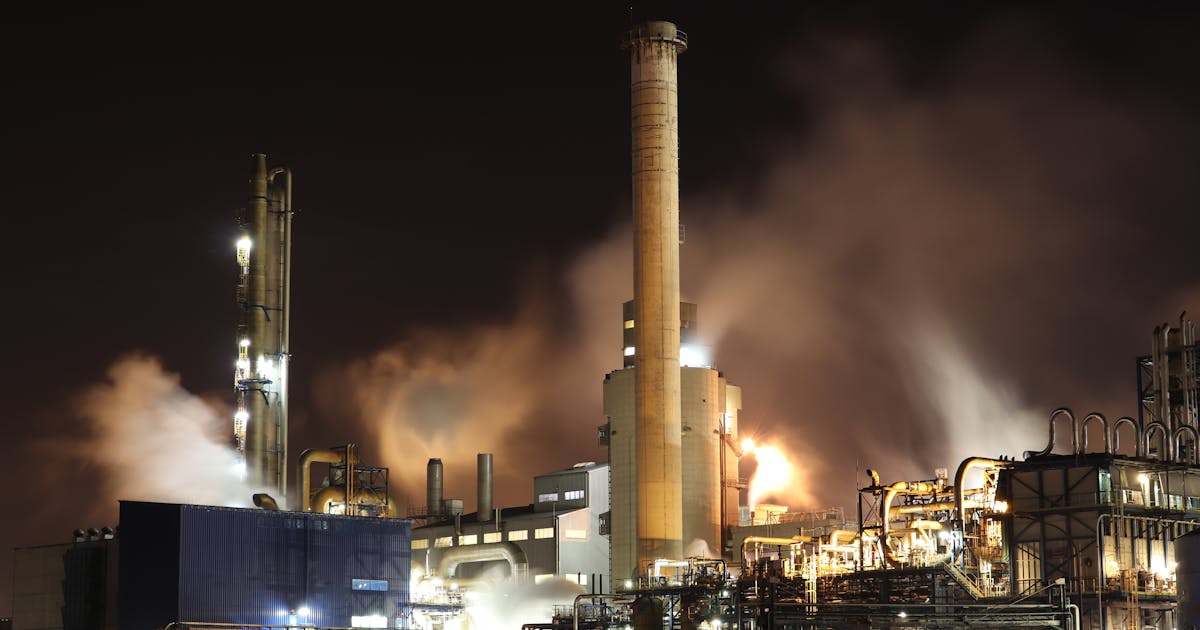
Cities don't turn trash into revenue. They turn tipping fees into infrastructure debt and call the spread "revenue" on slide fourteen of the procurement deck. That's the position I'll defend through this piece - and it's the one the urban waste recovery industry pushes back on hardest, because it threatens the financial story used to sell most municipal waste-to-energy projects to councils, ratepayers, and lenders.
I've spent twenty years inside these plants, three of them as the engineer who took facilities from permitting through commissioning. I've watched the same pitch deck get recycled across continents: combine a landfill diversion mandate with an offtake contract, sprinkle in some carbon attribution, and tell the city it's about to make money on its waste. It almost never does - at least not the way the deck claims. And the gap between the financial promise and what shows up on the operating P&L is the most consequential thing nobody writes about in urban waste recovery projects.
The revenue myth, in three numbers
Start with the EPA's own figures, because they reflect the operating reality of the seventy-five active waste-to-energy facilities currently operating in the United States, per the U.S. EPA's Energy Recovery from MSW page. A typical plant produces about 550 kWh per ton of waste. At a wholesale price of four cents per kWh, that's twenty to thirty dollars of electricity revenue per ton. A new plant costs at least one hundred million dollars to build, and large facilities run two to three times that.
Now layer in the tipping fee. The Environmental Research and Education Foundation's 2024 survey put the U.S. average landfill tipping fee at $62.28 per ton, up roughly ten percent year-over-year [EREF / Waste Advantage Magazine, 2024]. Northeast averages cleared eighty dollars; the South Central region (Texas, Oklahoma, Louisiana, Arkansas, New Mexico) sat under forty-five. A waste-to-energy plant typically charges a tipping fee in the same range, sometimes a touch higher when landfill capacity is tight.
So here's the thing the deck never frames clearly. When a city sends a ton of MSW to a waste-to-energy plant and "earns" sixty dollars in tipping fees plus twenty-five dollars in electricity, the city itself is paying the sixty dollars on the front end. That money came out of a sanitation budget funded by ratepayers. The "revenue" line is internal: a transfer from one municipal pocket to another. Strip it out and the actual external revenue from the plant is the electricity sale - twenty-five dollars on a one-hundred-fifty-million-dollar asset. Try financing that on a thirty-year bond and tell me how the coverage ratios look.
I'm not saying these plants shouldn't exist. I'm saying the framing of "turning trash into revenue" is misleading, and it pushes cities to size the wrong projects, choose the wrong partners, and pay too much for technology that doesn't fit their feedstock.
When the math actually works
There are exactly three conditions under which urban waste recovery generates real, external revenue at scale. I've never seen a financially successful project that lacks all three.
The first is district heating offtake. Copenhagen's Amager Bakke plant (€470 million in capital cost, processing 440,000 tons annually [Babcock & Wilcox case study]) works because Copenhagen's district heating network actually buys the thermal output at a rate above the marginal cost of natural gas. Heat is the high-value product; electricity is a co-product. In a city without piped district heating, that revenue stream simply doesn't exist. You can't retrofit it cheaply (try costing a district network on retrofit and you'll see the per-meter numbers go vertical).
The second is crushing landfill scarcity. Singapore runs four city waste to energy plants processing 2.8 million tons a year and generating about 2,300 GWh (roughly three percent of the country's total electricity. They built that infrastructure for S$2.5 billion not because the math pencils on a marginal-cost basis but because they have nowhere else to put trash. Tokyo's similar. New York City would be similar if its political economy allowed it. Land-rich regions) most of the U.S. South and Midwest - don't face this constraint, which is why their landfill tipping fees stay under fifty dollars and why no municipal waste recovery project pencils there on landfill avoidance alone.
The third is mature carbon pricing. The EU ETS prices avoided methane at numbers high enough to materially shift project economics. In jurisdictions where carbon credits trade thinly or aren't yet integrated into power markets, that revenue line is mostly aspirational. I've sat in too many financing meetings where the lender asks the developer to redo the model with a zero in the carbon column. The model usually breaks.
"What about avoided landfill emissions and the new carbon credit markets? Those should change the math." - every project sponsor I've worked with
It's a fair counterargument. The credits are genuine. But the volumes a single waste-to-energy plant produces aren't large enough to anchor financing without a contractual offtake from a buyer with a balance sheet. And those buyers - the corporates pursuing actual global waste-to-energy projects as part of their net-zero programs - write tight contracts with verification clauses that most municipal projects can't meet without third-party MRV systems and proper waste intelligence software in place. Without that telemetry, the credits are theoretical. Theoretical credits don't pay debt service.
What urban waste recovery actually is
Strip the revenue narrative away and a different story emerges. Urban resource recovery is a utility. It's no different from water treatment or stormwater management - a service the city must provide because the alternative (uncollected waste, illegal dumping, methane plumes from undersized landfills) is worse than the cost of providing the service.
The American Society of Civil Engineers gave the U.S. solid waste system a C+ grade in its 2025 infrastructure report card. We generate 292.4 million tons a year. About 44 percent is productively reused - recycled, composted, or burned for energy. The rest goes in the ground. ASCE's framing is closer to the truth than the procurement-deck framing: this is an infrastructure system, financed like infrastructure, judged on resilience and externality avoidance, not on EBITDA.
Once you frame municipal waste recovery as utility infrastructure, the right questions change. You stop asking "what's the IRR" and start asking "what's the cost per ton diverted, including the external costs of the alternative?" The number you compare against isn't a corporate hurdle rate. It's the all-in cost of landfilling at a site you'd actually permit today, plus the social cost of the carbon and the leachate.
That comparison usually makes urban waste recovery look reasonable, even at sub-thirty-dollar electricity revenue. It just doesn't make it look profitable in the way the procurement deck implies. Different framing, different decisions.
The mistakes I've personally made
The first plant I ran point on, back in 2008 (I'm not naming the city) we sized the boiler to the design feedstock spec the municipality handed us. Tonnage and HHV were both about fifteen percent off the actual waste stream once collection routes settled in. We spent the first eighteen months chasing parasitic load issues because we were running the boiler off design point. We blamed the contractor. The contractor blamed us. Nobody blamed the procurement document, which is where the actual mistake was. I should've insisted on six months of bin audits before locking the boiler spec. I didn't. We lost about $2.4 million on rework. That money came out of the operating budget, which means out of ratepayer pockets, which means the "revenue project" was net-negative for its first three years.
Second mistake, different plant, 2014. We let the developer talk the city into a fifteen-year power purchase agreement at a fixed nominal price. By year seven, wholesale power had moved enough that the PPA was below merchant. The "revenue" on the model was real on paper, but every megawatt-hour the plant produced was earning less than the city could've gotten on the spot market. Indexed PPAs cost more upfront. Skip them and you're locking in your own obsolescence. Why aren't more procurement teams insisting on indexed offtake? Because indexed contracts make the year-one model look worse, and the year-one model is what gets approved.
And the third (call it a category mistake) I've watched cities choose waste-to-energy technology based on capital cost alone, then discover their actual feedstock doesn't suit the technology. Mass burn doesn't love high moisture. Pyrolysis systems don't love construction debris. Gasifiers don't love variability. Waste conversion technology has to fit the waste stream. The waste stream has to be measured for at least a year before the technology decision is made. Sounds obvious. Almost never how the procurement runs.
What cities should do instead
Stop selling waste-to-energy projects as profit centers. Sell them as the cheapest available option for handling waste streams that landfilling and recycling can't absorb. Build the revenue model around external cash flows only - actual electricity sales, actual heat sales, actual metal recovery from bottom ash, actual carbon credits backed by a creditworthy offtaker. Treat tipping fees as cost recovery, not as revenue.
Then size the plant to the actual waste stream (measured, not projected) and pick technology that fits. For most mid-sized U.S. cities, that probably isn't a 1,000-TPD mass burn facility. It's a smaller modular system, often paired with materials recovery and selective zero-waste-to-landfill solutions for the high-organic fraction. The economics are different at smaller scale, but the ratepayer math is honest.
Use waste intelligence software to track composition, throughput, and emissions in real time. The data closes the gap between the design spec and the operating reality faster than any consultant report. ESG compliant projects need that telemetry anyway, and corporate offtakers increasingly demand it before signing carbon-credit contracts. Without continuous data, you're flying instruments-out.
And one more thing: be honest about which conditions you actually have. If your city doesn't have district heating, doesn't have a landfill capacity crunch, and doesn't have a deep carbon market (none of which are failures, just facts) then your project is going to lean hard on tipping fees and modest electricity revenue. That's fine. Build accordingly. Don't oversize the plant assuming a heat load that doesn't exist.
Where this argument gets weakest - limits and caveats
I should name where this position breaks down. The argument has limitations and a few clear exceptions. Small-scale plants under about 100 TPD operate on different economics - modular pyrolysis units serving industrial parks or single large generators (hospitals, agricultural processors) can sometimes pencil purely on tipping-fee replacement plus on-site heat use. The utility framing doesn't always hold there. Some Gulf-region urban waste recovery projects also work differently because subsidized power tariffs distort the comparison; I'd treat those as a different category. The argument won't work cleanly for those cases.
Also, the carbon math is moving fast. If U.S. voluntary carbon markets mature in the way some forecasts assume, the methane-avoidance credit value could shift the marginal project from underwater to bankable. I'm skeptical that happens in the next five years for municipal-scale offtakers, but I've been wrong about timing before. We modeled credit values at $5/ton in 2018 - they're nowhere near that consistently in real markets yet, but the trajectory isn't trivial.
Disclosure: Renewable Waste Energy, the parent organization of this blog, advises municipalities and developers on waste recovery project structuring. Some of the project experience referenced here informed RWE's diligence frameworks. I write under my own byline, not the company's.
The position, sharper
Cities don't turn trash into revenue. They turn unavoidable waste streams into the least-bad infrastructure outcome. The framing matters because it dictates how the project gets sized, financed, and operated. Procurement decks that promise revenue produce oversized plants on bad PPAs running off-design boilers. Procurement that treats waste recovery as utility infrastructure produces plants the right size, on indexed contracts, with technology fit to the feedstock - and those plants tend to actually operate at design point, which is what determines whether the asset earns its keep over thirty years.
So when the next pitch deck arrives at city hall promising trash-into-revenue at a 12% IRR, read it skeptically. Ask what the model assumes about feedstock variability. Ask whether the carbon credit revenue is contracted or modeled. Ask what the PPA escalator is. Ask whether the heat offtake is contractual or aspirational. And ask, plainly, whether the city is prepared to operate this asset as a utility for thirty years, because that's what it actually is.
If the answer to that last question is no, don't build the plant. Build something else.
Sources & Notes
- U.S. Environmental Protection Agency, "Energy Recovery from the Combustion of Municipal Solid Waste (MSW)" - 75 active U.S. WtE facilities, 550 kWh/ton, $20-30/ton electricity revenue, $100M+ baseline construction cost.
- Environmental Research and Education Foundation 2024 landfill tipping fee report (via Waste Advantage Magazine) - $62.28/ton national average, $80.67/ton Northeast, $44.87/ton South Central, 10% YoY increase.
- ASCE 2025 Infrastructure Report Card, Solid Waste section - C+ grade, 292.4 million tons MSW generated annually (2018 baseline), 44.1% productively reused, 35 million tons to energy recovery.
- Babcock & Wilcox, Amager Bakke / Copenhill case study - 440,000 tons/year capacity, €470 million capital cost, district heating offtake structure.
- Author's project records - operating data and financial outcomes referenced in "The mistakes I've personally made" are from three plant commissioning projects (2008, 2014, 2019) across two regions, with city names withheld for client confidentiality.
Researched and written by OWI editorial staff. Technical review by RWE engineering. AI tools used for drafting assistance.