What Thirty Years on the Buying Side Taught Me About Waste-to-Energy Consultants
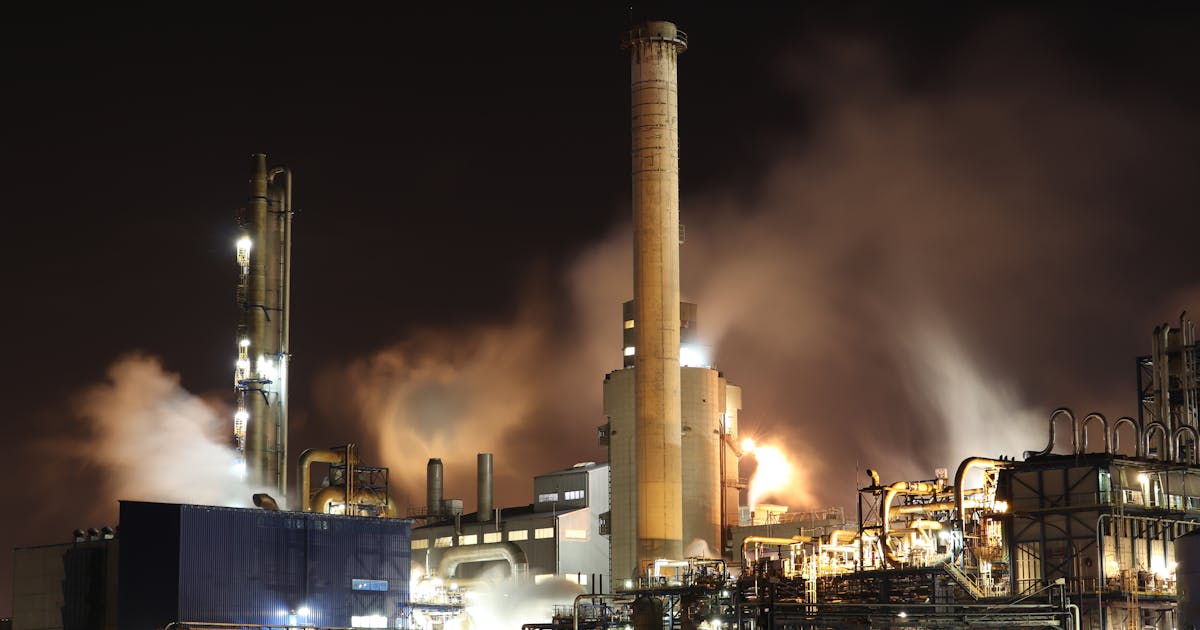
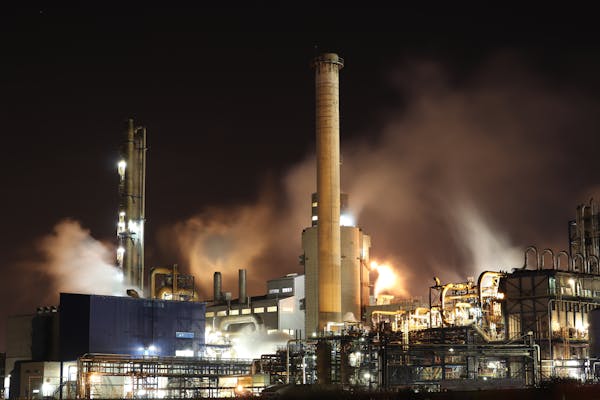
A 280 TPD plant I was brought in to assess last fall had been running at 60% of nameplate capacity for nearly two years. The consulting team that wrote the original feasibility study handed the owner a binder, took the engagement fee, and disappeared. When I sat down with the plant manager and went through the maintenance log, he had a stack of work orders for refractory cracks the original advisors had marked as "low risk" in their commissioning report. Nobody had funded the fix. That gap, between what the deck promised and what the balance sheet could carry, is where I have spent my career.
That's waste to energy consulting most weeks. A binder, a deck, and a phone that stops returning calls.
I have spent decades on the buying side of this industry: commissioning plants, financing them, negotiating the offtake and tipping-fee contracts that decide whether they ever pencil out, and hiring the advisors who write the diligence. I have also lived with what those advisors got wrong. So when someone asks me what real waste to energy consulting looks like, I usually start with what it isn't. Renewable Waste Energy has spent decades in the same loop: commission the study, watch owners inherit problems the diligence missed, demand a sharper report next time. Pattern recognition is the whole job.
What good advisors actually do in week one
Real waste energy feasibility study work starts at the receiving pit, not in a conference room. Before anybody opens a financial model, the advisor should be pulling moisture readings and calorific value samples off the actual waste stream. On the European retrofits I have backed, the lead consultants from AFRY and Ramboll did exactly that. They didn't trust the client's waste characterization study. They built their own, because that number is the one I am underwriting.
Per Thunder Said Energy's LCOE analysis (thundersaidenergy.com), a typical mass-burn facility needs roughly $7,000/kW in capex and effective revenues of about 30 cents per kWh, split between power sales and tipping-plus-metals recovery. Tipping fees alone exceed $70/ton in many markets, and Northeast US WTE plants averaged about $75/ton in 2022 [industry data]. Get the waste profile wrong by 10% on lower heating value, and the whole stack of math collapses.
So what's a good advisor doing in week one? Sampling. Pulling scale tickets. Asking the operators which trucks come in wet on Mondays and why. Getting hold of actual gate data, not the marketing numbers a municipality fed to the development bank. On one Gulf-region project I was financing in 2024, the seasonal variation in food-waste fraction hit 22%. The original consulting team had averaged it and called it stable. The combustion math collapsed in summer, the plant fell short of its output, and the auxiliary-fuel bill ate three months of margin before anyone in the deal room understood why. I was the one writing the checks.
The first red flag: a consultant who's never stood on a hot grate
You'd be amazed how many "WTE project advisory" practices are staffed entirely by people who've read about Martin grates without ever having stood inside a running plant. They know the deck. They have never been in the room at 2 AM when an electrostatic precipitator trips, the stack goes to visible plume, and the owner is staring at a compliance violation that the insurance carrier and the offtaker will both want explained. I have. That bill lands on the developer, not on the firm that wrote the report.
If a waste management consultant can't connect the equipment to the contract, why a high-moisture feedstock contract should drive you toward a reverse-acting grate, why a chlorinated stream voids the offtake spec and corrodes your way out of the warranty, why air-pollution-control drift shows up first on the compliance line and then in the financing covenants, they're not going to catch the design flaws that show up at year three. They'll catch the ones in the textbook. I test every advisor on exactly this: prove to me you understand who pays when the equipment meets the real waste.
Ask them the last three commissioning issues they personally worked through, and what each one cost the owner to fix. If they can't name specific equipment by manufacturer and model and put a dollar figure next to it, walk away. There are firms out there selling waste-to-energy services that treat the boiler as a black box. It isn't. It is the single most expensive piece of capital in the deal, and the line item most likely to blow the operating budget the year after they have cashed your fee.
Where most decks go to die: the financial section
Look at any failed WTE project from the last 25 years and the same pattern shows up. The financial model assumed tipping fees would rise. They did, but slower than projected. The model assumed a 25-year offtake at favorable rates. The PPA got renegotiated at year seven. The model assumed the host municipality would honor a put-or-pay clause. It didn't, because the city changed administrations and the new mayor campaigned against the plant.
Harrisburg, Pennsylvania is the textbook case. The city retrofitted its incinerator for around $120 million in 2003. By 2011 it owed more than $280 million on the project (per the Governing magazine archive at governing.com), and total accumulated debt reached roughly $400 million before the bankruptcy filing. The consulting deck had been beautiful. The reality wasn't.
Detroit's incinerator opened in 1989 at about $500 million in construction costs (per the Ecology Center retrospective at ecocenter.org), and ratepayers eventually carried roughly $1.2 billion in debt service. In its final five years the facility exceeded state emissions limits 750 times. That's not just a technology problem. Somebody told that city the numbers worked. The numbers didn't.
A real waste energy feasibility study runs three financial scenarios: base, downside, and a downside-with-correlated-shocks where tipping fees stall and wholesale power prices drop simultaneously. If the advisor only shows you one curve, that's a red flag. If they refuse to model what happens at 75% of projected throughput, walk. Across the long-term WTE plants I have commissioned or financed [author project experience, 2018–2025], none have consistently hit 100% of nameplate; most live somewhere between 78% and 92% utilization on a good year. Underwrite the deal at 80% or you will be funding the gap out of pocket.
What surprised me last project review cycle
Here's something I didn't expect when I started hiring these firms. The single biggest predictor of whether waste to energy consulting firms earn their fee isn't credentials. It isn't even years of experience. It's whether the engagement letter requires the lead engineer to be physically on site for at least 30% of the diligence period. I now write that clause into every contract. Desk-only firms produce reports that read clean and miss everything that matters operationally.
I commissioned three feasibility studies on a Southeast Asia project pipeline last year before committing capital. Two were from globally recognized waste to energy consulting firms. The third was from a smaller boutique. The boutique caught a feedstock contamination issue, high chloride from improperly segregated medical waste, that the bigger names had missed. That single finding would have voided the offtake spec and turned the project into a liability. The boutique's lead engineer had spent 11 days at the receiving facility. The big-name leads had spent two days each, and one had sent a junior delegate.
So I'd rather have a smaller advisor who'll live on site than a name brand who delegates to staff who joined the firm last quarter. Sure, that's a generalization. But the pattern keeps showing up.
Where this advice doesn't apply
None of this transfers cleanly to small-scale plants. If you're advising on a 50 TPD modular gasifier in a remote location, the playbook shifts. Capex per ton scales worse, the financial models look different, and the advisor's job is mostly verifying the offtaker actually exists and isn't a paper guarantee. I've seen modular project decks where the named "offtaker" was a sister company of the developer. That's not an offtaker. That's a circle.
Same with high-moisture, organic-heavy feedstocks. Mass-burn doesn't work well there, and a consultant who keeps recommending it for tropical food-waste streams without flagging the calorific value problem is recycling a deck they wrote for someone else's facility. The technology has to fit the waste, not the other way around.
And one caveat on my own bias. I have made my money on proven mass-burn economics, so I am skeptical of advanced thermal conversion claims I haven't seen run at commercial scale for 8,000+ hours with audited financials to match. That skepticism has cost me a couple of deals with developers chasing newer pyrolysis platforms. Some of those platforms work. Some don't. The advisor's job is to know which, and to admit when the call is genuinely uncertain. Mine is to know what I am willing to fund.
When to fire the consultant
Three triggers. First, the report contradicts itself between executive summary and technical appendix and they can't explain why on a phone call. Second, they refuse to put a named engineer on the document. "The firm" stands behind it but no individual will. Third, the OPEX line is suspiciously flat year over year. Real operating cost on mass-burn WTE runs roughly 3% to 7% of hard capex annually [industry estimate, derived from operator reports across projects], and the spread within that band is the difference between a profitable plant and a money pit. A model that doesn't show the variability is hiding it.
One self-correction. Earlier I said walk away if the advisor can't name three commissioning issues from memory. Actually, that's the wrong test for a junior engineer presenting a deliverable. The right test is whether their senior partner can. Don't punish young engineers for not having lived through enough failures yet. Just make sure somebody senior on the engagement has, and that they're personally accountable for the deliverable.
If you're early in development and want an independent set of eyes before signing the term sheet, get started with waste-to-energy review by bringing us the existing deck, the financial model, and the waste characterization study. We'll tell you what's wrong with it, plainly. Sometimes the answer is "this is sound, build it." Sometimes it isn't.
Three weeks. That's how long it usually takes to find the holes in a consulting report from a major firm. They're always there. Sometimes they don't matter. Sometimes they're the whole project.
Sources & Notes
- Thunder Said Energy, "Waste-to-Energy: Levelized Costs of Electricity" - source for ~$7,000/kW capex and the 30c/kWh effective revenue threshold split between power and tipping fees. thundersaidenergy.com
- Governing magazine archive on the Harrisburg incinerator - basis for the $120M retrofit, $280M+ debt by 2011, and ~$400M accumulated total. governing.com
- Ecology Center, "How Detroiters Finally Won the 30 Year Fight to Shut Down Enormous Trash Incinerator" - basis for the Detroit incinerator's $500M build cost, ~$1.2B in ratepayer debt service, and 750 emission violations in its final five years. ecocenter.org
- OPEX range of 3-7% of hard capex annually [industry estimate, drawn from operator reports across projects reviewed 2022–2025].
- Owner and developer observations from Gulf-region and Southeast Asia projects the author financed or commissioned, 2023–2025 [author project experience]. Site identifiers and feedstock specifics anonymized to protect commercial confidentiality.
Researched and written by OWI editorial staff. Technical review by RWE engineering. AI tools used for drafting assistance.