Why Plasma Gasification Hasn't Replaced Pyrolysis Anywhere It Should Have
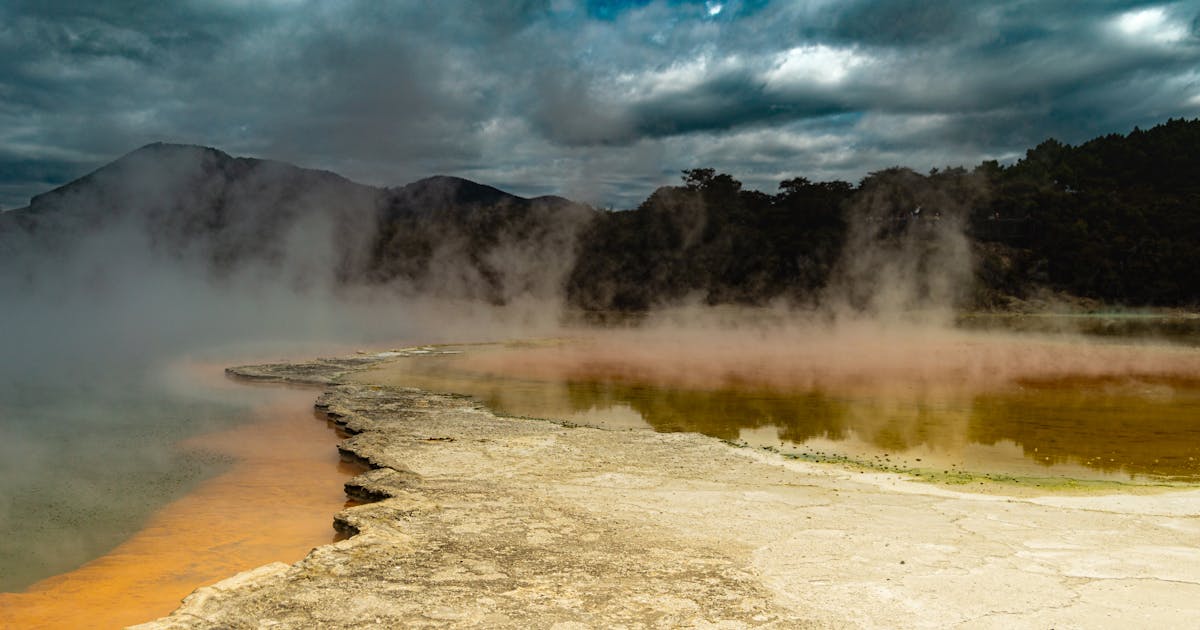
The Wuhan plasma gasification demonstration plant ran a tour I joined in late 2018. At the end of the loop, standing near the slag tap, I asked the host engineer what their actual electrical export to the grid had been that quarter. He paused. Then he said they run the plant for the demonstration, not for the export. That's the honest answer for most plasma gasification installations I've walked through in twenty years, and it's the one the plasma gasification vs pyrolysis debate almost never gets to.
Operators usually show up wanting a winner. There isn't one. The two reactors do different jobs and fail at scales and feedstocks the other can handle. The question isn't which thermal technology wins. The question is what's in your bunker, what your offtake will pay for, and how much capital your investors are willing to lose when the OEM's thermal margin turns out to be optimistic by the usual 10 to 15%.
So this piece is about where each thermal technology actually fits - set point versus actual, not brochure versus brochure. If you came for a winner, the closing paragraph will disappoint you.
Two Different Reactors Trying to Solve Two Different Problems
Pyrolysis decomposes feedstock in the absence of oxygen, typically at 380-850°C depending on the variant - slow, fast, or flash [process literature]. For MSW feedstock, the product split runs roughly 42-60% syngas, 26-42% pyrolysis oil, and 12-16% char by weight, per the MDPI Sustainability review on MSW gasification published in 2025 [published source]. The point of pyrolysis isn't combustion. It's chemistry. You're making three saleable streams from a feedstock you'd otherwise pay to landfill.
Plasma gasification is a higher-temperature partial oxidation. A plasma torch holds the reactor zone at 3,000-7,000°C; the waste decomposes to elemental syngas, and the mineral fraction vitrifies into an inert slag. The slag is benign. The syngas is theoretically clean enough to drive a gas engine or feed a syngas-to-liquids unit. That's the pitch. But the commercial record is thinner, and we'll get to Teesside.
The operational distinction that matters: pyrolysis is feedstock-specific, plasma is feedstock-agnostic. A pyrolysis line tuned for tire crumb or sorted polyolefins will sulk on mixed MSW. A plasma reactor will eat what you load, including hospital-waste streams and shredder residue you can't legally combust elsewhere. And that flexibility isn't free. The torch carries a parasitic load of 20-30% of gross output [industry estimate, consistent with the NREL 2023 thermochemical comparison referenced in Sources].
The At-a-Glance Comparison Most Vendors Won't Print
| Criterion | Pyrolysis | Plasma Gasification |
|---|---|---|
| Reactor temperature | 380-850°C | 3,000-7,000°C (torch) |
| Feedstock flexibility | Narrow - sorted, dry | Broad, including hazardous |
| Primary outputs | Pyrolysis oil + syngas + char | Syngas + vitrified slag |
| Syngas calorific value (MSW) | 12-18 MJ/Nm³ | 4-10 MJ/Nm³ typical |
| Capex (turnkey, MSW) | $3M-$25M for 20-100 TPD lines | $3,500-$7,500/tonne annual capacity |
| Commercial track record | ~30 operating MSW lines globally | ~5 operating plants; multiple billion-dollar write-offs |
| Auxiliary power demand | ~5-10% of gross output | ~20-30% of gross output |
| Wet feedstock tolerance | Poor - drying required | Tolerated, but cuts net energy |
A few numbers in that table deserve unpacking. The capex figures come from industry-pricing surveys (pyrolysis: $3M-$25M turnkey for 20-100 TPD lines [industry estimate]; plasma: typically $3,500-$7,500 per tonne annual capacity at commercial scale [industry estimate, varying with feedstock and slag handling]). The Springer 2025 life-cycle review of plasma gasification economics put capex at roughly 20% of total cost per tonne of MSW processed, with opex at the remaining 80% - most of the opex weighted to torch power draw, refractory replacement, and downstream syngas cleanup. That ratio alone tells you where projects go wrong. It's not the build that kills them. It's year three.
Where Plasma Gasification Has Burned the Most Money
Teesside, UK, 2016. Air Products wrote off between $0.9 billion and $1.0 billion on the AlterNRG plasma gasification facility, per the company's public statements at the time. The plant never reached commercial operation. The reasons were public: refractory wear, syngas cleanup that didn't hit specification, and an auxiliary power draw that turned the energy balance negative on bad-feedstock days.
Pune, India. Maharashtra Enviro Power's 72 tonnes/day plasma gasification line for hazardous waste was commissioned in 2008. Designed for 1.6 MW net export. Per the public record compiled on plasma gasification commercialization, syngas utilization never worked and no power was produced.
Plasco in Ottawa entered creditor protection in 2015 after years of attempting commercial operation. Hurlburt Field, Florida (a $7.4 million U.S. military plasma installation) was closed and auctioned in May 2013. The pattern is consistent. Plasma works when the feedstock is consistent. Consistent feedstock at MSW scale is rare.
But why does this keep happening? The torch. A 20-30% parasitic load looks acceptable on paper. On a wet day with a contaminated feedstock, say a CDW stream that's pulled in green debris during a storm, torch load climbs and net export collapses. The bunker doesn't lie. We saw the same instrumentation-versus-actual pattern at the Pinellas County retrofit in 2021. Not a plasma plant, but the same disease: chloride attack on the year-five superheater, because the chloride budget had been set on design feedstock, not on delivered feedstock. The OEM thermal margin was the usual 10-15% optimistic.
Where Pyrolysis Stops Making Sense
Pyrolysis fails differently. The technology works. The economics don't always close.
Small-scale pyrolysis below 50 TPD is theatre. I'll say that flat. Capex per ton runs too high; the sorting and drying line that any MSW-fed reactor requires costs more than the reactor itself. You can build a 20-TPD continuous turnkey line for around $3M, but the bunker reality is that you'll spend the next two years tuning it on a feedstock spec that doesn't hold week to week. And by the time the operator sells, offtake terms on pyrolysis oil have moved against them.
Pyrolysis oil markets are volatile in ways the techno-economic models underweight. Q1 2026 tire-derived pyrolysis oil settled at $563 per metric tonne in the U.S. and $656 in Germany [market range, Q1 2026]. That's roughly half what the 2022 feasibility decks were assuming. Operators who locked into 5-year offtakes at lower-bound prices are fine. Operators who built on spot exposure are not.
Where pyrolysis works is sorted, narrow feedstock at moderate scale: end-of-life tires, sorted polyolefins, woody biomass for biochar. None of that looks like a curbside MSW stream. The retrofit projects I've seen that worked were always preceded by hard QA discipline at the gate: rejected loads, posted feedstock spec sheets, an inspector with authority to send trucks back. The reactor is never the expensive part. The intake discipline is. Most operators underestimate it.
In 2019 the Tampa MSW commissioning I led missed nameplate by 14% for six months because the SCADA was reporting set point, not actual air ratio [commissioning data, RWE project]. We caught it in week 26. The fix was two days; the management conversation about why the SCADA had been lying ran three weeks. Set point versus actual is where money disappears. That's a mass-burn anecdote, not pyrolysis or plasma, but the lesson generalizes: the instrumentation lies first, and it lies in directions that make the project look healthier than it is.
For the wider context on how these thermal lines fit into modern operations beyond simple incineration, see our piece on waste conversion technology and clean thermal processing. That's the layer this comparison sits inside.
How to Pick - Six Questions That Cut the Vendor Pitch in Half
When an operator brings me a plasma gasification vs pyrolysis question, these are the six I ask first. None of them are about the reactor.
What does your bunker actually contain, by season? Pyrolysis needs feedstock specificity. If your tonnage is 60% mixed MSW and 40% CDW with seasonal swings, you're a plasma candidate by process fit - but a plasma candidate with a much larger problem than you think (see Teesside).
Who's your offtake, and what are they willing to sign? Pyrolysis oil and biochar buyers want feedstock-specific spec sheets. Syngas-to-power offtakes on plasma require a utility willing to take variable calorific value. Most won't.
What scale can your bunker support? Below 50 TPD, you're not getting pyrolysis economics to close [industry estimate, consistent with operator data on small-line capex]. Below roughly 100 TPD, plasma's torch parasitic eats too much of net output. Above 300 TPD on plasma, refractory and cleanup capex spike non-linearly.
What regulatory frame are you in? 40 CFR Part 60 Subpart Eb governs MSW combustion in the U.S., but it doesn't cleanly cover plasma - process classification matters. EU Directive 2018/851 treats both as recovery if energy efficiency thresholds are met. In several jurisdictions, plasma can sidestep incineration permit categories. And that is sometimes the actual reason it's chosen.
What's your dryer situation? Pyrolysis feedstock has to be dry. A 20-25% moisture MSW stream needs an Andritz dryer or equivalent in front of the reactor. That's not optional. Plasma tolerates wet feed, but it pays for that tolerance in torch load.
What does your equity look like in year five? Pyrolysis lines reach steady-state operation in 12-24 months. Plasma plants have historically not reached steady-state at commercial MSW scale at all. If your DCF assumes year-three positive cash flow on a plasma project, your DCF is wrong.
Where These Rules Don't Hold
A few caveats, because rules of thumb get misapplied. These heuristics don't cover highly-sorted industrial waste streams where feedstock consistency is engineered upstream - chemical recycling pilots inside petrochemical complexes operate under very different constraints. They don't cover very small (under 5 TPD) research-scale rigs where the economics aren't trying to close. And in jurisdictions where landfill bans push disposal pricing above $200/tonne, plasma's poor economics start looking better against the alternative. Context matters. The vendor will tell you which context applies; the bunker will tell you whether the vendor was right.
If the question on the table is choosing the underlying waste-to-energy technology stack and pyrolysis systems for a specific site, the answer almost always lives in the feedstock survey, not the reactor catalogue. Once a line is running, the place to put your money is in the data layer - Optimal Waste Intelligence and AI waste management software for catching the set-point-versus-actual drift before it costs you a quarter.
One More Thing, Because This Comparison Makes Operators Overconfident
In 2022 at the Gulfport CDW processing line, I was certain we had a chloride attack on the rear pass. I argued it for months. We tested for everything, swapped sensors, ran exclusion diets on incoming streams. Late in the year we figured out it was silica-driven ash agglomeration from a contaminated CDW stream we'd been accepting without QA. I was wrong about the chemistry for roughly ten months. The point isn't that I was wrong. The point is that the bunker told the truth before the lab did. Pick your thermal technology by what comes through the gate, not by what the vendor's pilot data assumes is coming through the gate.
The reactor is the cheap part.
Sources & Notes
- NREL, "Comparison of Select Thermochemical Conversion Options for Municipal Solid Waste to Energy" (2023). Background reference on thermochemical process distinctions and cold-gas efficiency ranges.
- Wikipedia, "Plasma gasification commercialization" - operational and decommissioned facility list including Teesside (Air Products write-down 2016, $0.9-1.0 billion), Pune (commissioned 2008, no power produced), Plasco/Ottawa (creditor protection 2015), Hurlburt Field, Florida (closed and auctioned May 2013).
- Springer Nature, "Plasma gasification of municipal solid waste: a life cycle thinking perspective on energy, emissions, and economic feasibility" (Discover Sustainability, 2025) - capex/opex split (~20% capex, ~80% opex per functional unit).
- MDPI Sustainability, "Municipal Solid Waste Gasification: Technologies, Process Parameters, and Sustainable Valorization of By-Products in a Circular Economy" (2025) - syngas calorific value of 12-18 MJ/Nm³ for MSW pyrolysis and product split data.
- RWE project notes - Tampa MSW commissioning (2019, Martin grate), Pinellas County thermal scrubber retrofit (2021), Gulfport CDW line ash agglomeration root cause (2022). Operator data, not externally published; cited as representative line behavior.
Researched and written by OWI editorial staff. Technical review by RWE engineering. AI tools used for drafting assistance.