Landfill Mining Pays for the Airspace, Not the Aluminum
A regional operator sent me a landfill mining feasibility two years ago and asked one question: does this dig pay? The deck had the metals tonnage, the refuse-derived-fuel yield, a tidy chart of recovered aluminum and steel priced at scrap. What it didn't have, anywhere, was a number for the fraction that comes up as dirt. So that's the first thing I asked for. Because that fraction, not the metal, decides whether you've got a project or a very expensive way to move garbage from one hole into the hole next to it.
Landfill mining sounds like found money. There's a closed dump, it has metal and plastic and calorific material in it, you dig it up, you sell what's valuable, and you get the land back. I've watched that pitch land in three different countries. And in almost all of them, the spreadsheet that follows quietly assumes a buyer for everything that comes out of the ground. That assumption is where these projects go to die. Feasibility is mostly figuring out which assumption will move on you, and in legacy landfill recovery it's always the same one.
The fines fraction is the number that decides it
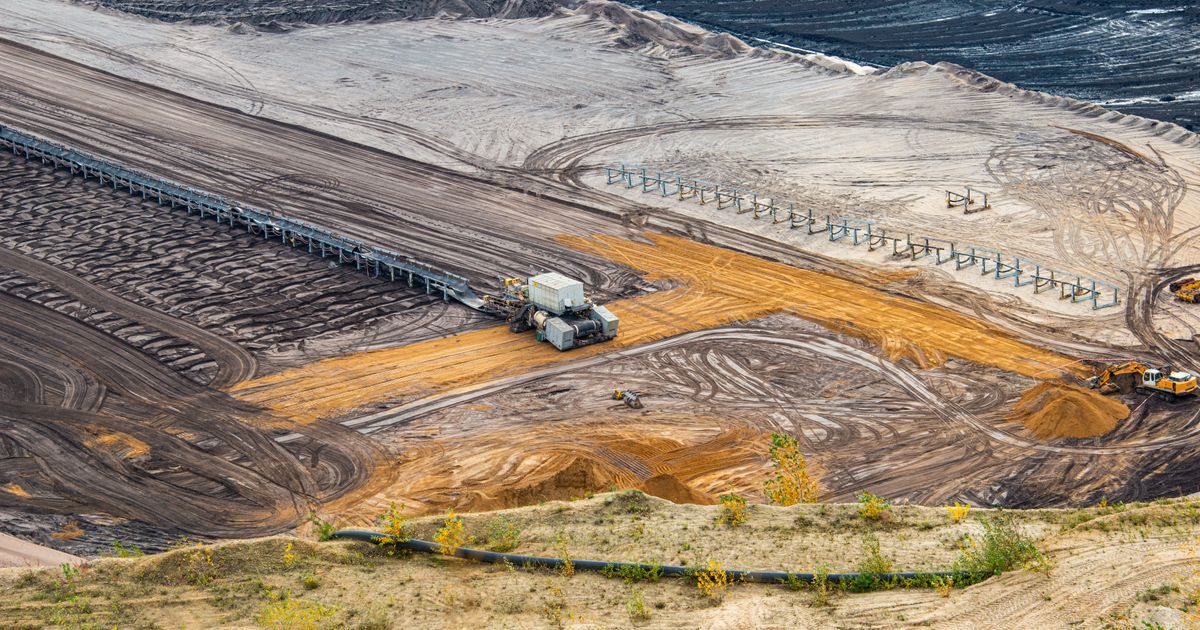
Dig up a tonne of old municipal waste and screen it, and somewhere between 40 and 80 percent of what you recover by weight is fine material: a dark, soil-like fraction of decomposed organics, weathered grit, broken glass, and bits of everything else, depending on how long it sat and what size screen you run it through [characterization studies put the fines at 40 to 80 weight percent of excavated material]. Operators call it the fines. It's the single biggest output of nearly any dig, and it has almost no market.
What do you do with it? You can't sell soil-like fines as topsoil. It carries heavy metals, plastics, sometimes PFAS, and it won't pass any clean-fill spec I've seen (and the permit usually won't let you try). You can use a little of it for daily cover or capping, on site. Otherwise you screen it, you treat it, or you put it back. Actually, treating contaminated fines up to a sellable spec is so expensive that most projects just rebury it - which means you paid to excavate material, handle it, and bury it again in the same site, with nothing recovered for the trouble.
The dig-and-treat cost runs about 50 to 70 dollars a tonne for compacted waste, according to a 2025 Frontiers review of recent landfill-mining projects. Multiply that by a million tonnes, a small legacy cell, and you're spending 50 to 70 million dollars before you've sold a gram of aluminum. The calorific fraction you can pull for fuel is thinner than the brochures suggest: mechanical processing of excavated waste typically liberates around 20 percent as potential RDF, and old, wet, chlorine-loaded landfill fuel struggles to meet a solid-recovered-fuel standard like BS EN 15359 without heavy blending. Cement kilns are fussy about chlorine. They have every reason to be, and that calorific fraction only earns out if there's downstream waste-to-energy technology nearby that can actually take dirty, variable fuel.
You can throw a good trommel at all of this. A Doppstadt screen or a Komptech Cribus will give you clean size cuts all day. But no screen turns contaminated fines into a product; it just sorts your problem into neater piles. This is the same problem I've killed projects over before, wearing different clothes. We walked away from a Bogota feasibility in 2021 at the offtake stage, not because the technology didn't work, but because there was no creditworthy buyer at the kilowatt-hour price we needed. If the offtake math doesn't close, you kill it at feasibility, not at financial close. Ask any renewable waste expert what actually sinks these projects and you'll hear the same word: offtake. The metal has a buyer. The fines don't. And the fines are most of what you bring up.
You're mining the hole, not the metal
So if the materials don't carry the project, what does? Airspace. The hole itself. When you mine a legacy cell and relocate the residue into a modern lined cell, you recover disposal capacity, and in a market where new permits are slow and land is short, that capacity is worth more than everything you screened out of the ground.
Escambia County, Florida ran the cleanest example I know. The Perdido Landfill mined a closed cell between 2009 and 2011, roughly 2.7 million dollars to excavate and process plus another 3 million for new infrastructure, and recovered about 2.8 million cubic yards of fresh disposal capacity. At their hauling and tipping rates, that reclaimed airspace was projected to throw off something near 60 million dollars over its life, a fivefold-plus return, according to an Ensia feature on US landfill mining. Notice what carried it. Not the metal. The hole.
"The primary value is the air space you will gain. That's worth a fortune." - Mark Roberts, on why landfill reclamation pencils when it pencils at all.
There's one exception worth naming, because it gets cited as if it were the rule. A project in southern Maine between 2011 and 2015 pulled 34,352 tonnes of metal out of an old cell and recovered something like 7.4 million dollars of it, at about 158 dollars a tonne. Great numbers. But that was an ashfill, incinerator ash where the metal is already concentrated by combustion. Normal municipal waste isn't pre-concentrated like that. The metal in a mixed cell is diffuse, low-grade, and expensive to liberate, the same reason most e-waste metal goes unrecovered even when it's worth tens of billions. A buried landfill is worse: lower grade, wetter, dirtier.
And when the airspace isn't worth much, the whole case falls over. Denton, Texas scoped a 30-acre dig and walked away from it in 2017, once the recyclables plus the reclaimed space didn't clear the cost of moving the waste. They already had capacity. That's the quiet killer across most of the US right now - one expert in that same piece put it flatly, there's a lot of landfill capacity out there. If you don't need the hole, mining it is a hobby, not a business.
There's a version of the airspace case that doesn't lean on land prices at all: liability. Plenty of pre-1990s cells in the US were never lined to anything close to the RCRA Subtitle D standard, and they leak. If a regulator is going to make you excavate and reline that cell regardless, the economics flip, because the dig is a cost you already owe. Now the recovered metal and reclaimed airspace are upside on a bill you couldn't dodge. I've seen far more landfill reclamation justified by liability you can't escape than by materials you can sell.
Where the dig closes, and where it stalls
Put the cases together and a short list emerges of when legacy landfill recovery actually pencils. You want at least one of three things, ideally two: airspace you genuinely can't get any other way, a remediation or closure liability you'll pay regardless, or a feedstock so rich it behaves like ore - an ashfill, a slag heap, a monofill of something worth money. Resource recovery on its own, in a normal mixed municipal cell, doesn't get there. That same Frontiers review found projects waiting 8 to 10 years for profitability, and one Australian dig that returned roughly 20 percent after five years on a 10-million-dollar outlay. Those aren't returns a private developer underwrites without a second reason in the model.
Europe has tried to engineer a fourth reason: policy. Enhanced landfill mining, the idea that you recover materials and energy together and bank the avoided emissions, was meant to make the fines and the calorific fraction pay through carbon and circular value. The flagship is the Remo site at Houthalen-Helchteren in Belgium, 16 to 18 million tonnes of historic household and industrial waste, a plan to recycle maybe 45 percent as material and gasify much of the rest into hydrogen, per the EURELCO consortium that documented the Closing the Circle project. It's the most ambitious dumpsite mining concept anyone has drawn up. It's also been mostly on the drawing board for over a decade. The plasma plant meant to turn buried waste into renewable energy from waste hasn't been built at scale. The materials story works on paper; the energy story keeps waiting on a plant that pencils and a carbon price that holds.
That carbon piece isn't nothing. Mining and properly treating an old cell can cut its methane emissions by up to 30 percent versus leaving it to degrade under a cap, and in a market that's finally pricing landfill methane, that's a line in the model that didn't exist five years ago. If you're structuring an ESG-compliant project around avoided emissions, legacy landfills are a genuine source of credits - provided the monitoring stands up to an auditor, which is a different article. It's the kind of second reason that turns operators chasing zero-waste-to-landfill solutions from spectators into buyers.
The regional picture splits hard, and it's where I spend most of my time. In a dense, land-short metro with expensive disposal and a binding airspace shortage, urban waste recovery from a legacy dump can pencil on capacity value alone. In much of the developing world, where the open dumpsites are biggest and the human case for cleaning them up is strongest, the airspace isn't scarce and the disposal alternative is nearly free - so the one number that makes Western projects work is simply missing. I've watched imported reclamation schemes underperform for exactly that reason, the same way imported waste-to-energy plants keep underperforming against dumpsite economics nobody priced honestly. The technology travels; the economics don't. It's a pattern I see again across the global waste-to-energy projects I get asked to look at.
So when someone hands me a landfill mining deck now, I don't start with the metals tonnage. I start at the bottom of the page, with the fraction nobody wants to talk about, and I ask the same question I asked two years ago: who buys the dirt? If there's a real answer - a cement kiln, a remediation mandate, a metro that's genuinely out of airspace - the dig might close. If the answer is a shrug and a sentence about future markets, the project is already dead. It just doesn't know it yet. The metal's down there, sure. It's been down there for forty years. Whether it's there was never the question.
Sources & Notes
The excavation-cost band, the payback range, the weak Australian return, and the methane-reduction figure all trace to the 2025 review in Frontiers in Environmental Science on landfill mining for resource recovery and climate mitigation. Worth reading in full if you're modeling one of these.
The US project economics - Perdido in Escambia County, the southern Maine ashfill, Denton walking away, the Roberts line on airspace - come from this Ensia long-read on why we don't mine more landfills. It's where I'd send anyone who still thinks the metal pays.
Everything on Remo and the enhanced-landfill-mining idea sits in EURELCO's write-up of the Closing the Circle demonstration at Houthalen-Helchteren.
For the fines-fraction proportions and the RDF yield, I'm drawing on the published characterization work on excavated waste, read against the solid-recovered-fuel quality bands in BS EN 15359.
The Bogota offtake kill in 2021 is my own project file. I still tell operators the same thing I learned there: the buyer for your worst fraction decides the project, not the buyer for your best one.
Researched and written by OWI editorial staff. Technical review by RWE engineering. AI tools used for drafting assistance.