Africa's Dumpsite Crisis Is Real. Imported Waste-to-Energy Plants Keep Underperforming.
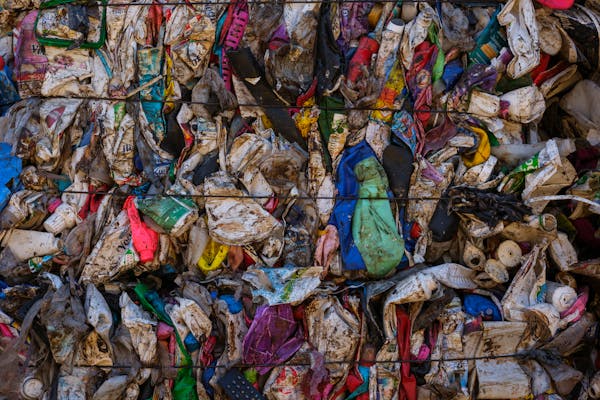
The waste at a Nairobi transfer station doesn't look like the waste in a feasibility model. It's wet. You can watch it leach. When I walked the edge of one in early 2024, advising on a regional market entry, the first thing I did was push a gloved hand into a fresh pile to feel how much water was in it. That moisture fraction decides more about whether waste to energy in Africa works than any boiler spec you'll argue over later.
Here's the uncomfortable part. The dumpsite crisis is severe and getting worse fast. Nigeria generates around 32 million tonnes of municipal solid waste a year and collects maybe 20 to 30 percent of it, per reporting from CAPPA on Nigeria's waste sector. Lagos and Abuja alone put out 13,000 to 15,000 tonnes a day. Open dumps catch fire, methane vents, kids pick through it. So the political pull toward a big, visible plant that "makes the trash disappear" is enormous. And that pull is exactly what keeps producing plants that don't work.
What the dumpsite actually hands you
Across sub-Saharan Africa, organic matter averages roughly 57 percent of the municipal stream, and a lot of it is food and market waste with high water content. Compare that to the dry, plastic-and-paper-heavy waste a European mass-burn line is tuned for. The two aren't the same fuel. They're barely the same category.
| Feedstock trait | Typical European MSW | Typical sub-Saharan MSW |
|---|---|---|
| Organic / food fraction | ~25-30% | ~55-60% |
| Moisture content | ~25-35% | ~50-65% |
| Lower heating value | ~9-11 MJ/kg | ~4-7 MJ/kg |
| Collection rate | over 95% | ~20-55% |
These are typical ranges, not a single city's gate data [industry estimate; sub-Saharan composition drawn from the 44-country dumpsite analysis in The Conversation]. The exact numbers move city to city. The direction never does.
Here's what surprised me the first time I sat with real gate samples instead of a consultant's average: the moisture wasn't just high, it was unstable. Morning loads off a wholesale market ran far wetter than afternoon residential loads (I checked our own gate logs against the consultant average, and they weren't close). A mass-burn grate hates that. It wants a steady calorific value, and an African urban catchment hands you a fuel that swings shift to shift. The first commissioning week is when those assumptions meet reality, and wet feedstock is usually the assumption that moves.
Reppie is the cautionary tale, not the template
Addis Ababa's Reppie plant is the one everyone cites, usually as a win. Look at the numbers. It came online in 2018 at a cost of about US$120 million [per the GAIA assessment reported in SustainabilityMEA], built around two Martin SITY 2000 reverse-acting grates rated for 1,400 tonnes a day combined, and it was sold as meeting EU Industrial Emissions Directive (2010/75/EU) limits. By that same assessment, it's been processing roughly 396 to 650 tonnes a day, less than half nameplate, and generating about 92.8 GWh a year against a projected 185.6 GWh. Nearly 3,000 tonnes a day still go to the Koshe dump next door, and the plant throws off around 85 tonnes of ash daily with no clear disposal plan.
That's not a contractor failure or a corruption story. It's physics. The grate was sized for a heating value the feedstock never delivers, so the plant leans on auxiliary fuel and runs cool and slow. A facility engineered for dry German waste got dropped onto wet Ethiopian waste, and the gap shows up as a 50 percent capacity shortfall and a decade of "it'll improve next year." It rarely does.
I'm not throwing stones from a clean position. On a Monterrey municipal-waste project I developed between 2017 and 2020, I assumed the diesel backup generator would never run past what the OEM warranty modeled. In 2019, the first full year of operation, it ran 380 hours and overran its fuel budget by about US$74,000 because grid stability was worse than the utility's own data claimed. A small mistake next to Reppie. Same root cause, though: I trusted a number on paper over the messy local reality. Feasibility is mostly figuring out which assumption will move, and I picked the wrong one to trust.
Why these projects die at the meter, not the boiler
Even when the combustion works, the project can still fail, and in my experience it usually fails downstream. Most failed waste-to-energy projects don't die on technology. They die at offtake. You can burn the trash beautifully and still have no creditworthy buyer for the power at the tariff you need. So why does every ministry still want the landmark incinerator?
We killed a Bogota feasibility ourselves in 2021 at exactly that stage. The combustion case closed. The offtake didn't. There was no buyer who'd sign a power-purchase agreement at the kWh price the capital stack required, and a letter of intent from a utility with a shaky balance sheet isn't bankable. If the offtake math doesn't close, you kill it at feasibility, not at financial close. We killed it. It still stings, and it was still right.
African WtE hits the same wall, sharper. Grid tariffs are often set below what a thermal plant needs to clear, sometimes by a wide margin, and the utility counterparties carry real credit risk. A plant needs both a gate fee from the municipality and a power tariff that together cover debt service. Miss either leg and the model collapses. The projects that pencil tend to pair a firm tipping fee, say US$25 to US$45 a tonne depending on the city [market range], with a tariff in the low double digits of US cents per kWh (think $0.10 to $0.13/kWh [industry estimate]). A solar PPA in the same grid clears nearer $0.04, and that's the comparison every regulator now makes. The same pattern shows up across the global waste-to-energy projects I've reviewed: the engineering closes, and the offtake quietly doesn't.
Regulation is the other half of the story, and it's finally maturing. Kenya's Sustainable Waste Management Act of 2022 pushed counties toward engineered disposal and away from open dumping, which changes who pays for waste handling and how much. Lagos State signed a 2024 partnership to build a plant at the Epe site rated for 2,250 tonnes a day. For investors chasing ESG-compliant projects, an African deal can look attractive on paper, methane avoided, energy added, but the diligence has to reach the offtake and the feedstock before it reaches the brochure. Whether that electricity even counts as renewable power that qualifies as clean, dispatchable supply depends on the biogenic fraction of a stream nobody has fully characterized yet.
What I'd build instead, mostly
If the feedstock is 55 percent wet organics, the honest engineering answer usually isn't a giant incinerator. It's separation first, then the right conversion route for each fraction. Anaerobic digestion eats the wet organic stream that chokes a grate. The dry, high-calorific remainder, plastics, textiles, packaging, can go to a refuse-derived fuel line feeding a cement kiln that already wants the heat. That's a less photogenic project than a single landmark plant. It's also closer to a real zero-waste-to-landfill solution, and far more likely to still be running in year ten. There's no shortage of waste-to-energy solutions on the market; the shortage is in matching one to the actual trash.
Now I'll qualify myself, because the rule isn't universal. Mass-burn can work in specific African catchments: large coastal metros with high plastic content, strong tourism-driven dry waste, and a utility that can actually pay. A few Gulf-of-Guinea and North African cities fit that profile. But below maybe 300 to 400 tonnes a day of genuinely combustible material, and anywhere the moisture runs past 55 percent, an imported mass-burn line is the wrong default. It will underperform, and you'll spend a decade explaining why. Data quality is the quiet killer here too: most of these decisions get made off composition studies that are thin, old, or borrowed from another city entirely.
The dumpsite crisis is undeniable, and the energy is genuinely there, somewhere between 20 and 58 million MWh a year across the region by 2060 if anyone captures it, per The Conversation's modeling. The technology to capture it exists. What's missing isn't a plant. It's the discipline to match the plant to the trash, and to walk away when the offtake won't close. Reppie was built for 1,400 tonnes a day. It burns 500. Until the next project starts from the feedstock instead of the photo opportunity, that's the number to expect.
Disclosure: I develop waste-to-energy projects and advise on regional market entry for Renewable Waste Energy, and I've walked dumpsites and transfer stations across three continents. The views here come from project work, not a vendor pitch.
Sources & Notes
- The Conversation, "From trash to power: how to harness energy from Africa's garbage dumps." theconversation.com - source for the 20 to 58 million MWh/year regional potential by 2060, the 95%-unregulated dumpsite figure across 44 sub-Saharan countries, and the wet-organic composition direction.
- SustainabilityMEA, reporting on the GAIA assessment of Reppie. sustainabilitymea.com - actual throughput of 396 to 650 t/d against 1,400 t/d design, 92.8 GWh actual vs 185.6 GWh projected, US$120M cost, ~85 t/d ash, feedstock-mismatch explanation.
- Reppie waste-to-energy plant technical summary (Wikipedia / World Economic Forum reporting). en.wikipedia.org - Martin SITY 2000 reverse grates (2x700 t/d), 2018 commissioning, design output of ~185 GWh/yr.
- CAPPA, "Wanted: Blueprint for Nigeria's Waste Management Crisis." cappaafrica.org - Nigeria's ~32 Mt/yr generation, 20 to 30 percent collection rate, Lagos/Abuja 13,000 to 15,000 t/d.
- RWE project experience: Monterrey MSW project (2017-2020) diesel-backup overrun and US$74k cost, and the 2021 Bogota feasibility killed at the offtake stage, are from my own project records. Tipping-fee and tariff ranges are industry estimates that vary by city and grid.
Researched and written by OWI editorial staff. Technical review by RWE engineering. AI tools used for drafting assistance.