As Northeast Disposal Capacity Shrinks, Waste by Rail Sets the Gate Fee
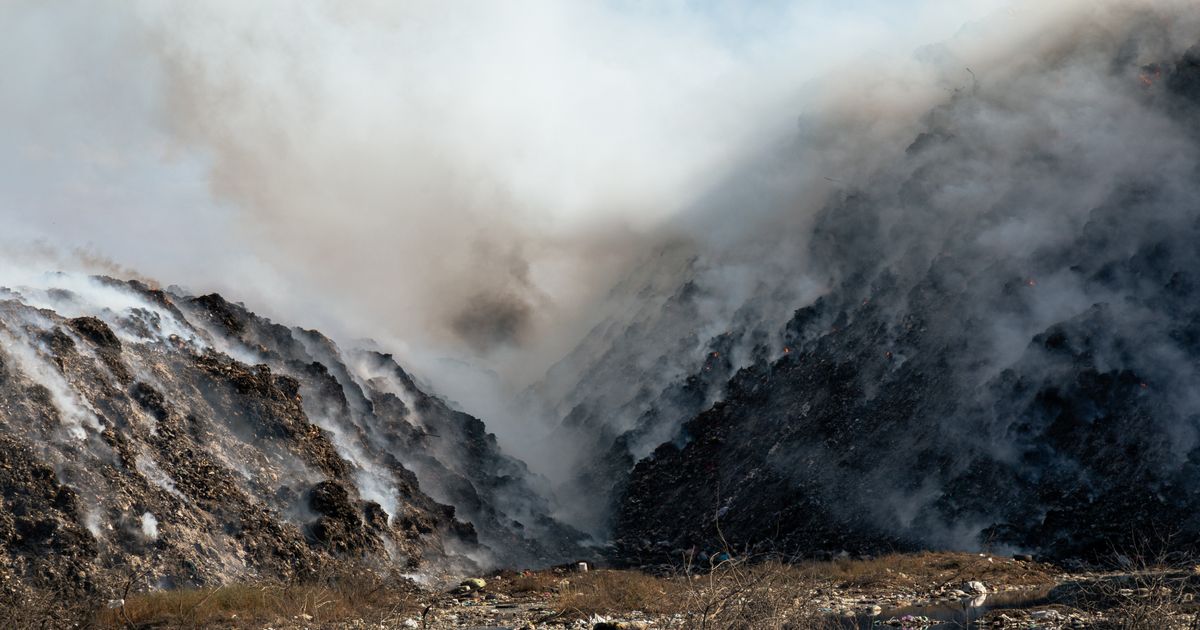
On September 6, Waste Dive reported that roughly 23 percent of the 33.56 million tons disposed of in the eight Northeast states during 2024 went to landfills that will reach their permitted capacity within five years. The number comes from the April 2026 capacity report from NEWMOA, the association of the region's state waste regulators, and Megan Quinn's story tied it to the money haulers are now putting into waste by rail. If you sign disposal contracts anywhere between Bangor and Cape May, shrinking Northeast disposal capacity is going to show up in your price.
For years, the clients I advise on regional market entry opened with a technology question. Lately the first question is blunter: what happens to my disposal cost when the nearest landfill fills up? The public data answers more of that than I expected, and most of the answer runs through a rail yard.
Seven and a half million tons looking for a new address
NEWMOA puts the at-risk tonnage at 7.6 million tons. That's waste that went in 2024 to sites that hit their permitted limits before 2030, and it will have to be cut, recycled or sent somewhere else. New York holds roughly two-thirds of it. Maine's share is smaller in tons but bigger relative to the state, because a single landfill, Juniper Ridge, takes close to half of what Maine disposes.
The region was already a heavy exporter before any of this. Per the same report, 12 million tons left the eight states by truck or rail in 2024, about a quarter of the waste they sent to disposal. Ohio took 4.2 million tons, and Pennsylvania and Virginia took close to 3 million each. (NEWMOA notes that its export estimate blends 2022 and 2024 data where a state hadn't reported the newer year.)
State by state, the exposure is uneven:
| State | 2024 disposal at sites that fill within five years | What sits behind the number |
|---|---|---|
| New York | 34% of in-state capacity | Largest landfill's permit expired in 2025; a valley infill expansion is before state regulators |
| Maine | 53% | Juniper Ridge reaches its permitted capacity in 2028 |
| New Jersey | 13% | Three landfills; two have applied for expansion or plan to |
| New Hampshire | 13% | NCES in Bethlehem plus Lebanon's regional facility; NCES filed for expansion in late 2025 |
| Massachusetts | 10% | Six landfills; all five that take incinerator ash fill by 2033 |
| Connecticut | No MSW landfills | Incinerators handled 72% of in-state disposal |
Rhode Island and Vermont are left out because each runs one large landfill with permitted room into the 2040s. Connecticut is the warning. The MIRA trash-to-energy plant in Hartford shut down in July 2022, and CT Mirror reported that the state sent 640,000 tons out of state that year and 940,000 tons in 2023, roughly 41 percent of its municipal solid waste, on trucks and rail cars bound for Pennsylvania and Ohio.
Why a rail car costs more than a truck loop
Ned Coletta, Casella's CEO, told Waste Dive that shipping by rail can cost the company up to eight times what trucking does, and that Casella will send waste to third-party sites such as waste-to-energy plants, or to its own landfills, before it puts that waste on a rail car. He contrasted the rail setup with "one truck and one trailer that's just making a loop." I'd qualify that multiple before anyone builds a model on it. It's one company's upper bound on its own network, measured against the short truck haul Casella prefers to run. A truck running the same route to Alabama would compare very differently.
Most of that cost is handling. Dickson Suit of Laurel Mountain Capital put it plainly in the same story: every additional touch raises the cost. A ton headed south gets tipped at a transfer station, loaded into a sealed intermodal container or a lidded gondola, lifted by a gantry crane or a reach stacker, hauled by one railroad and often handed to a second, lifted again at the landfill, and trucked to the working face. Each of those steps carries labor, equipment and a dwell clock. Suit also flagged cycle time: a landfill unloading three to five cars per day needs the empties coming back on a steady cycle, because cars that get stuck somewhere create backlogs at both ends.
I learned what one stalled handoff costs on the Panama transfer-station retrofit in 2021. Customs held our sorting line for five weeks, and we missed the commissioning window with a finished building and an empty tipping floor. Nothing in the design was wrong. The schedule hung on one step outside our control, and every cost downstream of it kept running while the crates sat at the port. A waste train is a string of those steps, several of them owned by a railroad that has other customers to serve.
Rail does win on distance. WIN Waste estimates rail moves waste about four times more fuel-efficiently than highway trucks, and a transfer trailer's radius is capped by the driver's day: federal hours-of-service rules in 49 CFR Part 395 allow 11 hours behind the wheel inside a 14-hour window. Once the nearest open landfill sits beyond a same-day round trip, a truck needs a second driver, a relay yard or an overnight stop, and its cost per ton climbs fast. Past that line, the fixed costs of a rail route (cars, cranes, sidings, a transload permit) finally spread over enough tons to pay off.
So the spread between a Northeast gate fee and a southern one is the budget a rail route has to fit inside. EREF's analysis of 2023 fees put the Northeast average at $84.44/ton and the Southeast at $43.18/ton, the highest and lowest regional averages in its survey. Those figures are a few years old, and every contract prices its own way. Still, the logic holds: the gap between the two gates pays for the transload, the line haul, the cars and the operator's margin, and if the gap narrows, rail stops paying for itself.
A short list of owners holds the rail-served airspace
Ohio and Alabama have landfill space. What the Northeast needs is landfill space with a rail siding and a transload network feeding it, and the Waste Dive story names several of the companies that have both. WIN Waste Innovations, which bought Tunnel Hill Partners in 2019, runs what it calls the largest waste-by-rail operation in the country, with two rail-served Ohio landfills, about 2,300 rail cars and roughly 5 million tons moved per year. Interstate Waste Services moved about 2.5 million tons by rail in 2025 and operates three rail-served facilities in New Jersey.
Waste Connections says it grew the rail network into its Arrowhead landfill in Alabama by about 300 percent over two years, all of it moving off the Eastern Seaboard from New Jersey north. Per Waste Dive, Arrowhead can take up to 15,000 tons per day, 95 percent of it by rail. Casella, for its part, has put money into its McKean landfill in western Pennsylvania: more than a mile of new spur track, gantry cranes and a transfer station for gondolas. McKean is permitted for 1.6 million tons annually and currently takes about 200,000.
Coletta's comment on McKean tells you how that capacity will be allocated. Casella never built it as a merchant site; he described it as a long-term home for many of the company's important customers over the next 30 years. That's a sensible choice for Casella. For a town or an independent hauler without its own transfer network, it means the ton that has to leave the region will probably ride a competitor's train into a competitor's landfill.
I've argued for years that regional entries die on logistics and credit well before technology gets a vote, and waste by rail is a logistics business from end to end. The Northeast disposal market is the plainest case of that I know. The scarce asset here is a siding, a crane and a permit, and the gate fee will follow whoever owns them.
Permits at the origin yard set the pace
Adding capacity at the southern end is mostly a capital question, since the receiving landfills already operate under their state permits and EPA's municipal landfill criteria in 40 CFR Part 258. The origin end is harder. A new transload yard in New Jersey or Massachusetts has to clear state solid waste permitting, local siting and a railroad's willingness to serve it, and in my experience that combination runs on a clock measured in years.
It didn't always work that way. The Surface Transportation Board used to hold exclusive jurisdiction over waste sites along rail lines, which left states unable to regulate them; New Jersey alone had nine such sites at the time, mostly in Hudson, Passaic and Essex counties, according to Rep. Frank Pallone's office. Senator Frank Lautenberg wrote the fix, and the Clean Railroads Act became law in October 2008. Solid waste rail transfer facilities now have to meet state requirements. The Board can still grant a land-use exemption that overrides state siting rules, but only after finding the site poses no unreasonable risk to public health, safety or the environment.
For a developer, that history cuts both ways. States have the tools to stop a bad yard, and neighbors near a proposed site know it. So the realistic way to add Northeast rail capacity is to expand yards that already hold permits, which again favors the companies that own them. Could a municipality get its own siding permitted faster than that? The projects I've seen move quickest sat on parcels that already had an industrial rail customer, and those parcels are rare near the cities producing the waste.
Where this forecast could miss
Expansions could shrink the Northeast disposal capacity gap. NEWMOA says the at-risk tonnage drops to 5.2 million if New York's largest landfill and Juniper Ridge both win expansions. New York's largest is Seneca Meadows. In March 2026 a state appellate court upheld the ruling that struck down the Seneca Falls law ordering it closed, Spectrum News reported, and its bid to keep filling through 2040 still waits on the state Department of Environmental Conservation. NCES in Bethlehem has an expansion application under review too, even as Casella runs down volumes there ahead of a planned closure at the end of 2027.
Other forces push the other way. The region had 27 waste-to-energy plants in 2024, down from 31 in 2018, and they still handle close to a third of what the Northeast disposes of. If another one closes, its tonnage goes where Hartford's went, which is the best argument for keeping existing waste conversion facilities running and permitting new ones inside the region. And fuel prices matter as well. CSX told Waste Dive it has seen growing customer interest in moving freight from truck to rail as fuel prices and truck rates rise, so a diesel spike narrows the gap Coletta described.
And the regional averages hide who is most exposed. A town locked into a disposal contract through 2030 won't feel much until renewal, while a small hauler buying spot capacity feels it now. Construction and demolition debris runs on its own economics, with Ohio as its biggest out-of-region destination. NEWMOA's data has limits too: facilities self-report waste types, some mixed loads get misclassified, and the capacity dates count only what's permitted today. Incinerator ash is its own squeeze, which is why the Massachusetts row in the table worries me more than its headline share suggests. Sludge and other wet streams don't ride a rail car the way baled household waste does, either.
Diversion is the lever the regulators prefer. NEWMOA's report says cutting disposal demand is the option many state officials favor, and waste characterization studies in the region keep finding material in the disposal stream that could have been reused or recycled. For commercial generators that work starts with measuring what leaves the loading dock, because a ton kept off the transfer trailer never needs a rail slot.
Gate fees through 2029
Over the next two to three years, I expect the spread between Northeast gate fees and southern ones to stay wide as Northeast disposal capacity tightens, because the marginal ton now leaves on a train and somebody has to pay for the train. Municipal contracts that renew after Bethlehem closes and after Ontario County's landfill near Stanley is expected to close at the end of 2028 will be priced by haulers who know their own rail costs and their rivals' siding limits. Look for more fuel and rail surcharge clauses in those contracts. Towns with long-term access to a waste-to-energy plant or a rail-served transfer station should hold a pricing edge over neighbors with neither, and that edge will show up first in bid tabulations.
What the evidence doesn't settle is how the handful of companies with rail-served airspace will price it once the in-region landfills close. Will they charge Northeast tonnage what the rail route costs them plus a normal margin, or whatever a town with no siding and no incinerator nearby can be made to pay?
Disclosure: I work on project development and regional markets for Renewable Waste Energy, which offers waste-to-energy services that compete with landfill disposal and rail export for some of the tonnage discussed here.
Sources & Notes
- The at-risk tonnage, the export volumes and every row of the state table come from NEWMOA's Solid Waste Disposal Capacity in the Northeast (April 2026). It counts capacity permitted as of February 2026 and assumes no pending expansion is approved.
- Megan Quinn's Waste Dive report of September 6, 2026 is where the operator figures and the quotes from Casella, Waste Connections, WIN Waste, Interstate Waste Services, Laurel Mountain Capital and CSX appear.
- Regional gate fees are calendar-2023 averages from EREF's tipping fee analysis. The foundation's national average rose again in 2024, so treat the dollar figures as dated.
- John Moritz covered Connecticut's post-MIRA exports for CT Mirror in April 2025.
- The land-use exemption test sits in 49 U.S.C. 10909, added by the Clean Railroads Act; the driving limits are in the FMCSA hours-of-service rule at 49 CFR 395.3.
Researched and written by OWI editorial staff. Technical review by RWE engineering. AI tools used for drafting assistance.
Cite this article
David Ayala, “As Northeast Disposal Capacity Shrinks, Waste by Rail Sets the Gate Fee,” Optimal Waste Intelligence, September 17, 2026, https://optimalwasteintelligence.com/posts/northeast-disposal-capacity-waste-by-rail.
You’re welcome to quote this article with attribution and a link to the original.