AI and Satellites Now Find the Landfill Methane a Quarterly Walkover Misses
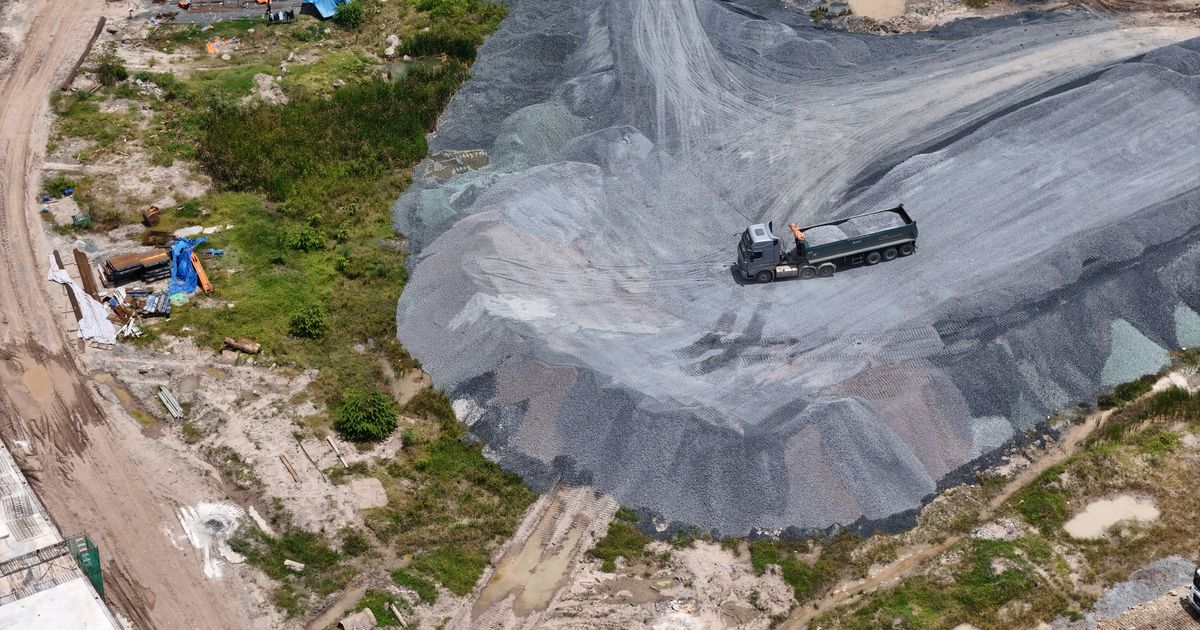
On 20 August 2021 a commercial satellite passed over two landfills east of Madrid and, in a single frame, clocked them venting close to nine tonnes of methane an hour between them, the largest such plume GHGSat had then recorded in Europe, per the European Space Agency. Nobody on the ground had reported it. The crews were doing exactly what the rules ask: walking the surface with a handheld analyzer once a quarter. Landfill methane monitoring, as most operators still run it, couldn't see what a spectrometer in orbit caught in one pass.
That gap is the whole story of where landfill methane monitoring is heading. Satellites and aircraft can now find leaks the mandated ground survey was never designed to catch. The phrase doing the marketing work, satellite methane detection powered by AI, oversells the AI and undersells the physics. So it pays to be precise about which instrument does what, because they aren't interchangeable, and the one the law requires is, on raw sensitivity, the weakest in the stack.
The Madrid reading wasn't a freak. A 2024 study in Science, led by Carbon Mapper and NASA's Jet Propulsion Laboratory, flew imaging spectrometers over some 250 US landfills and found point-source plumes at roughly half of them, most emitting well above what the operators had reported to the EPA. It's the same gap you get when a diversion rate shrinks the moment an auditor walks the site: the reported figure and the measured figure rarely match, and this kind of detection is very good at showing the difference.
The walkover was built for compliance, not coverage
Regulators didn't pick the quarterly walkover because it's the best way to find a leak. They picked it because, when the rule was written, it was the only method a field tech could run with a calibrated box and a clipboard. Under the landfill methane emissions rule most sites work beneath, 40 CFR Part 60, an existing municipal landfill above the emissions trigger has to install gas collection and then walk its surface every quarter with a flame-ionization detector, flagging any reading above 500 ppm of methane over background. Wellheads get checked monthly. It's a genuine standard, it's enforceable, and it has pulled a lot of gas into collection that would otherwise have drifted off the cap.
But a quarterly snapshot is blind for the ninety-odd days between visits, and a walkover only catches what happens to be seeping through the strip of cover the tech crosses. Cover cracks in a dry spell, a flare trips overnight, a wellhead pulls the wrong vacuum, and the surface can vent hard long before the next scheduled survey. This isn't hypothetical. In September 2024 the EPA documented, in an enforcement alert, that more than a hundred landfill inspections over three years had turned up operators who failed to run surface monitoring properly, some readings past 50,000 ppm, a hundred times the 500 ppm limit. The mandated method is only ever as good as the quarter you measure it in.
What "AI methane leak detection" actually is
I build vision models and sensor loops for a living, so let me be blunt about the AI part. The detection itself is mostly physics. Methane has a specific absorption fingerprint in the shortwave infrared, and the workhorse is a matched filter that hunts for that fingerprint against the background reflectance of the ground (bright sand and a wet clay cap behave very differently, which is half the retrieval problem). That's spectroscopy, not machine learning. Where the neural networks earn their keep is downstream: a convolutional model scans the flood of daily imagery and pushes a short list of high-probability plumes to a human analyst, cutting false positives and the hours someone would spend staring at noise. The published benchmarks put the better deep models clearly ahead of the plain matched-filter baseline, mostly by throwing out false alarms rather than by finding more real plumes.
These systems are tuned for recall on purpose. Miss a super-emitter and you've lost the one plume that mattered; flag a false one and an analyst spends two minutes dismissing it. So the models run hot, accept the false positives, and lean on people to clean up. It's a sensible design. But calling it autonomous detection is a stretch, and giving the CNN credit for finding the leak gets the story backwards. What gets sold as AI methane leak detection is really a matched filter with a triage net in front of the analyst, and the net is the junior partner.
And the accuracy operators actually care about, how many kilograms an hour is this thing losing, doesn't come from the network at all. It comes from the wind. Flux is concentration times wind speed, so a plume mapped perfectly and paired with a bad wind estimate hands you a confident, wrong number. For a long time I took it on faith that a better model was the cure for a bad measurement. It rarely is. I say this a lot and it holds here too: the model is 10% of the system; the data pipeline is the other 90%, and for methane that pipeline means wind fields, calibration, and cross-checks against sources you already know about.
Five ways to look for a leak, side by side
Line the options up by what each can actually see, and the trade is coverage against sensitivity against cost. The detection floors below come from manufacturer figures and published surveys, so read them as order-of-magnitude, not guarantees.
| Method | What it catches | Where it fits |
|---|---|---|
| Quarterly walkover (handheld FID) | Surface leaks over 500 ppm, checked point by point four times a year | Compliance baseline; blind between visits |
| Fixed continuous sensors | Concentration trends across one site, hour by hour | Early warning; you own the drift and the siting |
| Drone or aircraft spectrometer | Point-source plumes down to tens of kilograms an hour, meter-scale | Periodic audits; pinpointing a single vent |
| High-resolution satellite (GHGSat, Tanager-1) | Facility plumes from about 100 to 200 kilograms an hour, 25 to 35 m pixels | Screening many sites; catching super-emitters |
| Wide-scan satellite (TROPOMI) | Only very large releases, several tonnes an hour, coarse pixels | Regional screening; flags where to look closer |
Two things fall out of that table. Continuous ground sensors and orbital screening sit at opposite ends: one watches a single site cheaply but sees nothing beyond its own cap, the other is built for super-emitter detection across every landfill on Earth, though only when the sky is clear and the plume is large. The walkover sits awkwardly in the middle, mandated yet outmatched on both coverage and reaction time.
Which one fits your landfill
So which do you actually deploy? It depends on what you're trying to do, and anyone selling you a single answer is selling you their product. If you run a mid-size municipal site and your problem is the compliance file, the walkover stays your system of record, because that's what the rule recognizes. But bolt continuous sensors onto your collection headers and cover, and you'll catch the tripped flare or the failed vacuum the same day instead of next quarter. It's the cheapest gap on the list to close.
For a company sitting on dozens of sites, satellite screening changes the question from which cell is leaking to which landfill deserves a truck this month. A wide-scan instrument flags the region, a high-resolution one pins the facility, and only then do you send people to walk it. The satellite doesn't replace the walkover. It tells you which walkover to run first. Any serious landfill methane monitoring program five years from now will run all of these at once, and the skill will be fusing them, not picking one.
Each method has hard limits, and the vendors are quiet about them. Satellites need sun and a clear sky, so a cloudy maritime climate or a high-latitude winter guts the revisit rate (and yes, that means a bad-weather week is a blind week). They read tidy point-source plumes well and diffuse emissions across a wide cap badly, which is the pattern plenty of well-run sites actually show. Not every landfill is even a satellite target: a small site below the collection trigger may never vent a plume large enough for orbit to catch, yet still leak in aggregate. And wind, again, sets the error bar on every flux estimate, which is why one pass is a detection and not an inventory.
There's a harder-nosed reason to care than the compliance file. Methane you leak is methane you didn't capture, and captured landfill gas is fuel, the stuff that runs the GE Jenbacher gensets and, at sites built for it, sells into the grid as waste-to-energy technology. Wholesale gas has sat near $3/MMBtu per EIA, so a large plume is lost revenue stacked on a climate hit. Finding it faster is money the site would otherwise flare or vent, not a softer number on a form.
What I'm watching is the legal question, not the technical one. The instrument that finds the leak and the instrument the law requires are still two different machines. Once a regulator treats a satellite plume as presumptive evidence, and a few are edging that way, the burden flips: an operator stops defending a clean quarterly file and starts explaining a plume they never saw coming. The walkover isn't going anywhere. It's just stopped being the last word on what your landfill is doing.
Disclosure: I'm Chief Automations Officer at Renewable Waste Energy and I built OWI, our AI waste management software. We work on sensor and computer-vision systems for waste operations, not on methane satellites, so treat the orbital detail here as an engineer's read of the public record rather than a pitch.
Sources & Notes
The Madrid plume figure and the Sentinel-5P-to-GHGSat workflow are from the European Space Agency's account of the August 2021 detections.
For the US picture, the key source is Cusworth and colleagues, "Quantifying methane emissions from United States landfills" in Science (2024), the aircraft survey behind the roughly-half and above-reported figures.
Chapter and verse on the 500 ppm surface-monitoring threshold and the quarterly cadence lives in 40 CFR Part 60, Subpart Cf on the eCFR.
Those September 2024 findings, including the readings past 50,000 ppm, come from the EPA's enforcement alert on landfill monitoring and maintenance.
On where the machine learning actually sits, this 2024 arXiv survey of ML methods for methane detection from space maps the matched filters, the CNNs, and the analyst-in-the-loop design fairly.
Researched and written by OWI editorial staff. Technical review by RWE engineering. AI tools used for drafting assistance.
Cite this article
Andrus Nomm, “AI and Satellites Now Find the Landfill Methane a Quarterly Walkover Misses,” Optimal Waste Intelligence, September 12, 2026, https://optimalwasteintelligence.com/posts/landfill-methane-monitoring-ai.
You’re welcome to quote this article with attribution and a link to the original.