Waste-to-Energy Market 2026: Growth, Investment, Innovation

The global waste-to-energy market reached $35.1 billion in 2025 and is projected to exceed $50 billion by 2030, driven by landfill capacity constraints, tightening emissions regulations, and corporate ESG mandates that penalize disposal-dependent waste management. But the 2026 market looks different from even two years ago - shaped by AI integration, modular deployment models, and carbon credit monetization that are transforming WTE from a niche disposal technology into mainstream energy infrastructure.
Market Size and Growth Drivers
Three forces are accelerating waste-to-energy investment in 2026:
1. Landfill Economics Are Breaking
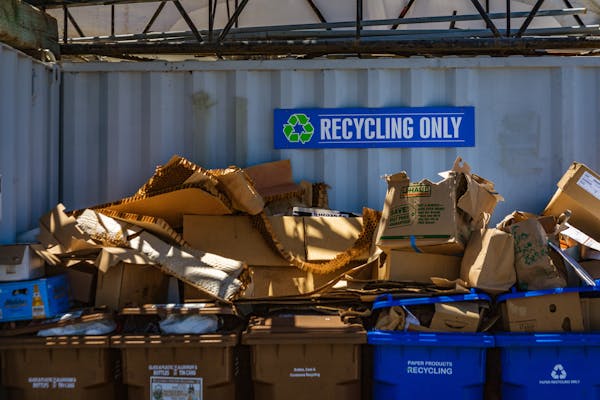
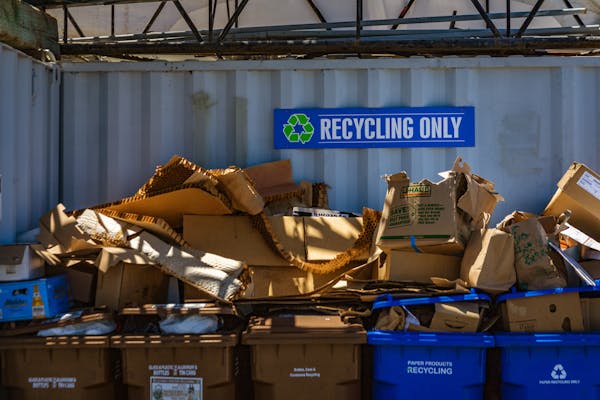
Average landfill tipping fees in the US have risen 35% since 2020, exceeding $75/tonne nationally and $120/tonne in capacity-constrained regions (Northeast, Pacific Coast). The EU Landfill Directive continues to tighten, with several member states now banning organic waste from landfill entirely. In Asia, mega-cities like Mumbai, Jakarta, and Manila face acute disposal crises with no viable landfill expansion paths. Every dollar increase in landfill costs improves WTE project economics by the same amount.
2. Carbon Markets Are Pricing Landfill Methane
Landfilled organic waste generates methane for decades. As carbon markets mature and methane-specific regulations emerge (EU Methane Regulation, US EPA Methane Rule), the avoided-emissions value of diverting waste from landfill to WTE becomes quantifiable. Current carbon credit prices of $30-60/tonne CO2e add $15-30 per tonne of waste diverted to the WTE revenue model - a material swing in project pro formas.
3. Corporate Zero-Waste Commitments Need Infrastructure
Over 500 major corporations have committed to zero-waste-to-landfill targets by 2030. Meeting these targets requires conversion capacity for the residual fraction that recycling cannot handle. Corporate demand for zero-waste-to-landfill solutions is creating a new customer segment for WTE operators - one that pays premium tipping fees for documented diversion with full chain-of-custody reporting.
Technology Trends Reshaping the Industry
AI-Driven Operations
The integration of artificial intelligence into waste-to-energy operations is the most significant technology shift of the past three years. AI waste management platforms like OWI (Optimal Waste Intelligence) handle real-time feedstock classification, process optimization, predictive maintenance, and market-responsive output routing. Facilities using AI control systems report 8-15% improvements in conversion efficiency and 20-35% reductions in unplanned downtime. As AI capabilities improve and sensor costs decline, AI-optimized operations will become the baseline expectation for new WTE projects, not a competitive differentiator.
Modular and Distributed Deployment
The traditional WTE model (large centralized plants processing 1,000+ tonnes per day) is being supplemented by modular systems at 50-200 TPD scale. These units can be containerized, factory-built, and deployed in 12-18 months versus 3-5 years for conventional plants. Modular WTE opens the market to smaller municipalities, industrial campuses, military installations, and remote communities that lack the waste volume for centralized facilities but need alternatives to landfill.
Pyrolysis Over Incineration
New WTE capacity globally is increasingly pyrolysis-based rather than mass-burn incineration. Advanced pyrolysis systems using radiant heat, thermal scrubbing, and vortex pyrocore technology produce multiple marketable outputs (syngas, liquid fuel, char) versus incineration's single output (heat/electricity) plus hazardous ash. Regulatory environments in the EU, US, and Asia are reflecting this shift, with faster permitting pathways for pyrolysis compared to incineration.
Regional Market Dynamics
- North America: Strongest growth in mid-scale modular WTE and legacy waste remediation projects. EPA methane regulations and state-level landfill restrictions are key drivers. Investment focus on brownfield remediation combined with energy recovery
- Europe: Mature market transitioning from incineration to advanced thermal conversion. EU taxonomy alignment requirements are pushing existing facilities to upgrade to pyrolysis-based systems with lower emissions profiles
- Asia-Pacific: Fastest absolute growth. China, India, and Southeast Asia are building WTE capacity to address urban waste crises. China alone added 30+ GW of WTE capacity in the past five years
- Middle East & Africa: Emerging market with high growth potential. GCC countries are investing in WTE as part of economic diversification and circular economy strategies
Investment and Financing Trends
WTE project financing is evolving. Green bonds and sustainability-linked loans now fund a growing share of new capacity. Infrastructure funds are acquiring WTE portfolios as stable, inflation-linked assets with 20-30 year revenue visibility from long-term waste supply agreements and power purchase agreements.
Phased deployment models (starting at validated throughput (15 TPH) and scaling to full capacity (60 TPH) over 3-4 years) reduce capital risk for investors. Renewable Waste Energy, with 30+ years of project delivery across 100+ global installations, has demonstrated that phased scale-up consistently outperforms single-phase mega-project approaches in both financial returns and operational reliability.
What to Watch in 2026–2027
The waste-to-energy market is entering a period of structural acceleration. Landfill costs will continue rising. Carbon pricing will continue tightening. Corporate waste mandates will continue expanding. The operators best positioned are those combining proven conversion technology with AI optimization, modular scalability, and diversified revenue models - not single-product disposal operations, but integrated circular infrastructure platforms.