PFAS Superfund Liability Is Landing: What the 400 to 800 Percent Leachate Cost Jump Means for Thermal Destruction
Four hundred to eight hundred percent. That's the National Waste & Recycling Association's own estimate of what it costs to strip PFOA and PFOS out of landfill leachate under the new Superfund rules, and across America's municipal landfills it pencils out to somewhere between $966 million and $8.2 billion a year. I've spent thirty years negotiating waste and manufacturing deals, and I can't recall another regulation that repriced a single operating line item this hard, this fast.
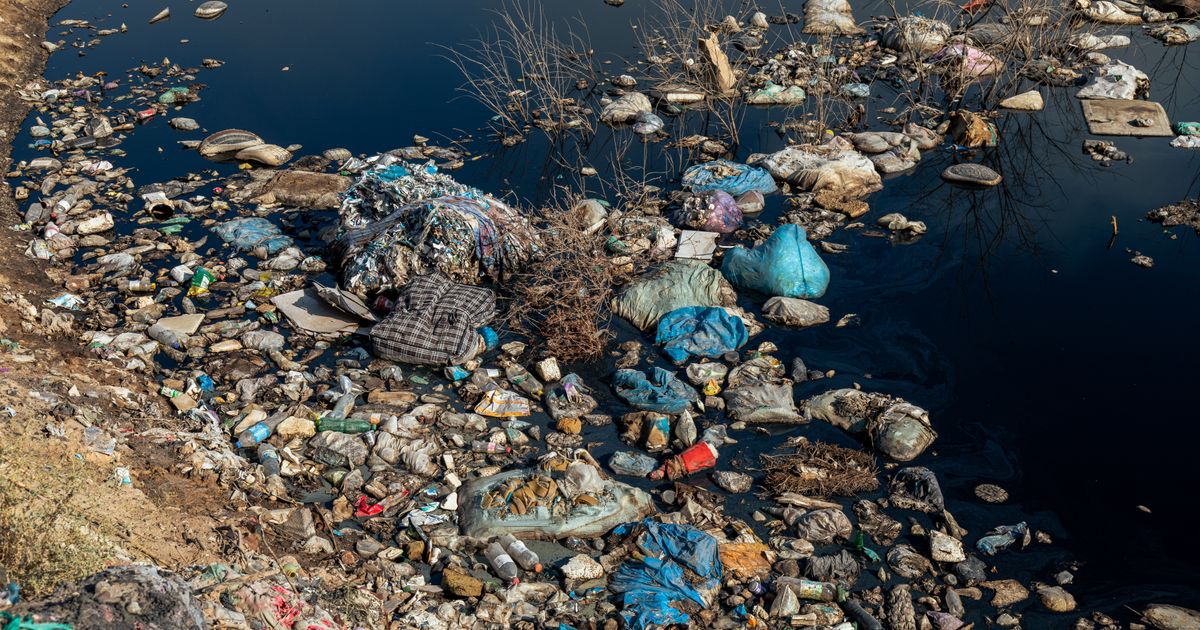
Leachate is the line item most people outside this industry have never thought about. Rain falls on a landfill, water works down through decades of buried material, and what collects at the bottom is a liquid that has touched everything we ever threw away (a mid-size site can run into the tens of millions of gallons in a wet year). For half a century the standard move was simple: pipe it or truck it to a wastewater treatment plant and pay by the gallon. PFAS is ending that arrangement, because the treatment plant wants the liability even less than the landfill does.
What the Superfund label actually changed
In April 2024, EPA designated PFOA and PFOS as hazardous substances under CERCLA, the federal Superfund law, and the agency's designation rule imported the full CERCLA liability regime along with it: strict, retroactive, joint and several. You don't need to have manufactured a molecule of PFAS to be on the hook for it. Receiving it is enough.
That's exactly the landfill's position. Landfills made nothing. They accepted carpets, cookware, food packaging, and firefighting foam because that's what arrived at the gate, and the industry has been arguing in court that a passive receiver shouldn't carry a manufacturer's liability. The U.S. Chamber of Commerce is leading that petition with NWRA alongside it, asking the courts to send the rule back to EPA. The case was still live this summer, and EPA was still defending its decision. But an operator can't finance a maybe, so the market is behaving as if the designation holds.
Under it, leachate stops being a disposal afterthought and becomes a regulated hazardous-substance stream the moment PFOA or PFOS turns up above reportable levels. Per NWRA's comments to EPA, serious pretreatment runs $2 million to $7 million of capital for a moderate site, before the first dollar of operating spend, and EPA counts more than a thousand active municipal landfills in its national waste figures. Multiply it out and you arrive at the annual range this article opened with. Based on my own envelope math, a site collecting 20 million gallons a year that amortizes a $4 million retrofit over ten years adds roughly two cents a gallon before chemicals, power, or residuals handling, and the operating side usually ends up the bigger number. The costs aren't hypothetical. They're being quoted in contracts right now.
The other side of the ledger: destruction becomes a revenue line
Liability on one side of a market always shows up as revenue on the other. The clearest public numbers yet came together in a Waste Dive analysis published June 29, drawing on what the large environmental-services companies now disclose about their PFAS businesses.
| Who | 2026 PFAS-related revenue | Disclosed growth |
|---|---|---|
| Republic Services | About $100 million this year | 15 to 20 percent annually |
| Clean Harbors | About $175 million this year | 20 to 30 percent |
| Revive Environmental (supercritical water oxidation) | Firefighting-foam destruction market estimated near $1 billion over five to eight years | One-time stockpile work, then recurring streams |
Look at what those companies are selling. Not storage, and not dilution. Destruction. Once a substance carries CERCLA liability, moving it around just relocates your exposure, and every party in the chain knows it. The only transaction that actually closes the risk is the one that ends the molecule.
Thermal systems sit at the end of that chain because heat is the most broadly deployable way to break the carbon-fluorine bond, the strongest single bond in organic chemistry. High-temperature combustion with adequate residence time, supercritical water oxidation coming up alongside it commercially, and a short list of newer approaches behind those. It's the same class of waste-to-energy technology the industry already runs for energy recovery, now being asked to do a second job: close a liability loop. We looked at the technical half of this, and EPA's notably cautious guidance on incinerating PFAS, in our analysis of the April guidance. The commercial half is what changed since: the customers stopped asking whether destruction works and started asking who can take the volume.
What happens when a pathway closes faster than contracts reprice
Maine already ran this experiment. In 2022 the state banned land application of biosolids after PFAS from spread sludge contaminated dairy farms, and the in-state disposal pathway effectively shut down within weeks. For the rest of that year haulers ran stranded loads to New Brunswick because nowhere closer would accept them. Nobody had renegotiated those disposal contracts in advance. Everyone paid spot prices after the fact, and some of that material crossed an international border to find a home. That's the shape of a stranded stream, and leachate is a far bigger stream than sludge.
So who actually pays for a contaminant that nobody in the disposal chain manufactured? Follow the contracts, because that's where the answer gets written. A landfill's gate fee is the only revenue line it fully controls, and gate fees are already being repapered with PFAS riders on top of a national average tip fee that EREF's latest survey puts near $57/ton. Leachate-hauling agreements are picking up change-in-law clauses that pass new treatment costs through to the generator side. Municipal collection contracts, most of which run five to ten years, will absorb the increase at renewal, which means ratepayers see it with a lag. And upstream, the manufacturers who actually made these compounds have been settling water-utility claims in the billions, which tells you where the deepest pockets in the liability chain sit.
The deal I'd be negotiating today
I run The Waste Agency, and commercialization is the seat I watch this from: waste-to-energy, bioenergy, and carbon strategy, the deals that decide whether a project gets financed and built. The renewable energy from waste business spent two decades selling electrons that competed with ever-cheaper solar. I've said for years that the kilowatt-hour is the byproduct and the contracted fee is the product, and PFAS is the strongest version of that argument I've ever seen. A destruction fee attached to a federal liability is the most defensible revenue line this industry has been offered since the tipping fee itself.
If I'm advising an operator, the checklist is short. Get PFAS language into every leachate and gate-fee contract at the next opening, not the next crisis. Price the rider off your worst-quarter lab results, not your average. Treat pretreatment capital as a shared cost with the parties whose liability you're extinguishing, because you're doing them a service and the contract should say so. And if you're a developer or an investor sizing waste-to-energy services around this, underwrite the destruction demand, not the electricity price. The counterparty's balance sheet matters more than the technology brochure.
Where this lands by 2029
The litigation will trim edges. It won't reverse direction; EPA reaffirmed its intent to keep the designation in place even while reviewing parts of the framework, and no serious operator is building a 2027 budget on the assumption that PFOA comes off the list. So project the data forward. Leachate pretreatment consolidates into fewer, larger regional plants, because $2 million to $7 million of capital per site doesn't spread across small landfills. PFAS riders become standard boilerplate in gate-fee and hauling contracts within two renewal cycles. Destruction revenue at the big environmental-services firms keeps compounding at the double-digit rates in their own disclosures against low-single-digit growth in collection, which quietly reweights those companies' earnings toward liability closure. And thermal capacity that can document destruction becomes the scarce asset in the chain, the way landfill airspace was scarce in the 1990s.
A rule made the waste industry the owner of a chemistry problem it didn't create. The operators who reprice fastest will be the ones who treat it as a market instead of a grievance. The molecule doesn't care how the litigation ends.
Caveats, and what could move these numbers
Three honest limits on everything above. First, the headline cost range comes from NWRA, which is also a petitioner against the rule, so treat it as advocacy arithmetic as well as engineering (the direction is right even if the top end is negotiating posture). Second, EPA paired the designation with an enforcement-discretion policy saying it doesn't intend to pursue municipal landfills, water utilities, or farms as responsible parties, which softens the federal edge of this, but discretion is policy rather than law, and it binds nobody in a private cost-recovery suit. Third, Congress keeps circulating passive-receiver exemption bills, and any of them passing would redraw the liability map I've described. None of those caveats changes the contracting behavior I'm seeing, but they set the error bars.
Sources & Notes
The cost and revenue figures throughout come from the June 29, 2026 Waste Dive analysis of PFAS Superfund costs and benefits, which compiled NWRA's leachate estimates and the Republic Services, Clean Harbors, and Revive Environmental disclosures.
The designation itself, and its scope, is laid out on EPA's PFOA and PFOS CERCLA designation page.
For the industry's legal challenge and the passive-receiver argument, see Waste Dive's reporting on the NWRA and U.S. Chamber petition.
Landfill counts and national waste-stream context are from EPA's Facts and Figures on Materials, Waste and Recycling.
Researched and written by OWI editorial staff. Technical review by RWE engineering. AI tools used for drafting assistance.
Cite this article
Alex Mardikian, “PFAS Superfund Liability Is Landing: What the 400 to 800 Percent Leachate Cost Jump Means for Thermal Destruction,” Optimal Waste Intelligence, July 10, 2026, https://optimalwasteintelligence.com/posts/pfas-superfund-leachate-economics-2026.
You’re welcome to quote this article with attribution and a link to the original.