Municipal Solid Waste Solutions: Modern Alternatives Beyond the Landfill
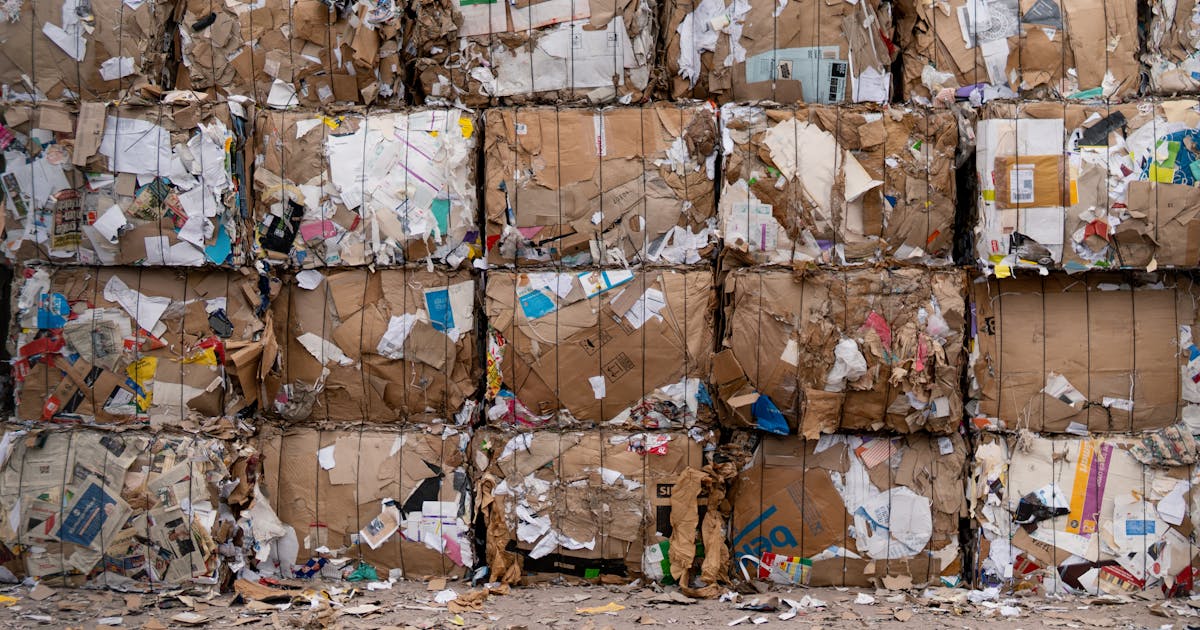
Municipal solid waste (the mixed residential and commercial refuse that cities collect daily) accounts for roughly 2.01 billion tonnes globally each year. That number will reach 3.4 billion tonnes by 2050 according to World Bank projections. The traditional response has been landfilling: dig a hole, fill it, cap it, move on. But landfill capacity is shrinking in every developed region, tipping fees are climbing past $100 per tonne in constrained markets, and methane emissions from decomposing organic waste now represent 5% of global greenhouse gas output. Municipal solid waste solutions have shifted from disposal to recovery - extracting maximum value from every tonne before anything reaches a landfill cell.
The Composition Problem
MSW is heterogeneous by nature. A typical residential collection stream contains 30-40% organics (food, yard waste), 20-25% paper and cardboard, 10-15% plastics, 5-8% metals, 4-6% glass, 3-5% textiles, and 10-15% residual material that defies single-category classification [EPA national waste characterization, 2023 (regional composition varies significantly]. And this variability makes single-technology approaches inadequate. A composting facility handles organics but ignores plastics. A materials recovery facility (MRF) captures recyclables but sends 30-50% of inbound material to landfill as residue [MRF operator data) rejection rates depend on contamination levels and local recycling markets]. Effective municipal waste management requires an integrated system where each technology handles the fraction it processes best, and the residuals from one stage become feedstock for the next.
Stage One: Mechanical Sorting and Material Recovery
The front end of any modern MSW solution is automated sorting. Trommel screens separate material by size. Ballistic separators divide flat items (paper, film) from rolling items (bottles, cans). Magnetic drums extract ferrous metals. Eddy current separators eject aluminum and copper. Near-infrared (NIR) optical sorters identify polymer types (PET, HDPE, PP) and air-jet arrays route each stream to dedicated collection bins.
A well-designed MRF recovers 40-60% of incoming MSW as marketable recyclables. AI-powered sorting systems push that ceiling higher. Computer vision and machine learning identify material composition in real time, adjusting sort parameters dynamically as waste stream characteristics shift between morning residential loads and afternoon commercial deliveries. Facilities running AI-augmented sorting report 15-25% improvement in material capture rates compared to static optical configurations [vendor claims and pilot data - results vary by waste stream and baseline equipment].
Stage Two: Organic Processing
Source-separated or mechanically extracted organics (food scraps, yard trimmings, soiled paper) follow a biological pathway. Anaerobic digestion (AD) breaks down organic material in sealed vessels, producing biogas (55-65% methane) for electricity generation or pipeline injection, plus a nutrient-rich digestate usable as soil amendment. A 200 TPD AD facility generates 1.5-2.5 MW of electrical equivalent from biogas, displacing fossil fuel consumption while diverting the fraction of MSW most responsible for landfill methane emissions.
Still, composting remains viable for yard waste and clean green material, but AD captures energy that composting releases as waste heat. For municipalities evaluating organic processing infrastructure, AD delivers both diversion and revenue - biogas sales, renewable energy credits, and avoided landfill tipping fees compound into a faster payback than composting alone.
Stage Three: Thermal Conversion of Residuals
So what happens to the material that recycling and composting can't handle? After recyclables and organics are removed, 30-40% of the original MSW stream remains: mixed plastics that lack recycling markets, contaminated paper, textiles, composites, and non-recyclable packaging. This residual fraction carries high calorific value (typically 15-22 MJ/kg) but no commodity buyer wants it. Historically, it went to landfill. But thermal conversion changes that equation entirely.
Pyrolysis processes this residual stream in an oxygen-free environment using radiant heat and vortex pyrocore technology rather than combustion. The sealed reaction chambers thermally decompose mixed waste at 400-700°C, producing three marketable outputs: syngas (40-50% of output by mass), pyrolytic liquid fuel (25-35%), and carbon-rich char (10-25%) [RWE process design data (actual split varies with feedstock composition and moisture content]. A facility processing 200 TPD of MSW residuals through pyrolysis generates approximately 1.2 MW of electricity per tonne from syngas-powered generation [engineering estimate]. In practice, net electrical output depends on parasitic load and syngas quality) facilities with poorly sorted feedstock can see 20-30% lower output than design capacity.
The distinction from incineration matters. Incineration burns waste with excess oxygen at 850-1100°C, producing flue gas, fly ash, and bottom ash that require expensive treatment and disposal. Pyrolysis operates without oxygen, producing no combustion emissions. Thermal scrubbing systems clean the syngas stream before it reaches generators, and the char residue (rather than being hazardous ash) has commercial applications as activated carbon, construction aggregate, or soil amendment.
Integrated Systems: How the Stages Connect
The highest-performing municipal solid waste solutions combine all three stages into a single integrated facility. Waste arrives at the tipping floor. Mechanical sorting extracts recyclables and separates organics. Organics feed anaerobic digestion for biogas production. Non-recyclable residuals feed pyrolysis for syngas, fuel, and char production. Metals recovered from both the front-end MRF and post-pyrolysis char processing enter commodity markets.
This integrated model targets 90-95% landfill diversion [design target - achieved at facilities with well-characterized, consistent feedstock]. And the economics work because each stage generates its own revenue: recycled commodity sales from the MRF, biogas electricity from AD, and syngas power plus fuel and char sales from pyrolysis. Tipping fees paid by waste generators fund the entire operation, with product revenue providing upside margin.
A caveat worth stating plainly: in our experience, integrated MSW recovery works best at 100+ TPD where capital costs amortize. Smaller municipalities often can't justify a full three-stage system and are better served by regional partnerships or phased deployment - starting with MRF and AD, adding thermal conversion when residual volumes justify the investment. Feedstock inconsistency is the other common stall point; I've seen facilities that accept waste from dozens of haulers without composition contracts spend far more on preprocessing than originally budgeted.
Urban Waste Recovery: The Municipal Business Case
For city governments and regional waste authorities, the financial argument for integrated MSW solutions has crossed a threshold. Landfill tipping fees in capacity-constrained regions now exceed $100-$150 per tonne, with annual escalation clauses of 3-5%. New landfill permitting takes 5-10 years and faces growing community opposition. Meanwhile, integrated recovery facilities accept waste at competitive gate rates while generating revenue from energy, fuel, materials, and carbon credits that landfills never produce.
Real-time monitoring of waste composition, processing throughput, energy output, and commodity pricing allows operators to route materials to highest-value destinations dynamically. When aluminum prices spike, sorting parameters tighten to capture more non-ferrous metal. When electricity spot prices drop, syngas diverts from power generation to liquid fuel synthesis. So this kind of continuous optimization turns MSW from a cost center into a managed resource portfolio - but only for operators who invest in the data infrastructure to make it work.
Moving Beyond Landfill Dependence
Municipal solid waste will continue growing as urban populations expand and consumption patterns persist. Does that waste enter a landfill cell where it generates methane, consumes land, and produces zero economic return (or does it enter an integrated recovery system where every tonne yields energy, materials, and revenue? The technology exists. The economics work. The remaining variable is commitment: from municipal governments willing to modernize procurement, from waste operators ready to invest in processing infrastructure, and from engineering partners who can design and deliver systems that perform at commercial scale. For municipalities ready to evaluate integrated MSW recovery, we recommend starting with a waste characterization study and feasibility assessment) understanding what's actually in the waste stream before committing to technology.
Disclosure: Renewable Waste Energy designs and operates integrated MSW recovery facilities. The OWI platform provides AI-driven sorting and process optimization for waste processing operations. Process data cited in this article draws from RWE project records unless otherwise noted. Contact RWE for feasibility assessments.
Sources & Notes
- Global MSW generation (2.01 billion tonnes/year, 3.4 billion by 2050) from World Bank "What a Waste 2.0" report, 2018 update.
- Waste composition ranges based on EPA national waste characterization data, 2023. Regional and seasonal variation can shift these by 5-10 percentage points.
- Pyrolysis output split (syngas/fuel/char) from RWE process design specifications for mixed MSW residual feedstock. Actual ratios depend on feedstock moisture, composition, and reactor temperature.
- Landfill tipping fees ($100+/tonne in constrained markets) reflect 2024–2025 pricing in Northeast US, California, parts of EU, and Gulf region.
- Diversion targets (90-95%) represent design-stage projections for integrated facilities with three processing stages. Single-stage facilities typically achieve 40-65%.