Should You Put Autonomous Landfill Equipment on Your Site After WM's Cat Command Rollout?
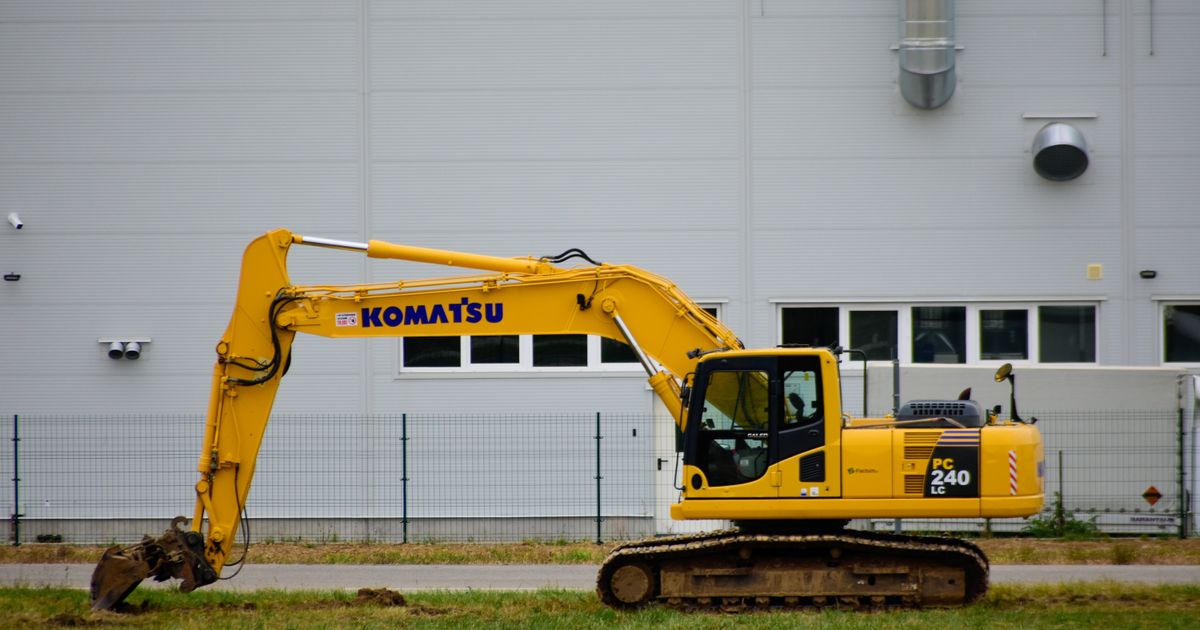
WM just put a remote-controlled bulldozer on a landfill. Does that change anything for the rest of us?
On 3 August 2026, WM said it's moving to the next phase of what it calls its "Landfill of the Future" program: it will work with Caterpillar to test a Caterpillar-built autonomous landfill compactor. That builds on something the company already did quietly in late 2025, when it started running a bulldozer under Cat Command remote-controlled technology at its Marana, Arizona site, pushing and spreading waste with the operator sitting somewhere other than the cab. It's the first time remote-controlled heavy equipment has run in the US solid-waste business. So here are the questions operators keep asking me about autonomous landfill equipment, in the order they actually come up.
Short version: it's coming, but what WM has on the ground today isn't autonomous. It's teleoperated. And that gap between "remote-controlled" and "autonomous" is the whole story for anyone deciding whether to care yet.
What did WM actually announce, and is it really "autonomous"?
Two different things got announced, and the coverage blurred them. The machine at Marana today is a Cat Command remote-controlled bulldozer: a person still runs it in real time from a console, and the cab is simply empty. WM says that console can be a climate-controlled room with a 360-degree camera view stitched from the machine. The second thing, the autonomous compactor, is a test program, not a deployment. Caterpillar builds the machine and WM gives it a live working face to learn on. Nobody has an unmanned compactor holding density on a landfill today.
Why does that distinction carry so much weight? Because teleoperation and autonomy have different cost curves, different risk, and very different timelines. Remote control is close to a solved problem, borrowed straight from mining, where Cat Command has run on haul trucks and dozers for years. Autonomy on a landfill is genuinely hard, and I'll get to why. If a vendor pitches you "autonomous landfill equipment" next quarter, the first thing to ask is whether there's a human in the loop. But right now, there always is.
Why would an operator want the driver out of the cab?
Safety, and it's not a small thing. A landfill working face is one of the more dangerous places in this business: heavy machines on soft, compacting ground, blind spots everywhere, dust, heat, and the steady risk of a rollover on a slope that shifted overnight. Pull the operator out and put them in a chair fifty feet away, or eventually fifty miles away, and you've taken the person out of the rollover. WM built its whole message around that when John Morris, its president, announced the next phase:
"We're reducing employee exposure to risk from challenging environments." John Morris, President of WM, 3 August 2026.
There's a workforce angle underneath the safety story, and it may matter more. Good heavy-equipment operators are hard to hire and harder to keep, and a climate-controlled room beats a dusty cab in an Arizona August (I've lost good crews to worse conditions than that). None of this shows up cleanly in an OSHA log or an RCRA Subtitle D file, which is part of why the trade press undersells it. The safety case sells itself. It's the workforce math that actually moves a budget.
Does the money actually work?
I slow people down right about here. Teleoperation doesn't cut your labor line. You still need a licensed operator running the machine; you've just moved their chair into a trailer. So the payback isn't headcount, at least not yet. It's uptime, fewer safety claims, and more productive hours from the same crew because they aren't cooked by mid-afternoon. Real benefits, but softer than "we cut two positions," and harder to sell upstairs.
Then there's scale, which decides everything. It costs about $62 a ton to dump municipal waste at the national average now, up about a tenth from the year before, and the big private sites clear north of $70/ton, per EREF's 2024 tipping-fee survey. Those gate fees fund everything that happens on the working face.
A site taking 8,000 tons a day runs dozers and compactors around the clock, so trimming rework and downtime across that fleet adds up fast. Compare a rural landfill that takes 300 tons a day and runs one dozer for part of a shift. Different world entirely. The capex bump and the vendor-support contract for remote or autonomous kit won't pencil there, and I'd tell that operator to wait a few years.
One more thing I keep in a separate column: the machines pushing waste aren't where a landfill earns its best margin anyway. The gas field usually is. If you want the cheapest reliable megawatt a landfill already owns, it's the methane under the cap, not the dozer on top of it. Automating the dozer is a cost-and-safety play on the operating side; it doesn't change what the asset earns. Keep those two conversations apart, or you'll talk yourself into the wrong capital priority.
So should I put autonomous equipment on my landfill next year?
Probably not next year, and I say that as someone who likes this technology. Here's the honest limits list. Remote-controlled and autonomous landfill equipment both lean hard on connectivity, and plenty of landfills have dead zones right where the face is working, down in a cell with earth berms on three sides (dead zones are worse than any vendor slide admits). Dust blinds cameras, so the 360-degree view that looks great in the demo degrades on a bad wind day. Slopes shift as waste compacts, and an autonomy stack that expects a stable world gets surprised by ground that moves under it. Below a few thousand tons a day this doesn't make economic sense, full stop. It isn't a fit for every landfill, and any vendor who tells you it is hasn't run one.
Let me tell you where I learned to respect timelines like this. On the Panama transfer-station retrofit in 2021, customs held our imported sorting line at the port for five weeks and we lost the commissioning window we'd promised the municipality. Nothing about the machine failed; a dependency I didn't control set the real schedule. Remote and autonomous kit is exactly that kind of dependency, stacked higher: vendor field support, spare parts flown in, connectivity, retraining, a software cycle you don't own. Plan for the dependency, not the demo.
I've also been wrong in the other direction, so I'll own it. On the Monterrey project I assumed a backup generator would barely run, because that's what the OEM's own numbers implied. It ran 380 hours in year one because grid stability was worse than the utility's data admitted, and it cost us about $74k we hadn't budgeted. The lesson carries straight over: a vendor's productivity and uptime figures for autonomous equipment describe a clean test, not your wet Tuesday under a wind advisory. Discount them.
Where does this fit with the software and data side of the yard?
Autonomous machines are one node in a bigger picture, and honestly the less glamorous one. For most operators the bigger lever is still the data layer: airspace consumption, compaction density, landfill diversion, gas-field performance, all tracked close to real time. That's the domain of waste-intelligence software, and it pays back at sites far smaller than the ones where a robot dozer makes sense. A remote-controlled bulldozer is a safety and workforce win; the model that tells you which cell to fill next, and flags when your gas collection is drifting, is where the operating margin usually hides.
And keep the frame honest: most of these sites will stay landfills, not turn into something exotic. Automating the equipment doesn't move a single ton up the hierarchy toward reuse or recovery. If your real goal is cutting what you bury, that's a different program built on diversion and waste-to-energy technology, and a self-driving compactor doesn't advance it one bit. It makes the burying safer and a little cheaper. Worth doing. Not the same conversation.
What I'm watching next
The tell will be the compactor test, not the remote dozer. Remote control I already believe; mining proved it years ago. Autonomy is the hard part, because a compactor's entire job is to read a surface that keeps changing and hit a density target anyway. I'll be convinced the day a Caterpillar autonomous landfill compactor holds its target density, unmanned, through a wet week at Marana without a human quietly taking the sticks every hour. Until then, this is a serious pilot by the one operator big enough to run it, and a preview of a labor model the rest of us may get to copy in maybe five years. Watch the compactor numbers, hire the operators you can, and don't spend a dollar on the robot until your tonnage says you should.
Sources & Notes
- WM's newsroom has the announcement, the Marana deployment, and the compactor collaboration: "WM's Landfill of the Future Advances Towards Autonomous Equipment Testing," 3 August 2026. The John Morris line is quoted from that release.
- For how much waste is still going into the ground, I leaned on the EPA's Facts and Figures national overview; its latest year, 2018, puts roughly 146 million tons of municipal waste in landfills, about half of everything the country generates.
- The tipping-fee numbers come from EREF's 2024 landfill tipping-fee survey (national average near $62 a ton, up about 10% in a year), as summarized by Waste Advantage Magazine.
- The Panama and Monterrey figures are mine, from my own project files rather than any published dataset. Read them as one developer's scar tissue, not a benchmark.
Researched and written by OWI editorial staff. Technical review by RWE engineering. AI tools used for drafting assistance.
Cite this article
David Ayala, “Should You Put Autonomous Landfill Equipment on Your Site After WM's Cat Command Rollout?,” Optimal Waste Intelligence, August 21, 2026, https://optimalwasteintelligence.com/posts/autonomous-landfill-equipment.
You’re welcome to quote this article with attribution and a link to the original.